logo
0

Diaper Bag Organization Tips

Learn how to choose the right diaper bag for you and your baby, including size, compartments, materials, comfort, essential features, and packing tips.

article image

Dr.Kamran

Every new parent quickly learns that stepping out with a baby means carrying far more than you expect. A well-chosen diaper bag keeps everything you need within reach, whether you are running a quick errand or spending the day out. This guide covers what to look for, how to pack smart, and what diaper bag essentials belong in every parent's kit, so you can leave the house feeling prepared rather than frazzled.

What Is a Diaper Bag and Why Do You Need One

A diaper bag is a purpose-built carry-all designed to hold everything a baby needs when you are away from home: diapers, wipes, feeding supplies, a change of clothes, and more. Unlike a regular handbag or backpack, it is organized with dedicated compartments, easy-clean linings, and features like insulated pockets that keep bottles at the right temperature.

The short answer to "do I need one?" is yes, at least for the first two to three years. Babies generate a surprising amount of mess on a short outing, and scrambling through a regular bag to find a clean diaper is not something you want to do on a busy day.

Types of Diaper Bags: Backpack, Tote, Sling, and Convertible

Choosing the right style matters as much as what goes inside. Each format suits a different kind of parent and outing.

  • A backpack diaper bag is the most popular choice for parents who are active or use public transport. It keeps both hands free and distributes weight evenly across your shoulders, which matters when you are also carrying an infant. It suits solo outings especially well.
  • A tote-style bag looks like a large everyday handbag and is easy to reach into with one hand. It works well for parents who mostly travel by car or want something that doubles as a work bag.
  • A sling or messenger bag sits across the body and is compact enough for short trips. It carries less than a full-sized bag, so it suits parents of older babies who need fewer supplies.
  • A convertible bag can shift between backpack and tote modes, which gives you flexibility as your routines change. It tends to be bulkier but is a good long-term investment.

There is no single best diaper bag for baby; the right one depends on how you travel and how much you carry.

Key Features to Look For

Once you have settled on a style, check for these practical features before buying.

  • Multiple compartments so diapers, feeding gear, and personal items do not all end up in one jumbled space
  • At least one insulated pocket to keep bottles warm or cold for one to two hours
  • Wipeable or water-resistant interior lining, because spills happen every single day
  • Exterior pockets you can reach without opening the main bag, ideal for wipes or a phone
  • Stroller straps or clips so the bag can hang off the pram handles without tipping the stroller
  • Padded shoulder straps or back panel if you are choosing a backpack style, to prevent shoulder and lower-back strain on longer outings
  • A built-in or included changing mat so you are not caught without one in a public restroom

Weight is worth checking too. A bag that is already heavy when empty will feel exhausting once loaded.

Organisation Tips to Keep Your Bag Clutter-Free

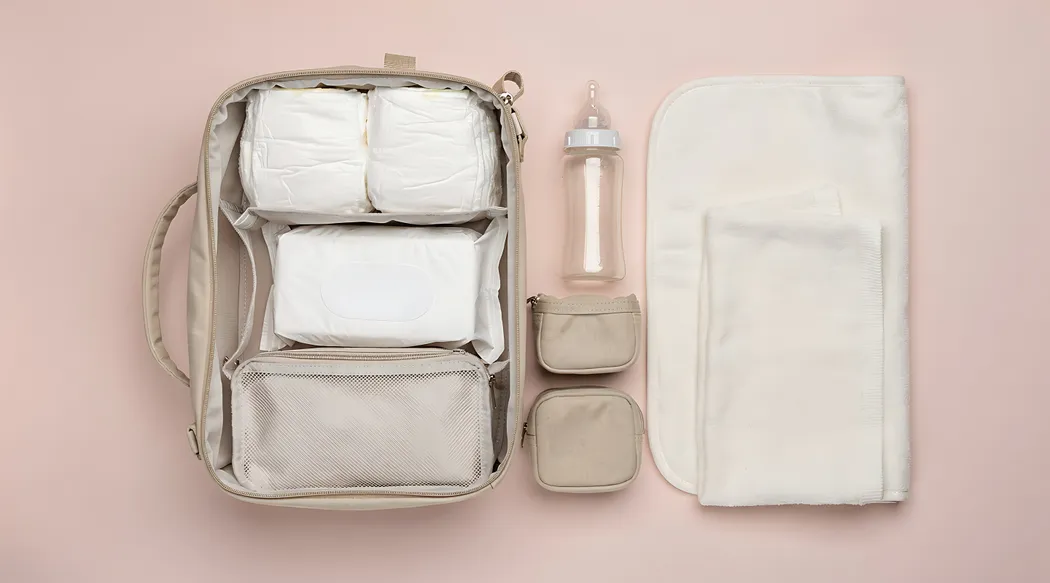
Even a well-designed diaper bag becomes chaotic within a week if you do not have a packing system. A diaper bag organizer, whether a pouch insert or a set of small packing cubes, makes a real difference.

Divide your bag into three zones. The first zone holds diapering supplies: diapers, wipes, a small tube of barrier cream, and the changing mat. The second zone holds feeding items: a bottle, formula or breast milk if needed, a burp cloth, and a small snack for older babies. The third zone is yours: your phone, keys, wallet, and hand sanitizer.

A few habits that help:

  • Restock the bag each night rather than on the way out the door
  • Use a small zip pouch for diapering essentials so the entire pouch can come out at a changing station
  • Keep one spare outfit in a sealed zip-lock bag so it stays clean even if a bottle leaks
  • Remove anything you did not use during the day to stop the bag growing heavier over time

Must-Have Accessories and Essentials Checklist

Here is a practical diaper bag checklist you can print and use before any outing.

Diapering

  • Diapers (at least one per two hours you plan to be out, plus one spare)
  • Baby wipes (fragrance-free for sensitive skin)
  • Foldable changing mat
  • Small barrier or nappy rash cream
  • Nappy disposal bags

Feeding

  • Pre-measured formula or expressed breast milk in an insulated bottle holder
  • Burp cloth or muslin square
  • Nursing cover if preferred

Clothing and comfort

  • One full change of clothes (two for newborns)
  • Light swaddle or muslin for warmth or shade

Health and hygiene

  • Hand sanitiser
  • Baby nail file (edges can scratch)
  • Any prescribed medications in their original packaging

Parent essentials

  • Phone, keys, wallet
  • A small snack and water bottle for yourself

Diaper bag accessories like a clip-on pacifier holder, a small portable fan, or a waterproof wet bag for soiled clothes are worth adding as you find your rhythm.

Newborn Hygiene Basics to Pack For

Newborns have a few extra care needs that older babies do not. The umbilical cord stump requires gentle cleaning and needs to stay dry until it falls off, usually within two to three weeks. If you are out and about during this period, pack a clean dry cloth and read up on how to care for a newborn's belly button so you feel confident if you need to tend to it away from home.

This is general guidance; always follow the advice of your paediatrician for your specific baby.

When to Consult a Doctor for Baby Skin or Wound Issues?

Babies have delicate skin, and rashes, redness, or small grazes can appear quickly. Most nappy rash clears with a barrier cream and frequent changes, but see a doctor if the rash is spreading, blistering, weeping, or does not improve within two to three days.

For any minor cut or graze from a baby accessory or toy, you can find helpful guidance on treating minor cuts and wounds at home, but always seek medical attention if a wound is deep, bleeding heavily, or shows signs of infection such as swelling, warmth, or discharge.

Report adverse events to your healthcare provider or the relevant regulatory authority. If your baby has an unexpected reaction to any product, including creams, wipes, or any prescribed item in your bag, stop using the product and contact your doctor promptly.

If you are carrying any prescription medication in your diaper bag, store it in its original labelled container and follow your doctor's instructions precisely. Do not use any medication outside its prescribed indication or share it with another child.

Conclusion

Choosing the right diaper bag can make outings with a baby more organised and convenient by keeping changing, feeding, clothing, and hygiene essentials within easy reach. The best bag depends on your baby's age, feeding routine, length of outings, travel needs, and personal preferences. Parents can consider factors such as size, weight, storage compartments, durable and easy-to-clean materials, comfortable carrying options, and practical features such as insulated pockets or changing mats. A well-organised bag should contain essential supplies without becoming unnecessarily heavy or difficult to carry. Regularly checking and restocking the bag can also help ensure important items are available when needed. Ultimately, a practical diaper bag is one that suits your family's routine, provides convenient access to essentials, and supports safe and comfortable baby care while travelling.

FAQS

What is the best diaper bag for daily use?

A backpack diaper bag is the most practical choice for daily use because it keeps your hands free and spreads weight evenly. Look for one with multiple compartments, wipeable lining, and stroller straps.

How many pockets should a diaper bag have?

Most parents find five to eight pockets sufficient: at least one large main compartment, one insulated pocket, two to three exterior quick-access pockets, and one zippered pocket for valuables.

Can a diaper bag be used as a regular bag?

Yes, many diaper bags are designed to look like everyday bags and work well as a daily carry once your child is past the nappy stage. Convertible and tote styles especially double as work or travel bags.

What size diaper bag do I need?

A medium bag of around 20 to 30 litres suits most outings for one child. Go larger if you have twins, a newborn, or tend to be out for most of the day.
How do I clean a diaper bag?

Empty the bag completely, shake out crumbs, then wipe the interior with a damp cloth and mild soap. Most bags with wipeable linings are not machine-washable, so check the label before machine-washing the exterior.

Apollo 247 Floating Action Button