logo
0

Diaper Bag Guide: Essentials, Packing & Organising Tips

Learn what to pack in a diaper bag, how to organise baby essentials, and what to carry for short trips, full-day outings, and travel with your baby.

article image

Dr.Vasantha Sree

Leaving the house with a newborn can feel like preparing for an expedition. A well-chosen diaper bag makes the difference between a calm outing and a stressful scramble for a spare onesie at the bottom of an overstuffed tote. Whether you are still expecting or already in the thick of those early weeks, knowing what to look for in a diaper bag and how to pack it smartly will save you time, energy, and quite a few public meltdowns (yours included).

What to Look for in a Diaper Bag

The right bag suits your lifestyle, not just a product review's top pick. Here is what actually matters.

Material and durability count for more than looks. Water-resistant nylon or polyester wipes clean easily and holds up to daily use. Leather-look bags can be stylish but are often heavy before you add a single item, which becomes noticeable on longer walks.

Compartments are where best diaper bag features really show up. Look for:

  • A main compartment wide enough for a changing mat or folded blanket
  • At least two or three internal pockets for bottles, creams, and small items
  • A dedicated insulated pocket to keep breast milk or formula at a safe temperature
  • A front or side quick-access pocket for wipes and your phone

Strap options matter for long days. Adjustable shoulder straps, padded backpack straps, and stroller-attach loops give you flexibility to carry the bag however your hands are occupied at any given moment.

Size depends on how long you are usually out, how many children you are packing for, and whether you carry feeding or pumping supplies. A medium-sized backpack or tote with enough room for diapers, changing supplies, clothing, feeding items, and your personal essentials is usually practical for a full-day outing. If you are stepping out for short errands, a compact crossbody style works well. For a newborn, err slightly larger because the supply list is longer in those early weeks.

Diaper Bag Essentials Checklist

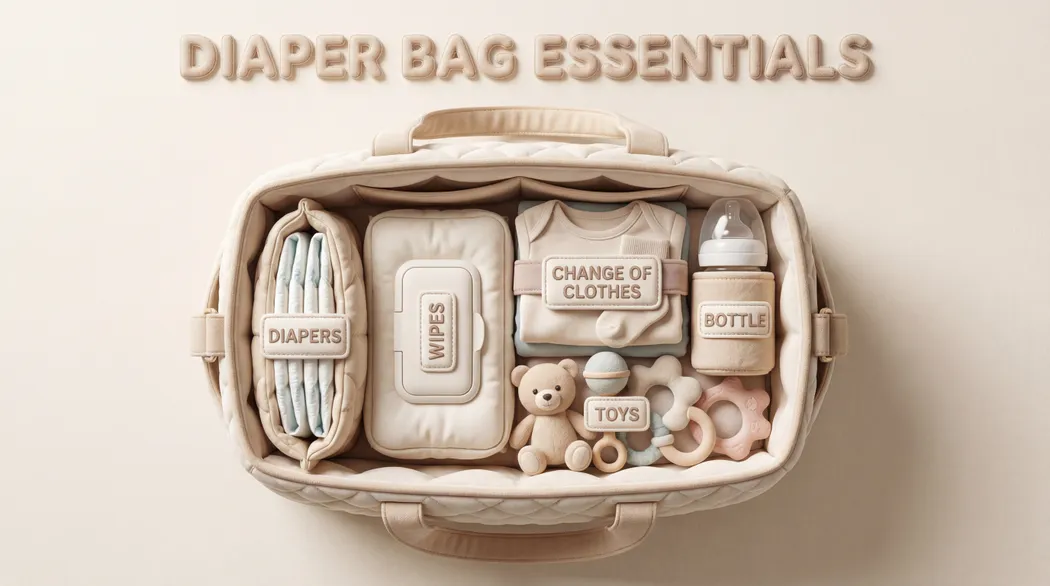
This diaper bag essentials list covers what to pack before any outing. Adjust quantities to match how long you will be away.

Nappy and changing supplies

  • Diapers — pack enough for the expected length of the outing, plus a few extras in case of unexpected changes or delays.
  • Fragrance-free baby wipes in a resealable pack
  • A portable changing mat or foldable pad
  • Nappy rash cream or barrier ointment

Clothing

  • At least one full change of clothes for the baby
  • A spare top or bib for yourself, because blowouts choose the worst moments
  • A light muslin cloth or swaddle

Feeding items

  • Pre-measured formula or expressed breast milk in an insulated bottle holder
  • A burp cloth
  • Nursing cover if needed
  • Age-appropriate snacks for older babies

Hygiene and first aid

  • Hand sanitiser
  • A small pack of tissues
  • A couple of nappy disposal bags
  • A basic plaster and antiseptic wipe

Newborn outing essentials specifically

For very young babies, also consider a hat for sun or cold protection, a dummy if used, and any prescribed drops or ointments your paediatrician has recommended. Caring for delicate skin includes staying across basics like newborn hygiene and belly button care basics until the cord has healed fully.

Organising Your Diaper Bag Efficiently

A packed bag is only useful if you can find things in under five seconds with one hand while holding a squirming baby with the other. Diaper bag organisation tips that actually work come down to one principle: zones.

Assign each section of the bag a category and stick to it every time you repack.

  • Changing zone: main compartment holds diapers, wipes, changing mat, and cream
  • Feeding zone: insulated side pocket for bottles; inner pocket for bibs and snacks
  • Parent zone: outer pocket for your phone, keys, and wallet
  • Overflow zone: a small pouch for a spare outfit or extra muslin

Use pouches or small packing cubes. Loose items sink to the bottom and disappear. A zip pouch for first-aid items and another for feeding accessories means you grab the whole pouch rather than hunting item by item.

Whatever you need without setting the baby down goes in a pocket you can reach with one hand. Wipes, a nappy bag or two, and your phone belong there.

Restock the bag as soon as you get home, not the morning of the next outing. Five minutes of refilling after every trip prevents the 8 a.m. discovery of zero diapers.

Packing Tips for Different Outings

How to pack a diaper bag well depends on where you are going. Calibrating what you carry to the outing saves weight and wasted space.

Short errand under two hours: a compact bag with two or three diapers, wipes, one change of clothes, a bottle, and your phone and keys is genuinely enough. Resist the urge to pack for every possible scenario.

Half-day or full-day outing one should follow the full diaper bag checklist above. Add a larger supply of diapers, an extra change of clothes, and packed snacks if the baby has started solids.

All-day or travel outing: pack double on diapers and clothing. Also add:

  • Sun protection, including shade, lightweight protective clothing, and a hat. For babies younger than 6 months, avoid direct sun exposure as much as possible; ask your paediatrician or check the sunscreen label for guidance if sunscreen is needed.
  • An extra layer or a light jacket depending on the season
  • A portable thermometer if your baby has any ongoing health concern
  • A note of your paediatrician's contact number and any allergy information

Seasonal thinking helps too. In summer, a cooling muslin and sun hat are worth the space. In cooler months, an extra swaddle or footed sleepsuit takes priority over lighter items.

When to Consult a Doctor for Baby Skin or Hygiene Issues

A well-stocked diaper bag handles the everyday. Some situations, though, need medical attention rather than just a fresh nappy.

See a doctor if:

  • A nappy rash is spreading, blistering, bleeding, becoming very raw or weepy, or is not improving after a few days of appropriate home care.
  • The skin around the nappy area becomes very raw or weepy, or develops a rash with features that could indicate a fungal infection, such as involvement of the skin folds or small spots around the main rash.
  • Baby wipes seem to be causing redness or hives, as your child may have a sensitivity that needs assessment
  • Any cut, graze, or skin break from an outing becomes red, warm, or swollen after a day or two

A diaper bag can carry first-aid supplies, but it cannot replace a clinical review. If something looks wrong or your instinct says it is, contact your paediatrician rather than waiting.

Contraindications and caution

Check the product label for age restrictions and directions before using any rash cream, antiseptic, or other topical product on a newborn. Avoid applying products to broken or severely inflamed skin unless advised by a healthcare professional, and keep products away from the eyes and other mucous membranes unless specifically intended for those areas. Always read the label and confirm suitability with your doctor or pharmacist before using any topical product on a young baby.

Adverse-event note

Report adverse events related to any baby product, medication, or topical preparation to your healthcare provider or the relevant regulatory authority.

Conclusion

A well-organised diaper bag can make outings with your baby much easier. Pack essentials based on your baby's age, feeding needs, the length of your trip, and the weather, while keeping diapers, wipes, spare clothes, and feeding supplies easy to reach. Carry a few extra supplies for unexpected delays, and restock the bag after each outing so it is ready for the next one. Remember that a diaper bag is there for everyday convenience, while persistent rashes, skin reactions, or other health concerns should be assessed by a paediatrician.

FAQS

What is the ideal size of a diaper bag?

A bag in the 15 to 25 litre range suits most full-day outings comfortably. For short errands, a smaller 10 to 15 litre crossbody or mini backpack is often enough.

How many diapers should I pack for a day out?

Pack enough diapers for the time you expect to be away, plus a few extras for unexpected delays, bowel movements, or leaks. Newborns generally need more frequent diaper changes than older babies, so consider your baby's usual changing pattern when deciding how many to carry.
Can I use a regular backpack as a diaper bag?

Yes, and many parents do. The main trade-off is that a regular backpack usually lacks insulated pockets and a built-in changing mat, so you will need to add those separately with pouches or a roll-up pad.

How often should I clean my diaper bag?

Clean your diaper bag according to the manufacturer's care instructions, and wipe up spills or leaks promptly. Empty and check the bag regularly so that used diapers, food, or damp clothing are not left inside. Spot-clean any spills immediately to prevent odour and bacteria build-up.

What should I do if my baby gets a rash from wipes?

Stop using the wipes that appear to be causing irritation and gently clean the area with plain water and a soft cloth or cotton pad. Keep the area dry and use a suitable barrier cream if needed. If the rash persists, spreads, or the baby develops swelling or hives, contact your paediatrician. If it persists, spreads, or the skin breaks, see your paediatrician to rule out an allergy or infection.

Apollo 247 Floating Action Button