logo
0

Diaper Bag Guide: How to Choose the Right Baby Bag

Learn how to choose and organise a diaper bag, including essential supplies, hygiene products, feeding items and safety tips for newborn outings.

article image

Dr.Bhanu Prakash

Stepping out with a newborn requires more preparation than most first-time parents expect, and a well-chosen diaper bag can make the difference between a calm outing and a stressful scramble. The right bag keeps everything within reach, protects hygiene essentials from spillage, and fits comfortably on your shoulder during a long day at the clinic or a family visit across town. This guide walks you through choosing the right bag, packing it smartly, and keeping your baby safe on the go.

What to Look for When Choosing a Diaper Bag?

Not every bag marketed as a "baby bag" is worth the money. Before you buy, check these features:

  • Size: Choose a bag based on the length of your outings, your baby's age, feeding method, and how much equipment you normally carry. A medium-to-large bag is practical for many newborn outings, while a smaller backpack-style bag may be enough for shorter trips. For full-day outings or travel, you may need more space.
  • Compartments: Multiple pockets prevent you from rummaging. Look for at least one deep main compartment, a front quick-access pocket, and insulated pockets if you plan to carry bottles or expressed milk.
  • Material: Wipeable fabric is practical. Polyester, nylon, or coated canvas can make cleaning up spills easier. A washable or wipeable lining is also useful.
  • Straps: A padded shoulder strap and a stroller clip can make the bag easier to carry. Backpack-style bags distribute weight across both shoulders, which can be useful on longer outings when you are also managing a pram.
  • Waterproofing: A water-resistant or waterproof base can protect the bag's contents if you set it down on a wet surface.

A changing mat that folds out from a dedicated pocket is a bonus, especially in public places where clean surfaces are hard to find.

Diaper Bag Essentials Checklist for Daily Outings

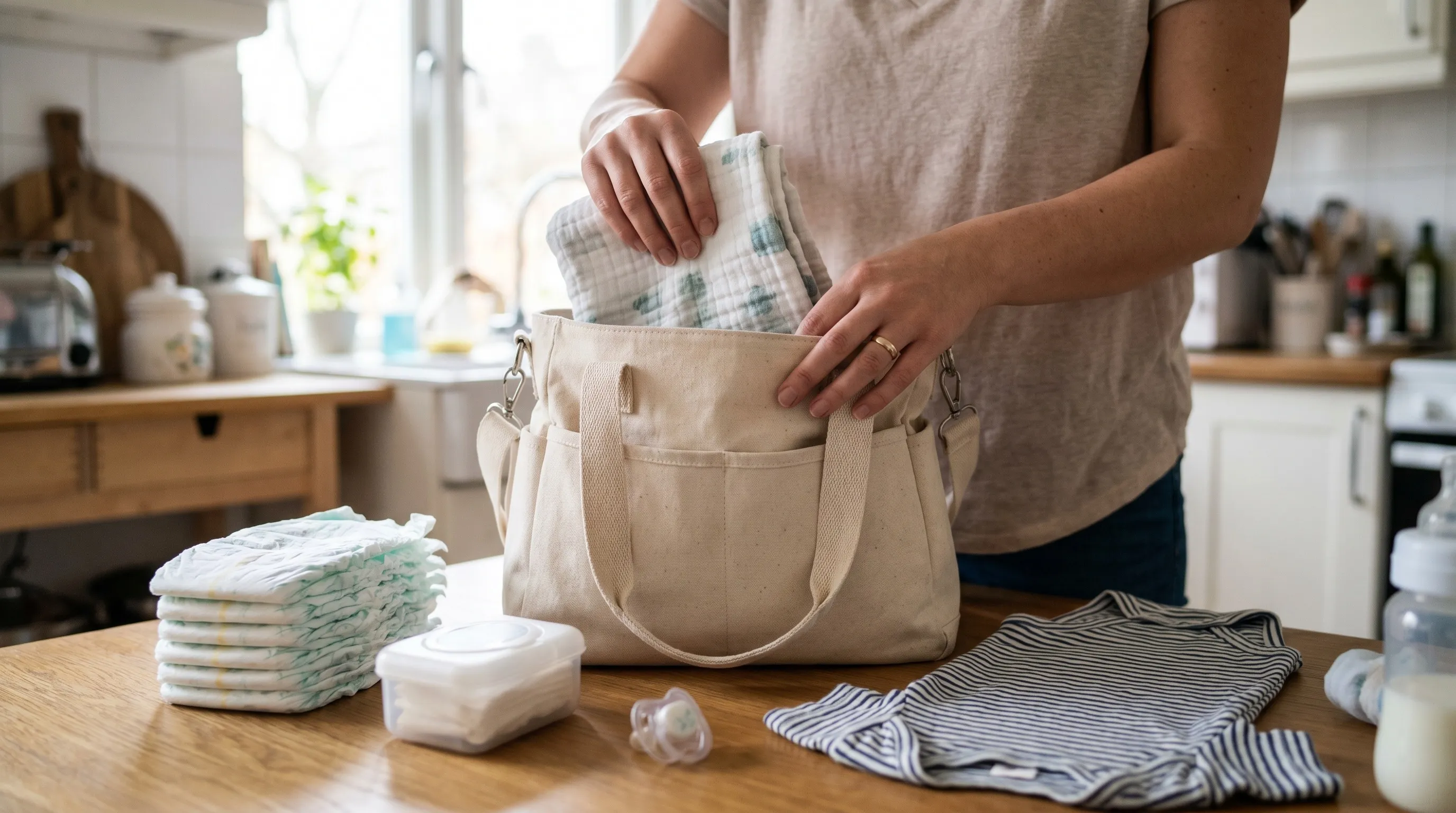
The goal is to carry what you need without turning the bag into a moving house. Below is a practical baby bag checklist organised by category.

Diapering

Enough diapers for the expected changes during your outing, plus several extras in case of delays
A portable pack of unscented baby wipes
Diaper rash cream, if recommended or suitable for your baby's skin
A small, foldable changing mat

Feeding

Pre-measured formula in a dry dispenser, or expressed breast milk stored and transported according to recommended temperature and storage guidance
A nursing cover if you prefer privacy
Two burp cloths

Clothing and Comfort

One to two full change-of-clothing sets, including socks
A light muslin swaddle or blanket

Hygiene and First Aid

Hand sanitiser for caregivers containing at least 60% alcohol
Supplies appropriate for umbilical cord care, if the cord has not yet fallen off, according to your paediatrician's advice
A small first-aid kit with adhesive bandages for minor cuts

For You

Your own water bottle and a small snack
A list of emergency contacts, including your paediatrician's number
Pack only what you will genuinely use. Overpacking adds weight and makes it harder to find things quickly.

How to Organise a Diaper Bag for Quick Access?

A diaper bag organiser system saves time when a baby is crying and needs an immediate change. The compartment-by-compartment approach works well:

  • Front/outer pocket: Hand sanitiser, your phone, and small items you reach for most often. This is your quick-grab zone.
  • Insulated side pockets: Bottles or other appropriately stored feeds, depending on your baby's feeding method.
  • Main compartment top layer: Spare clothing and the muslin. These are bulky but not frequently needed, so they sit below quick-grab items.
  • Main compartment base: Diapers and the changing mat. Keep diapers in a small zip pouch so they do not slip between other items.
  • Inner zip pocket: Rash cream and any medication prescribed by a doctor. Use a small labelled pouch so caregivers other than you can find things without asking.

Restock the bag every evening after returning home. A five-minute check prevents the unpleasant discovery that you've run out of diapers mid-outing.

Hygiene and Newborn Care Essentials to Include

Newborns need extra hygiene care, particularly in the first few weeks. If your baby's umbilical cord stump has not yet dried and fallen off, follow your paediatrician's guidance on keeping the stump clean and dry. The American Academy of Pediatrics recommends keeping the umbilical cord stump clean and dry and avoiding unnecessary products on the area. Apollo's blog covers how to care for a newborn's belly button in detail if you need a step-by-step reference.

For minor skin nicks or grazes that can happen during outdoor visits, knowing the best treatment for minor cuts and wounds is reassuring, and keeping a couple of sterile adhesive strips in the bag means you're prepared.

A few hygiene points worth noting:

  • Change diapers regularly and promptly after bowel movements to help reduce skin irritation and diaper rash.
  • Use separate pouches for soiled clothing and clean items to reduce the risk of transferring contamination.
  • Check wipes and other baby-care products regularly for their expiry date and follow the manufacturer's storage instructions.
  • Wash your hands or use an alcohol-based hand sanitiser containing at least 60% alcohol when soap and water are unavailable. The Centers for Disease Control and Prevention recommends handwashing with soap and water whenever possible and an alcohol-based hand sanitiser with at least 60% alcohol when handwashing is not available.

When to Consult a Doctor for Baby Skin or Health Issues?

Carrying a well-stocked bag helps with minor issues, but some situations need professional attention quickly.

See a paediatrician if:

  • A rash spreads rapidly, blisters, or is accompanied by fever
  • A cut does not stop bleeding after several minutes of gentle pressure, or shows signs of infection such as spreading redness, warmth, swelling, or pus
  • The umbilical stump becomes increasingly red around the surrounding skin, develops a foul smell, or has concerning discharge
  • Your baby seems unusually irritable, refuses feeds, or has a high temperature

This article is for general informational purposes only and does not replace medical advice from a qualified healthcare professional. Always consult your paediatrician for concerns specific to your child's health.

Report adverse events related to any baby care product to your healthcare provider or the relevant regulatory authority.

Contraindications and Safety Precautions for Baby Care Products

Any cream, ointment, antiseptic, or medicated product you carry in your diaper bag should be selected appropriately for your baby's age and skin condition. For newborns, particularly premature babies, it is advisable to check with your baby's doctor before using medicated or unfamiliar topical products.

Specific points to keep in mind:

  • Some topical products contain fragrances, preservatives, or active ingredients that may irritate newborn skin or may not be appropriate for very young infants.
  • Never carry an over-the-counter medicated cream for a newborn without first confirming that it is suitable for the child's age and skin condition.
  • Alcohol-based hand sanitiser is intended for cleaning hands and should not be applied directly to a newborn's skin.
  • Do not carry any product that is past its expiry date or that has been stored contrary to the manufacturer's instructions, such as in excessive heat.
  • If your baby has a known allergy or sensitive skin condition, ask your doctor to specify which products are suitable, and carry only those.

A travel diaper bag that looks well-organised but contains unsuitable products offers false reassurance. Product safety matters as much as convenience.

Conclusion

A well-organised diaper bag can make outings with a newborn considerably easier without requiring you to carry every baby product you own. Choose a bag that suits the length of your outings, organise frequently used items where they are easy to reach, and carry enough diapers, clothing and feeding supplies for the trip with a few extras. Keeping hygiene products and medications stored appropriately can also help make everyday travel safer and more manageable.

FAQS

What is the ideal size for a diaper bag?

There is no standard diaper bag capacity that suits every family. Choose a size based on the length of your outings, your baby's age, feeding method, and the amount of equipment you normally carry. A medium-to-large bag is generally practical for newborn outings, while a smaller bag may be sufficient for shorter trips.
How many diapers should I carry in a diaper bag?

Carry enough diapers for the expected changes during your outing, plus several extras for unexpected delays. The American Academy of Pediatrics notes that babies may need around 8 to 12 diaper changes a day, although the exact number varies. This means newborns generally require more frequent diaper changes than older babies who are further along in their diaper-wearing period.

Can I use the same diaper bag for twins?

Yes. The bag does not need to meet a specific litre capacity, but it should have enough space for the additional diapers, clothing, feeding supplies and other items required for two babies. Separate labelled pouches can help keep each baby's belongings organised and prevent mix-ups, particularly for medications or specific skincare products.

What is the best material for a diaper bag?

Wipeable materials such as coated nylon or polyester are practical choices because they are generally lightweight and easier to clean after spills. A bag with a wipeable or washable lining can also make routine cleaning easier.

How often should I clean my diaper bag?

Spot-clean spills and soiled areas as soon as possible, then follow the manufacturer's care instructions for routine cleaning. Empty the bag regularly so that expired products, used packaging and items that need washing do not remain inside. There is no universal weekly or fortnightly cleaning schedule for every diaper bag.

Apollo 247 Floating Action Button