logo
0

Diaper Changing Pad: How to Choose One Safely

Choosing a diaper changing pad? Learn safety features, sizing, hygiene tips and setup best practices to protect your baby during every change.

article image

Dr.Rohini priyanaka

Every new parent knows that diaper changes happen dozens of times a day, and a good diaper changing pad makes each one safer, cleaner, and less stressful. The right pad protects your baby from hard surfaces, contains messes, and gives you a consistent, hygienic spot to work. With so many options available in Indian markets, from simple foam mats to contoured waterproof pads, knowing what to look for matters more than most parents expect.

What Is a Diaper Changing Pad and Why It Matters

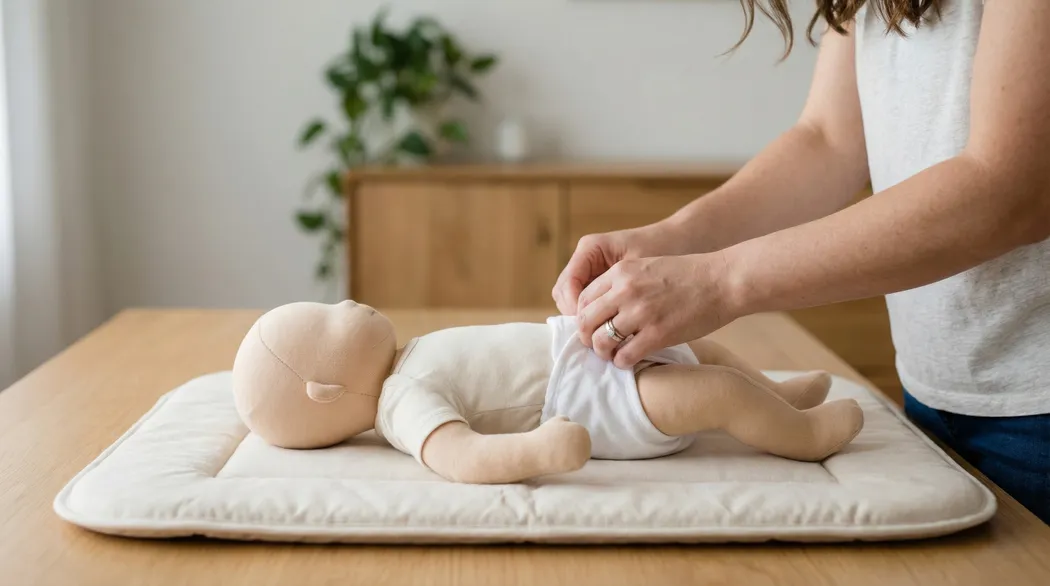
A diaper changing pad is a cushioned, wipeable surface designed specifically for diaper changes. It gives your baby a soft, contained spot to lie on while protecting furniture and floors from leaks.

Beyond comfort, it plays a practical role in hygiene. A dedicated baby changing mat keeps diaper-change messes away from your bed, sofa, or floor, reducing the spread of bacteria. It also gives you a predictable setup: your supplies are nearby, your baby is on a stable surface, and you can complete the change quickly and safely.

For newborns especially, who have delicate skin and a healing umbilical cord stump, a clean, padded surface is more than a convenience. Good newborn belly button care during diaper changes is easier when you have a consistent, well-lit spot where you can see what you are doing.

How to Choose a Safe Diaper Changing Pad

Choosing the right pad comes down to a few practical features. Here is what to check before buying.

  • Material and cushioning: Choose a foam-filled changing pad with firm, supportive cushioning. Very soft padding may shift more easily when your baby moves.
  • Inflatable pads: Inflatable pads are lightweight and convenient for travel but may deflate unexpectedly. They are better suited as a secondary option rather than the main changing pad at home.
  • Outer cover: Look for a smooth, non-porous cover without a strong chemical odour, which may indicate off-gassing from low-quality plastics.
  • Waterproofing: Choose a fully waterproof cover rather than a water-resistant one. A removable, machine-washable fabric cover over a waterproof core can also make cleaning easier.
  • Size and raised edges: A changing pad around 50 to 70 cm long can fit most newborns and infants. Raised or contoured edges on three sides can provide additional support during diaper changes.
  • Safety strap: A central safety strap can provide an additional safety feature, but it should never replace keeping one hand on your baby throughout the diaper change.

Quick checklist before buying

  • Dense foam or quality padded core
  • Fully waterproof, wipeable outer surface
  • Raised edges on at least three sides
  • Safety strap included
  • Easy to clean cover, removable or wipe-clean
  • No strong chemical odour from packaging
  • Size appropriate for a newborn through early infancy (at least 50 cm long)

Setting Up a Safe Changing Station

Where and how you set up your pad matters as much as which pad you choose.

  • Choose a low, stable surface: Use a sturdy changing table with a guard rail or another stable surface at a comfortable working height. For an active baby, placing the changing pad on the floor can eliminate the risk of a fall.
  • Never leave your baby unattended: Always keep one hand on your baby during diaper changes, even when using a pad with a safety strap. Babies can roll unexpectedly.
  • Keep supplies within reach: Have diapers, wipes, rash cream, and spare clothing ready before you begin. A small caddy or nearby shelf can help keep essentials accessible.
  • Avoid edges and soft surfaces: Do not place the changing pad near the edge of a raised surface or on soft, uneven surfaces such as a thick duvet or mattress, where the pad may sink or become unstable.

Hygiene and Skin Safety During Diaper Changes

Keeping your baby changing mat clean protects your baby from infection and reduces the risk of diaper rash.

  • Clean the pad after every change: Wipe the pad surface with a damp cloth or baby-safe disinfectant wipe after each diaper change. Allow it to air-dry completely before the next use when possible.
  • Wash removable covers regularly: If the changing pad has a removable fabric cover, wash it once or twice a week and immediately after any significant leak or soiling.

Changing pad hygiene tips for everyday use:

  • Change nappies frequently and do not leave a wet or soiled diaper on for long
  • Clean your baby's skin thoroughly from front to back at every change
  • Pat the area dry rather than rubbing, to avoid irritating delicate skin
  • Apply a thin layer of barrier cream if your baby's skin shows any pinkness
  • Rotate between two pad covers if possible, so one is always fresh

Good hygiene during changes is one of the simplest ways to prevent diaper rash. Keeping the pad surface dry and clean supports healthy skin.

When to Consult a Doctor

Most diaper rashes are mild and clear up with good hygiene and a barrier cream within two to three days. However, some situations call for a pediatric consultation rather than home care. See a doctor promptly if:

  • The rash is bright red, blistered, or has raised edges
  • There are yellow crusts or pus-like discharge suggesting infection
  • The rash spreads beyond the diaper area
  • Your baby seems unusually uncomfortable or is crying more than normal during changes
  • The rash does not improve after two to three days of home care
  • You notice signs of an allergic reaction such as hives, swelling, or difficulty breathing

Do not attempt to self-treat a suspected fungal or bacterial skin infection. A paediatrician can identify the cause and recommend the right treatment. Report adverse events to your healthcare provider or the relevant regulatory authority.

Contraindications and Precautions

Some materials and setups should be avoided entirely:

  • Avoid irritating materials: Avoid pads with a strong synthetic odour or unknown plastic composition. If your baby develops redness or a rash after using a new pad, stop using it and consult a doctor.
  • Check the safety strap: Do not use a changing pad with a broken, damaged, or frayed safety strap. Replace the pad if the strap cannot be secured safely.
  • Replace damaged pads: Discard any pad with mould, persistent biological staining, or foam that has become compressed and no longer provides adequate cushioning.
  • Never leave your baby unattended: Never leave an infant alone on a raised changing surface, even when the safety strap is fastened.
  • Avoid moisture-damaged pads: Do not use a pad if moisture has entered the foam, as trapped moisture can encourage bacterial and mould growth even when the surface appears clean.

Conclusion

A suitable diaper changing pad can make everyday diaper changes safer, cleaner, and more comfortable for both you and your baby. When choosing one, prioritise firm cushioning, a waterproof and easy-to-clean surface, an appropriate size, and useful safety features such as raised edges and a secure strap. However, no changing pad can replace close supervision. Keep all supplies within reach, clean the pad regularly, and never leave your baby unattended on a raised surface. If your baby develops a persistent, spreading, or infected-looking rash, seek advice from a paediatrician.

FAQS

What size diaper changing pad do I need?

A pad that is at least 50 cm long and 30 cm wide works for most newborns through the first year. Many parents find that a slightly longer pad, around 70 cm, gives more room as the baby grows.

Can I use a changing pad on a bed?

Yes, but place it near the centre of the bed, never at the edge, and keep one hand on your baby throughout the change. A bed surface can shift and sink, so a flat, firm pad with raised edges works best here.

How often should I replace a changing pad?

Replace the pad when the foam loses its firmness, the waterproof cover cracks or peels, or you notice any mould or persistent odour that does not go away after cleaning.

Are changing pad covers necessary?

A cover is not strictly necessary if your pad has a built-in waterproof surface, but a removable, washable cover adds a layer of softness and makes hygiene much easier to maintain between deep cleans.

Is a changing pad safe for newborns?

Yes, a firm, contoured pad with raised edges is safe and recommended for newborns. Avoid very soft or pillow-like surfaces, as these can pose a suffocation risk if a newborn turns to the side.

Apollo 247 Floating Action Button