logo
0

Diaper Rash: Causes, Prevention & Treatment for Infants

Learn about diaper rash causes, symptoms, prevention and treatment, including zinc oxide creams, skin care tips and when your baby needs medical advice.

article image

Dr. Rohini priyanaka

Diaper rash is common during a baby's first years and can leave the skin red, sore and uncomfortable. It often develops when moisture, stool or friction irritates the skin under the diaper. Some babies may also react to products such as wipes, creams, detergents or other substances that come into contact with the skin.

Most mild cases improve with simple skin care and regular diaper changes. However, not every rash in the diaper area is caused by irritation, and some rashes need specific treatment. This guide explains diaper rash causes, how to prevent diaper rash, which diaper rash cream options may help and when to seek medical advice.

What Is Diaper Rash?

Diaper rash refers to inflammation or irritation of the skin covered by a diaper. It can affect the buttocks, genital area, lower abdomen and upper thighs.

The skin may appear pink or red and can feel sore or warm. More severe irritation may cause peeling, cracks, raw areas or small bumps.

Diaper rash is particularly common during infancy because a baby's skin is sensitive and is frequently exposed to urine and stool. Babies with eczema or sensitive skin may be more prone to irritation.

A rash in the diaper area can have different causes. Irritant dermatitis, contact dermatitis, eczema and infections can sometimes look similar, so the appearance of a rash does not always reveal its cause.

What Causes Diaper Rash?

Several factors can contribute to diaper rash. Often, more than one is involved.

Moisture and Stool

Urine and stool can irritate the skin when they remain against it for a prolonged period. Stool can be particularly irritating because it contains digestive enzymes.

Frequent loose stools or diarrhoea can increase the chance of irritation because the skin comes into contact with stool more often.

Friction

A diaper that rubs repeatedly against the skin can cause irritation. Friction may be more noticeable around the thighs, waist and skin folds, particularly when the diaper does not fit comfortably.

Irritating Products

Some babies may develop irritation after using a new wipe, cream, detergent or diaper. Fragrances and other ingredients can trigger contact dermatitis in susceptible babies.

If redness appears after introducing a new product, stopping that product may help you identify whether it is contributing to the problem.

Yeast Infection

Candida is a type of yeast that can sometimes cause a diaper-area rash. It may cause a bright red rash that involves the skin folds, sometimes with smaller red spots or bumps around the affected area.

These features are not enough to confirm a yeast infection. Your doctor can determine whether an antifungal treatment is needed.

Changes in Bowel Movements

Changes in diet can alter a baby's bowel movements. When solid foods are introduced, for example, stool may change in consistency or frequency. Frequent loose stools can make the skin more prone to irritation.

Teething

Teething does not directly cause diaper rash. Babies may have changes in feeding or bowel movements around the same time as teething, but a rash should not be assumed to be caused by teething.

What Does Diaper Rash Look Like?

Mild diaper rash may appear as pink or red skin in the area covered by the diaper. Your baby may become more unsettled during cleaning or diaper changes.
  • Signs that need closer attention include:
  • Raw or broken skin
  • Blisters or open sores
  • Significant swelling
  • Pus or yellowish crusting
  • A rash that is spreading beyond the diaper area
  • Significant pain or discomfort
  • Fever or a baby who seems unwell

These changes can occur with infection or other skin conditions. If they develop, your baby should be assessed by a healthcare professional.

How to Prevent Diaper Rash?

A few simple habits can help protect your baby's skin.

  • Change diapers regularly: Check your baby's diaper and change it when it is wet or soiled. Change a soiled diaper promptly.
  • Clean gently: Use lukewarm water and a soft cloth or a suitable fragrance-free wipe. Avoid rubbing the skin.
  • Dry carefully: Pat the diaper area dry before putting on a clean diaper.
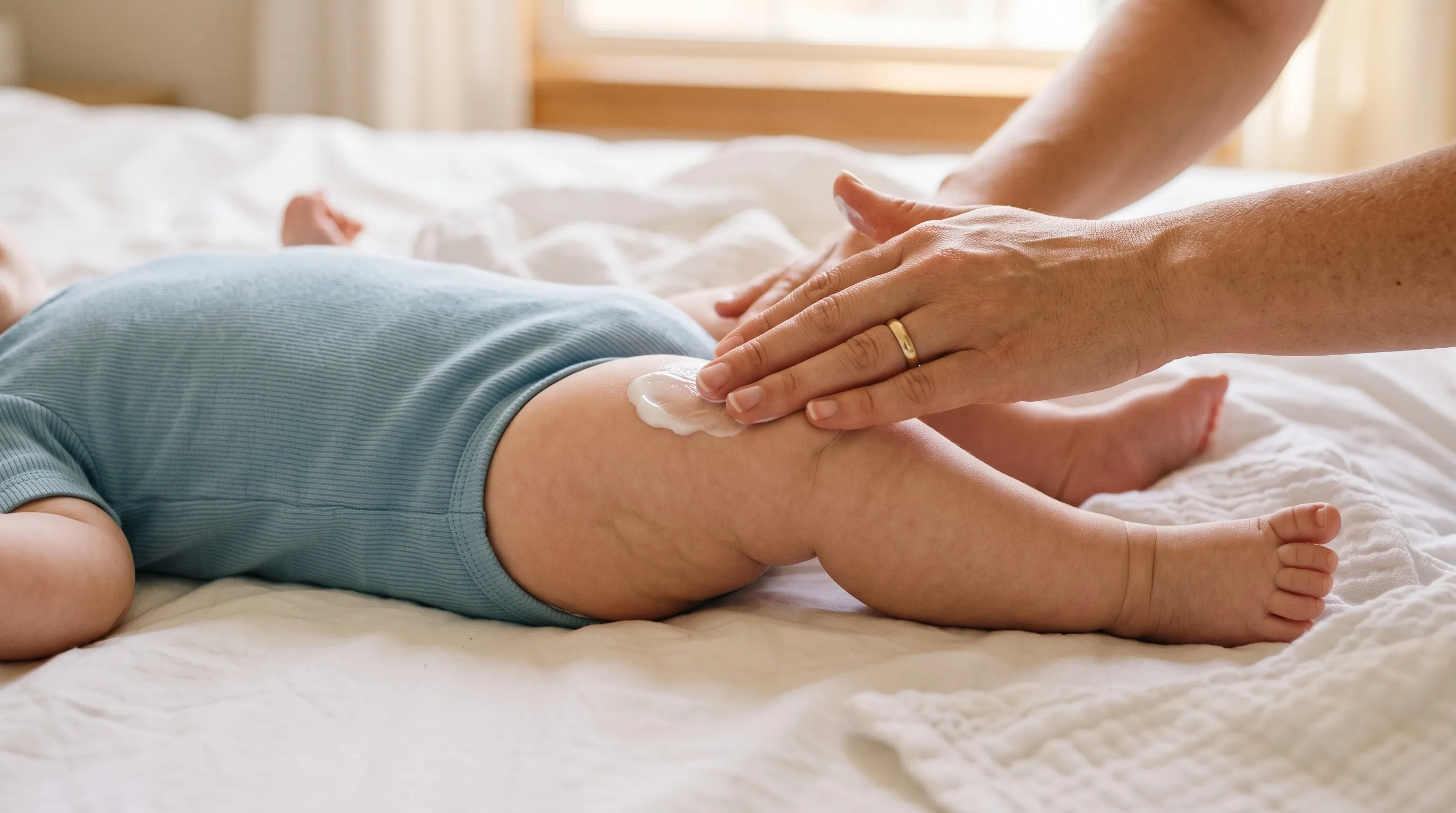
    Protect the skin: Petroleum jelly or a zinc oxide barrier cream can help reduce contact between the skin and moisture.
  • Check the fit: The diaper should sit comfortably without rubbing or pressing tightly against the skin.
  • Limit potential irritants: If a particular wipe, cream, detergent or diaper appears to make the rash worse, stop using it and see whether the skin improves.
  • Give the skin some air: You can leave your baby without a diaper for short periods when convenient. There is no set amount of diaper-free time needed to prevent rash.

For broader guidance on newborn skin and hygiene care basics, gentle cleaning and regular diaper changes can help protect your baby's delicate skin.

Which Diaper Rash Cream Can You Use?

The cream you use depends on what is causing the irritation and how your baby's skin looks.

Zinc Oxide Barrier Creams

Zinc oxide cream is widely used in diaper rash creams because it forms a protective layer over the skin and helps reduce contact with moisture. Products are available in different concentrations, including around 10% to 40% zinc oxide.

A lower concentration may be enough for routine protection, while a thicker, more concentrated preparation may be useful when the skin is more irritated. A higher concentration is not necessarily better for every baby.

Petroleum jelly is another simple barrier that can protect irritated skin from moisture.

Antifungal Creams

If your doctor finds that Candida is causing the rash, an antifungal medicine may be recommended. Medicines such as clotrimazole or nystatin may be used depending on the baby's age, the diagnosis and the product.

A red rash does not necessarily mean that an antifungal cream is needed. Using one without knowing the cause may delay the right treatment.

Mild Steroid Creams

A mild topical corticosteroid may sometimes be prescribed when inflammation is significant and barrier care alone has not helped. In babies, these medicines should be used only on the advice of a healthcare professional and for the shortest period needed.

Stronger steroid preparations should not be used on a baby's diaper area unless specifically prescribed.

What Should You Avoid?

Talcum powder should not be used around babies because inhaling fine particles can cause breathing problems.

Avoid applying antiseptics or other medicated products to the diaper area unless recommended by your doctor. Antibiotic creams are not routinely needed for ordinary diaper rash and should not be used without medical advice.

For general information about caring for broken or irritated skin, see treating minor skin irritation and wounds.

Precautions When Using Diaper Rash Cream

Most barrier creams are intended for use on irritated but intact skin. If your baby's skin is severely raw, blistered, bleeding or appears infected, speak to your doctor before applying medicated products.

Take care when introducing a new cream, particularly if your baby has previously reacted to skincare products. Stop using a product if it appears to make the irritation worse.

Prescription steroid, antifungal and antibiotic medicines should be used only as directed by a healthcare professional. Do not combine several medicated creams unless you have been advised to do so.

If you experience a suspected side effect from a medicine, inform your healthcare professional and report it through the appropriate adverse drug reaction reporting system.

When Should You See a Doctor for Diaper Rash?

Mild irritation often settles with regular diaper changes, gentle cleaning and a protective barrier. If the rash is not improving or is getting worse, your doctor can check whether another condition is causing it.

  • Seek medical advice if:
  • The rash continues despite good skin care
  • Your baby's skin becomes raw, cracked, blistered or starts bleeding
  • There is pus, significant swelling or spreading redness
  • The rash extends beyond the diaper area
  • Your baby appears to be in significant pain
  • The rash keeps returning
  • Your baby develops a fever or seems unwell
  • You are unsure whether the rash is an irritation, infection or another skin condition

Seek urgent medical attention if your baby has a fever and is unusually sleepy, difficult to wake, poorly responsive or seriously unwell.

Your doctor can examine the rash and decide whether your baby needs continued skin care, a barrier treatment or medicine for an infection or another skin condition.

Conclusion

Diaper rash is common, but gentle cleaning, regular diaper changes, a comfortable diaper fit and protection from moisture can help keep your baby's skin healthy. Petroleum jelly and zinc oxide barrier creams can help protect mildly irritated skin, while antifungal or steroid medicines may be needed when a healthcare professional identifies a specific cause.

If the rash is persistent, severe, spreading or accompanied by fever or other signs of illness, consult your doctor. Treating the cause rather than repeatedly changing creams or diapers can help your baby's skin recover.

FAQS

How long does diaper rash take to heal?

The time varies according to the cause and severity of the rash. Mild irritation may settle with regular diaper changes and barrier protection, while an infection or another skin condition may need specific treatment. If the rash is not improving or becomes worse, consult your doctor.

Can breastfeeding affect diaper rash?

Breastfeeding does not directly cause or prevent diaper rash. Breastfed babies can develop diaper rash, particularly if they have frequent stools or diarrhoea. Changes in bowel movements can increase the skin's exposure to moisture and stool.

Is coconut oil good for diaper rash?

Coconut oil can moisturise the skin, but evidence for using it specifically to treat diaper rash is limited. Petroleum jelly and zinc oxide are commonly used as protective barriers. If your baby's skin is already irritated, speak to your doctor or pharmacist before trying a new product.

Can diaper rash spread to other body parts?

A rash caused by irritation usually affects the area covered by the diaper, although irritation can extend to nearby skin. A rash that spreads beyond the diaper area may have another cause and should be assessed, particularly if there are blisters, sores, swelling, fever or other symptoms.

How often should I change diapers to prevent rash?

Check your baby's diaper regularly and change it when it is wet or soiled. Change soiled diapers promptly. Newborns often need frequent changes because they feed and pass urine and stools often. There is no single two- or three-hour schedule that applies to every baby.

Apollo 247 Floating Action Button