logo
0

Diaper Rash: Treatment & Prevention

Learn about diaper rash causes, treatment and prevention, including how zinc oxide cream may protect baby skin and when medical advice is needed.

article image

Dr.Mayank

Diaper rash is one of the most common skin concerns new parents face, and seeing red, irritated patches on your baby's bottom can be genuinely distressing. Most cases clear up quickly with the right care at home. This guide walks you through what causes diaper rash, how treatments like zinc oxide cream work, how to prevent diaper rash from recurring, and when it is time to call a doctor.

<Explore Diaper Rash Cream>

What Is Diaper Rash?

Diaper rash refers to skin inflammation in the diaper area, including the bottom, genitals, and inner thighs. It typically appears as red, puffy, or raw-looking patches and can range from mild pinkness to skin that looks sore and tender to the touch.

It is extremely common, particularly in babies between 4 and 15 months old, when solid foods are introduced and stool composition changes. Babies who wear diapers are naturally at risk because the area stays warm, moist, and in frequent contact with urine and stool. Most babies experience at least one episode during their diaper-wearing years.

Common Causes of Diaper Rash

Understanding diaper rash causes helps you address the right trigger quickly.

  • Leaving a wet or soiled diaper on too long is the most frequent culprit. Urine and stool together create enzymes that break down skin, making it more vulnerable to irritation.
  • A snugly fitted diaper rubbing against delicate skin can cause chafing, especially along the leg folds and waist edge.
  • Fragrances, preservatives, and alcohol in baby wipes, detergents, or bath products can trigger baby skin irritation. Even residue from laundry soap on cloth diapers can be a factor.
  • When the protective skin barrier breaks down, a yeast called Candida can overgrow, producing a bright-red rash with satellite spots at the edges. Bacterial infections are less common but possible.
  • Introducing solids changes the acidity and composition of stool. Some parents notice flare-ups linked to specific foods like citrus or tomatoes, so yes, diaper rash can be caused by food changes.
  • Antibiotics given to babies, or to breastfeeding mothers, can disturb gut flora, leading to looser stools and a higher chance of yeast overgrowth on the skin.

How Does Zinc Oxide Cream Help Baby Skin?

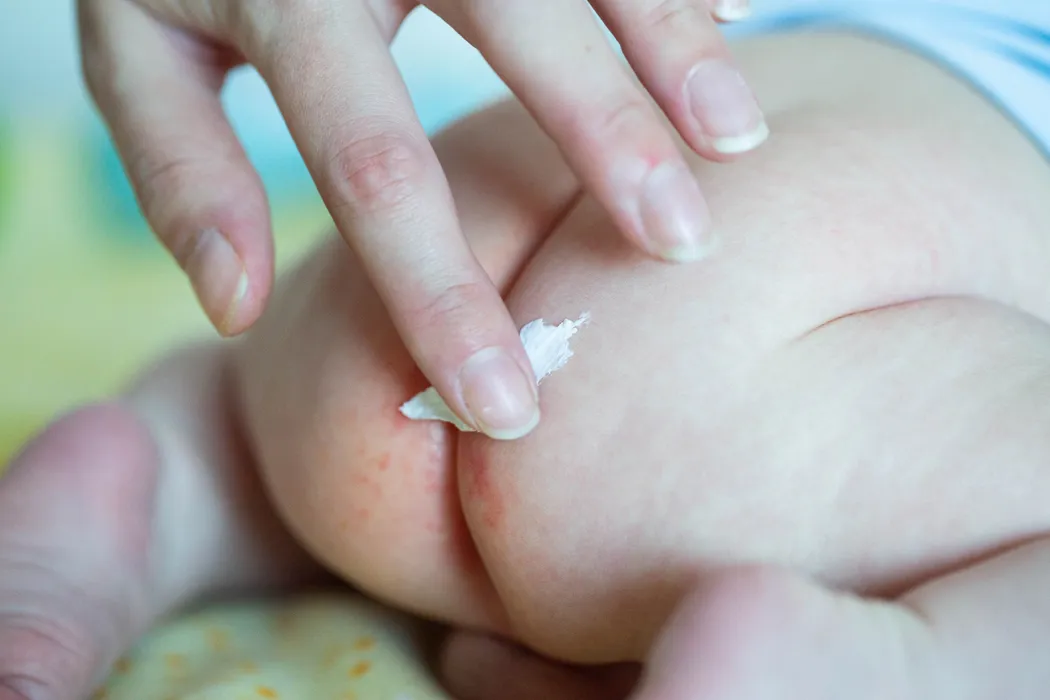
Zinc oxide cream for babies works primarily as a physical barrier. When applied to clean, dry skin, it forms a protective layer on the surface that shields against moisture, urine, and stool. It does not absorb deeply; instead, it keeps irritants from reaching the raw skin underneath while it heals.

Zinc oxide also has well-established astringent properties, which means it can help reduce moisture at the skin surface, offering gentle comfort alongside physical protection.

How to apply zinc oxide cream:

  • Change the diaper as soon as it is wet or soiled.
  • Gently clean the area with warm water and a soft cloth, or use a fragrance-free, alcohol-free wipe labelled safe for sensitive baby skin.
  • Pat the skin completely dry rather than rubbing.
  • Apply a generous layer of zinc oxide cream at every nappy change, or at minimum at bedtime when diapers stay on longest.
  • There is no need to remove every trace of cream at each change. A gentle wipe of the soiled portion is enough to avoid further skin trauma.
  • Zinc oxide cream is generally safe for regular use in the diaper area as part of both treatment and prevention.

How to Prevent Diaper Rash?

Knowing how to prevent diaper rash is just as important as treating it. A few consistent habits go a long way.

  • Change diapers frequently: Aim for every 2 to 3 hours during the day and immediately after every soiled nappy. The less time urine and stool sit against skin, the lower the risk of a rash developing.
  • Allow air time: Let your baby go nappy-free for short periods each day. Spreading a waterproof mat on the floor and letting the skin breathe is one of the most effective baby skin irritation remedies available, and it costs nothing.
  • Choose wipes carefully: Look for wipes that are labelled fragrance-free and alcohol-free. Water-based wipes with minimal ingredients are a good choice for sensitive skin. If in doubt, plain warm water and a soft cloth work just as well.
  • Get the diaper size right: Too tight means more friction and chafing; too loose means more leakage and moisture. Check the fit regularly as your baby grows.
  • Skip talcum powder: Fine particles can be inhaled and cause lung irritation in babies. It is not recommended for diaper area care.
  • Rinse cloth diapers thoroughly: If you use cloth diapers, avoid heavily fragranced detergents and rinse well to remove any soap residue that could irritate skin.

For broader guidance on keeping delicate skin healthy from the early weeks, see these newborn skin and hygiene care basics.

When to See a Doctor?

Mild diaper rash should improve within 2 to 3 days of consistent home care. See a doctor promptly if:

  • The rash is not getting better after 3 days of diaper rash treatment at home.
  • You see blisters, open sores, or bleeding skin.
  • There are bright-red patches with small red dots beyond the main rash, which may suggest a yeast infection needing antifungal treatment.
  • Your baby has a fever alongside the rash.
  • The rash is spreading to the abdomen, back, or legs.
  • Your baby seems to be in significant pain or is feeding very poorly.

A doctor can identify whether the rash is irritant contact dermatitis, a fungal infection, or a bacterial infection and prescribe the appropriate diaper rash cream or medication.

Contraindications and Precautions

Zinc oxide cream for babies is generally very well tolerated, but there are situations where caution is needed.

  • Do not apply zinc oxide cream to skin that is actively bleeding or has open, weeping sores. In these cases, see a doctor before applying any topical product.
  • If your baby has a known allergy to zinc oxide or any other ingredient in the product, do not use it.
  • Check the ingredient list and consult your pharmacist or doctor if you are unsure.
  • If the rash worsens after applying the cream, stop use and seek medical advice.
  • Keep all topical products away from the baby's eyes and mouth.

Report adverse events to your healthcare provider or the relevant regulatory authority.

Conclusion

Diaper rash is commonly caused by prolonged exposure to moisture, urine or stools, friction and irritation from nappies or skincare products. Keeping the nappy area clean and dry, changing nappies frequently and allowing the skin to air-dry can help manage and prevent mild rashes. Zinc oxide creams may provide a protective barrier that helps shield irritated skin from moisture and further friction. Apply them according to the product instructions and avoid using medicated creams without appropriate advice. If the rash is severe, spreading, blistered, painful or does not improve with routine care, consult a paediatrician to determine the cause and appropriate treatment.

FAQS

How long does diaper rash take to heal?

Most mild cases of diaper rash clear up within 2 to 3 days with frequent diaper changes, air time, and a barrier cream like zinc oxide. More stubborn rashes, especially those caused by a yeast infection, may need prescription treatment and can take up to a week or longer to resolve.

Can I use talcum powder for diaper rash?

Talcum powder is not recommended for babies. Fine talc particles can be accidentally inhaled and may cause respiratory irritation or lung problems. Stick to barrier creams and gentle cleansing instead.

Is coconut oil good for diaper rash?

Coconut oil can provide a mild skin barrier, and some parents use it for very mild rashes. However, it offers less protection than zinc oxide cream and is not a substitute if the rash is moderate or worsening. Always ensure the skin is clean and dry before applying anything.

How do I know if diaper rash is a yeast infection?

A yeast-related diaper rash typically looks bright red, has clearly defined edges, and is accompanied by small red dots or patches (called satellite lesions) beyond the main rash. It tends to persist despite standard home care and usually needs an antifungal cream, so see a doctor if you suspect this.

Can breastfeeding affect diaper rash?

Yes, indirectly. If a breastfeeding mother takes antibiotics, this can alter the baby's gut bacteria and increase the chance of a yeast-related rash. Dietary changes in the mother can also shift stool composition slightly, which may affect skin sensitivity in some babies.

Apollo 247 Floating Action Button