logo
0

Diaper Rash Cream for Newborn: How to Prevent and Treat It

Learn how to prevent and treat diaper rash in newborns, choose suitable barrier creams and recognise signs that need medical attention.

article image

Dr.Kamran

Diaper rash is common during infancy, and knowing which diaper rash cream for newborn skin may help can make managing redness and irritation easier. Newborn skin is delicate and can become irritated when exposed to moisture, stool, friction or certain products for prolonged periods. This guide covers common causes, prevention and appropriate treatment options so you know what to do when your baby's skin becomes irritated.

What Causes Diaper Rash in Newborns?

Diaper rash rarely has a single cause. Most cases involve a combination of factors:

  • Prolonged moisture. Urine and stool can irritate the skin when they remain in prolonged contact with it. Stool contains digestive enzymes that can further damage the skin barrier.
  • Friction. A poorly fitted or tightly fastened diaper can rub against delicate skin and contribute to irritation.
  • Chemical irritants. Fragrances, preservatives and other ingredients in wipes, diapers, creams or laundry products can irritate some babies' skin.
  • Yeast overgrowth. Candida can contribute to diaper dermatitis, particularly after antibiotic use. A candidal rash may appear as shiny, bright red or pink patches with sharp edges and small bumps or spots. It is often more prominent in the skin folds.
  • Bacterial infection. Bacterial infections are less common but can occur in the diaper area or make an existing rash worse. Signs may include yellow crusting, weeping, pimples or rapidly spreading redness.
  • Changes in bowel movements or antibiotics. Starting solid foods can change the frequency and composition of stools, while antibiotics can increase the risk of diarrhoea or Candida overgrowth. Both may contribute to diaper rash.

If your newborn keeps getting diaper rash despite appropriate care, consider whether a particular diaper, wipe, cream or laundry product may be contributing to the irritation. The American Academy of Pediatrics notes that fragrances, preservatives, dyes and other product ingredients can occasionally trigger reactions.

How to Prevent Diaper Rash?

Simple measures that reduce prolonged contact with moisture and stool can help prevent diaper rash.

  • Change diapers frequently. The American Academy of Pediatrics notes that babies may need around 8 to 12 diaper changes a day, particularly during the early months. This is a practical estimate rather than a fixed requirement for every newborn. Change the diaper promptly when it is soiled and avoid leaving your baby's skin in prolonged contact with urine or stool.
  • Cleanse gently. Use warm water and a soft cloth or fragrance-free, alcohol-free wipes. Avoid vigorous rubbing, particularly when the skin is already irritated. The American Academy of Pediatrics recommends gentle cleansing and allowing the skin to air-dry when possible.
  • Let the skin dry. Pat the area gently rather than rubbing it. Giving the skin some time to air-dry before putting on a fresh diaper may also help reduce moisture.
  • Apply a barrier cream. A barrier product containing zinc oxide or petrolatum can help protect the skin from moisture and irritants. The American Academy of Pediatrics recommends applying a generous layer of barrier paste to the diaper area, particularly when the skin is irritated.
  • Check diaper fit. A diaper that is too tight can increase friction and trap moisture. Make sure it fits comfortably without leaving persistent marks on the skin.

For other aspects of newborn skin care, our newborn belly button care guide covers keeping this sensitive area clean and dry during the early weeks.

Choosing a Diaper Rash Cream: What to Look For?

When choosing a diaper rash cream for newborn skin, focus on ingredients that help protect the skin barrier and avoid unnecessary irritants.

Zinc oxide is a commonly used skin-protectant ingredient in diaper rash products. It forms a protective barrier between the skin and moisture. FDA product information shows that marketed diaper rash preparations have used zinc oxide concentrations ranging from 10% to 40%. This range describes concentrations found in products and is not a recommendation that one concentration is appropriate for every baby.

White petrolatum or petroleum jelly is another established barrier ingredient. The American Academy of Pediatrics lists both zinc oxide and petrolatum as suitable choices for protecting irritated diaper-area skin. Fragrance-free formulations are generally preferable for babies with sensitive skin.

When reading a label, consider avoiding unnecessary ingredients that may irritate sensitive skin, particularly if your baby has reacted to products previously. These may include:

  • Fragrances and essential oils
  • Ingredients to which your baby has previously shown sensitivity
  • Products containing talc in loose powder form, because inhaled talcum powder can cause serious respiratory problems
  • Medicated ingredients that have not been recommended for your baby by a healthcare professional

The US Food and Drug Administration notes ongoing safety concerns relating to talc-containing cosmetic products, while Poison Control specifically warns that talcum powder can be dangerous if inhaled.

How to Treat Diaper Rash at Home?

For mild diaper rash, gentle cleansing, frequent diaper changes and a suitable barrier cream can often help the skin recover. The American Academy of Pediatrics recommends limiting contact with urine and stool, cleansing gently and applying a thick layer of barrier paste.

Step 1: Clean gently. Use lukewarm water or fragrance-free wipes. If stool is difficult to remove or the skin is very sore, rinsing with warm water may be gentler than repeated wiping.

Step 2: Dry thoroughly. Pat the area dry rather than rubbing it. Allow the skin to air-dry briefly if practical.

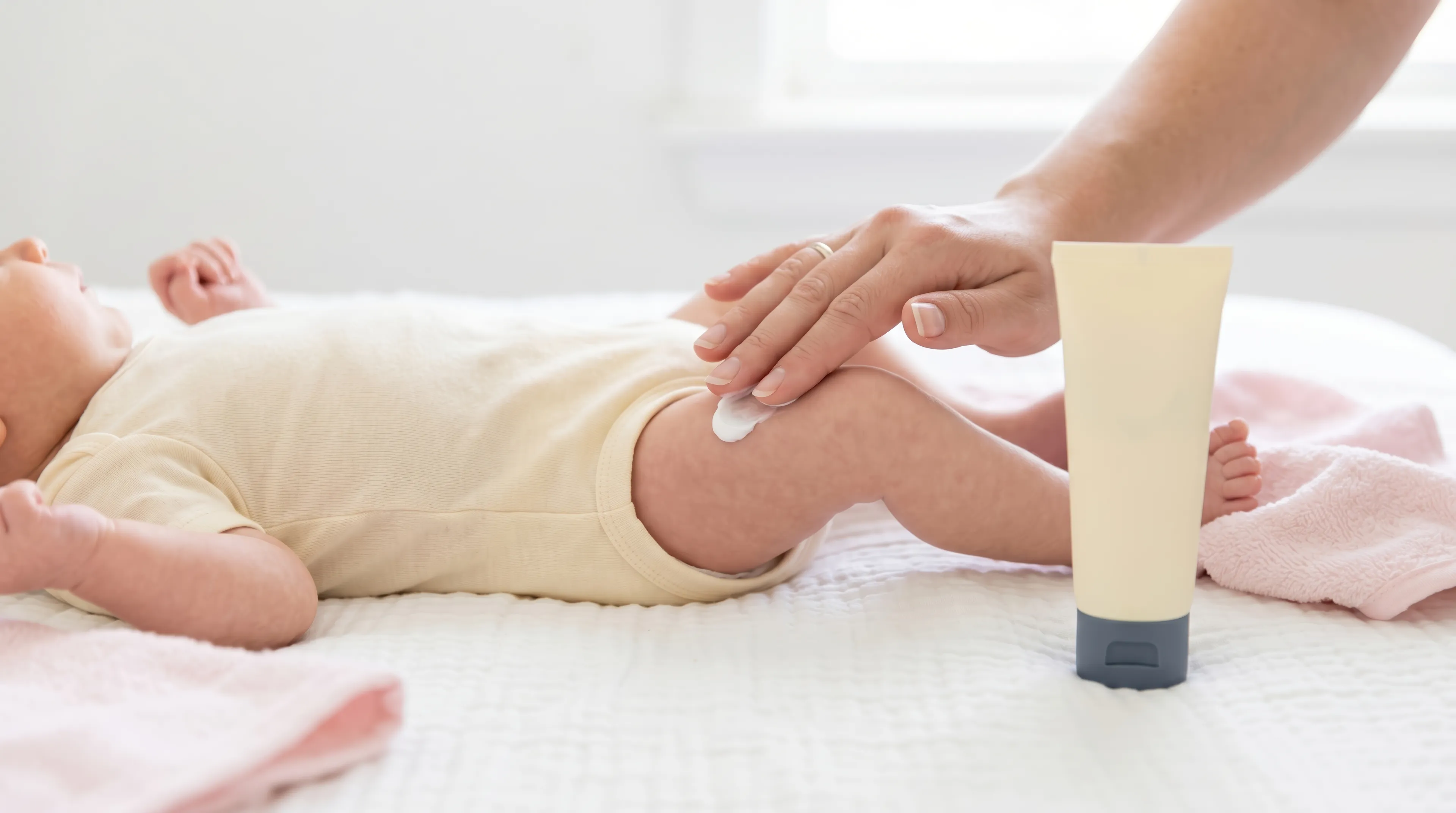
Step 3: Apply barrier cream. Apply a generous layer of a zinc oxide or petrolatum-based barrier product to cover the affected skin. If the existing layer is not soiled, you do not need to scrub it completely away before applying more.

Step 4: Allow some diaper-free time. Brief periods without a diaper can allow the skin to dry, provided your baby is kept somewhere safe and comfortably warm.

Step 5: Change soiled diapers promptly. During an active rash, pay particular attention to keeping stool and urine from remaining against the skin for prolonged periods.

Mild diaper rashes often begin to improve within a few days when these measures are followed consistently. The American Academy of Pediatrics recommends contacting your child's doctor if the rash is not going away or is getting worse after two to three days of treatment.

Home remedies should not replace appropriate barrier care or medical treatment when a rash is persistent, severe or appears infected.

Contraindications: When Not to Use a Rash Cream?

Barrier products are commonly used for diaper rash, but some situations require medical assessment rather than continued self-treatment.
  • Broken or bleeding skin. Raw or bleeding skin may need assessment, particularly if the area is worsening or showing signs of infection. Avoid vigorous rubbing when cleaning the area.
  • Suspected yeast infection. Zinc oxide and petrolatum can protect the skin but do not treat Candida. If the rash has features suggestive of a yeast infection, your paediatrician may recommend an appropriate antifungal treatment.
  • Known allergy to an ingredient. If your baby has previously reacted to a cream, stop using that product and check its ingredients before trying another one. Do not deliberately apply a suspected allergen to test the reaction.
  • Blistered or pustular rash. Blisters, pustules, open sores, yellow crusting or oozing may indicate an infection or another skin condition and should be assessed by a healthcare professional.

Products containing medicinal ingredients such as antifungals, corticosteroids or antibiotics should be used for a newborn only according to appropriate medical advice.

When to See a Doctor?

Some diaper rashes need medical assessment rather than continued home treatment. Contact your paediatrician if you notice:

  • Fever alongside the rash
  • Blisters, open sores, significant bleeding or peeling skin
  • Pus, yellow crusting, oozing or rapidly spreading redness
  • A rash that extends beyond the usual diaper area
  • A rash that is not improving or is getting worse after two to three days of appropriate care
  • A rash that is particularly painful or accompanied by unusual changes in your baby's behaviour
  • A newborn younger than one month with a rash that looks infected or develops blisters or grouped pimples

The American Academy of Pediatrics recommends medical review when a diaper rash does not improve or worsens after two to three days, or when there are blisters, pus-filled lesions, open sores, fever or other signs of infection.

Important Safety Information: Newborn skin can be particularly sensitive, so choose simple, fragrance-free products and follow the manufacturer's directions. If your baby is in the first few weeks of life and develops a persistent, severe or unusual rash, consult your paediatrician rather than repeatedly trying different medicated creams. Report adverse events to your healthcare provider or the relevant regulatory authority.

Conclusion

Most diaper rashes can be managed initially by reducing prolonged contact with urine and stool, cleaning the area gently, keeping the skin dry and using a suitable barrier cream. Zinc oxide and petrolatum are established barrier ingredients that can help protect irritated skin.

However, not every diaper rash has the same cause. A rash that persists, worsens, spreads or develops blisters, pus, open sores or fever may need medical assessment. If you are unsure whether your newborn's rash is a simple irritant rash or something that requires treatment, consult your paediatrician.

FAQs

Which cream is best for newborn diaper rash?

Barrier creams containing zinc oxide or petrolatum are commonly used for preventing and managing mild diaper rash. The American Academy of Pediatrics recommends zinc oxide and petrolatum as barrier ingredients. The appropriate product depends on your baby's skin and the severity of the rash.

Can I use a normal moisturiser for diaper rash?

Regular moisturisers are not necessarily designed to protect the diaper area from prolonged contact with moisture and stool. A dedicated barrier product containing ingredients such as zinc oxide or petrolatum may provide more appropriate protection.

Is coconut oil good for diaper rash?

Coconut oil is sometimes used as a home remedy for diaper-area irritation, but evidence for its effectiveness is more limited than the established use of barrier ingredients such as zinc oxide and petrolatum. If your baby already has a significant or persistent rash, speak with your paediatrician rather than relying on coconut oil alone.

How often should I apply diaper rash cream?

Barrier cream can be applied during diaper changes to protect irritated skin. The American Academy of Pediatrics recommends applying a generous layer of barrier paste and adding more during subsequent changes if the existing layer is not soiled, rather than scrubbing the skin each time.

Can diaper rash cream cause an allergic reaction?

Yes, although reactions to barrier creams are uncommon. Fragrances, preservatives and other ingredients can cause contact reactions in some babies. If your baby's redness or irritation consistently appears or worsens after using a particular product, stop using it and speak with your paediatrician.

Apollo 247 Floating Action Button