logo
0

Diaper Rash Cream Guide: Causes, Treatment & Best Picks

Learn how to choose and use diaper rash cream, including zinc oxide concentration, prevention tips, treatment options and signs that your baby needs medical advice.

article image

Dr.Ezhilrasan

Diaper rash is irritation or inflammation of the skin covered by a diaper. It commonly develops when delicate skin is exposed to urine, stool, moisture or friction for too long. Most mild cases can be managed with regular diaper changes, gentle cleaning and a suitable barrier cream.

This guide explains the common diaper rash causes, how diaper rash cream works, which ingredients to look for, how to apply it correctly and when medical treatment may be needed. It also explains how to use zinc oxide creams safely and what to know about steroid or antifungal creams for babies.

What Causes Diaper Rash?

Diaper rash commonly develops when the skin remains in contact with moisture, urine or stool for prolonged periods. Friction from the diaper can further damage the skin barrier. Frequent stools or diarrhoea can increase the risk because stool contains substances that can irritate the skin.

Common diaper rash causes include:

  • Prolonged moisture: Leaving a wet or soiled diaper on for too long can irritate delicate skin.
  • Stool exposure: Frequent bowel movements or diarrhoea can increase contact between stool and the skin.
  • Friction: A diaper that is too tight or rubs repeatedly against the skin can cause irritation.
  • Skin irritants: Fragranced wipes, soaps, detergents and some skincare products may irritate sensitive skin.
  • Dietary changes: Starting solid foods can change stool consistency and frequency, which may contribute to irritation.
  • Medicines: Antibiotics and some other medicines can alter bowel habits or increase the likelihood of certain types of diaper rash.
  • Infection: Fungal infections, particularly Candida, can sometimes develop in the diaper area.

Most diaper rashes are irritant contact dermatitis rather than an allergy. However, a healthcare professional may need to assess a persistent or unusual rash to identify the underlying cause.

How to Identify Diaper Rash vs Other Skin Conditions?

Typical irritant diaper rash causes flat or mildly raised pink or red patches on areas of skin that come into contact with the diaper. The skin folds may remain relatively clear because they have less direct contact with urine and stool.

Some features may suggest a different cause:

  • Possible fungal infection: The rash may be bright red, have relatively well-defined edges and include small spots or bumps around the main area of redness. Skin folds may also be affected.
  • Possible bacterial infection: Blisters, pus, yellow crusting, marked swelling, increasing warmth, or rapidly worsening redness may indicate infection.
  • Possible contact reaction: A reaction may occur after introducing a particular diaper, wipe, cream or other product and may affect areas where that product has been applied.

These features do not confirm the cause on their own. If the rash is severe, persistent or unusual, consult your doctor rather than treating it repeatedly with different products.

How Zinc Oxide Cream Works for Diaper Rash

Zinc oxide is a common active ingredient in diaper rash creams. It forms a protective barrier over the skin, helping reduce contact with moisture and irritants while the skin heals.

Zinc oxide formulations are available in different concentrations. Products may commonly contain approximately 10% to 40% zinc oxide, although the concentration varies between formulations. Lower concentrations may be used for routine skin protection, while more concentrated barrier pastes may be used when stronger protection is needed for irritated skin.

A higher concentration is not automatically better for every baby. The appropriate product depends on the condition of the skin and the formulation. Follow the product instructions and ask a pharmacist or doctor if you are unsure which strength is appropriate.

Zinc oxide works mainly as a physical barrier rather than as an infection treatment. It should not be used as a substitute for medical treatment when a fungal or bacterial infection is suspected.

How Do You Choose the Right Diaper Rash Cream?

The right diaper rash cream depends on your baby's skin condition and the ingredients in the product. Barrier creams containing zinc oxide or petroleum-based ingredients are commonly used to protect skin from moisture and irritation.

When choosing a product, consider:

  • Zinc oxide: Products commonly contain around 10% to 40% zinc oxide. Follow the manufacturer's instructions rather than assuming that a higher concentration is always more effective.
  • Petrolatum: Petroleum-based products can form a protective barrier and may be useful for preventing moisture-related irritation.
  • Dimethicone: This ingredient may also help form a protective barrier over the skin.
  • Fragrance-free formulation: Fragrance-free products may be preferable for babies with sensitive skin.
  • Age suitability: Check that the product is suitable for your baby's age and follow the directions on the label.
  • Known allergies: Check the ingredient list if your baby has previously reacted to a skincare product.

When looking for the best diaper rash cream for newborn babies, there is no single product that is suitable for every child. A simple, fragrance-free barrier cream may be appropriate for mild irritation, while persistent or severe rashes may need medical assessment.

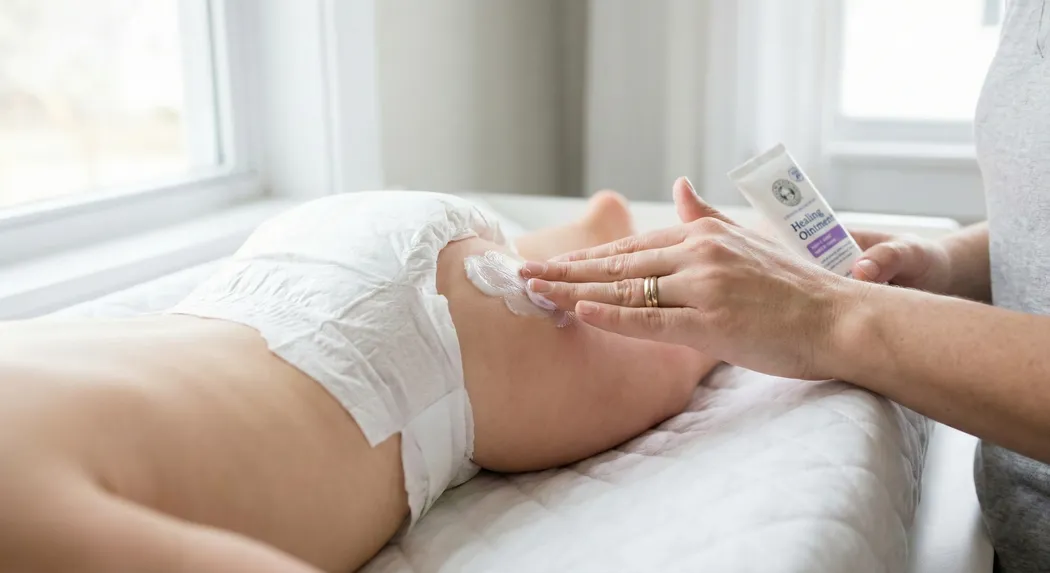
How to Apply Diaper Rash Cream Correctly?

Applying a diaper rash cream correctly can help protect irritated skin without causing additional friction.

Follow these steps during a diaper change:

  1. Remove the soiled diaper: Dispose of it safely and clean the area gently.
  2. Clean the skin: Use warm water and a soft cloth or suitable fragrance-free, alcohol-free wipes. Avoid vigorous rubbing.
  3. Dry gently: Pat the skin dry and allow it to air-dry briefly when practical.
  4. Apply the cream: Apply an appropriate layer of barrier cream according to the product instructions. For an active rash, a visible protective layer may be useful.
  5. Fasten a clean diaper: Make sure the diaper fits comfortably without being too tight.

If the cream has not been heavily soiled, you do not need to scrub all of it away at every diaper change. Gently clean away stool and any visibly soiled cream, then reapply as directed. Vigorous rubbing can further irritate damaged skin.

For prevention, the frequency of barrier cream use depends on the product and your baby's skin. Follow the manufacturer's instructions or advice from your pharmacist or doctor.

Can Steroid Creams Be Used for Diaper Rash?

Mild topical corticosteroids, such as hydrocortisone 1%, may sometimes be recommended by a doctor or pharmacist for a short period when inflammation is significant and simple barrier care has not been enough. They are not a routine first-line treatment for uncomplicated diaper rash.

Because a diaper creates a warm, occluded environment, medicines applied underneath it can be absorbed more readily through the skin. Babies also have more delicate skin than adults. Unnecessary or prolonged use of topical steroids can therefore increase the risk of adverse effects, including skin thinning.

If a healthcare professional recommends hydrocortisone for your baby:

  • Use only the recommended strength: Do not substitute a stronger steroid cream.
  • Apply a thin layer: Use only enough to cover the affected skin.
  • Use it for the shortest appropriate period: Do not continue treatment longer than advised.
  • Do not self-treat young infants: In newborns and very young babies, seek professional advice before using a topical steroid.
  • Do not use it for suspected infection without medical advice: Steroids can worsen or mask some fungal or bacterial skin infections.
  • Follow professional instructions: Do not cover the treated area with additional occlusive dressings unless specifically advised.

If the rash is not improving with appropriate barrier care, consult your doctor rather than starting a steroid cream on your own.

When Should Antifungal or Other Medicated Creams Be Used?

Not every diaper rash needs a medicated cream. If a fungal infection such as Candida is suspected, your doctor may recommend an antifungal treatment. The choice of medicine depends on your baby's age, the appearance of the rash and the clinical assessment.

Antibiotic creams should not be used routinely for ordinary diaper rash. Bacterial infections require appropriate medical assessment and treatment.

Avoid combining several medicated creams without professional advice. Using multiple products can make the skin more irritated and may make it harder to identify the cause of a reaction.

If you are unsure whether your baby's rash is simple irritation or an infection, consult your doctor or pharmacist before starting a medicated treatment.
What Precautions Should You Take With Diaper Rash Cream?

Even commonly used barrier creams need to be used appropriately, particularly on newborn skin.

  • Broken or bleeding skin: Consult your doctor before applying products to deeply broken, bleeding or severely damaged skin.
  • Possible allergic reaction: Stop using a product and seek medical advice if your baby develops hives, significant swelling or worsening irritation after application.
  • Medicated creams: Do not use steroid, antifungal or antibiotic creams without appropriate professional advice.
  • Talcum powder: Avoid talcum powder because airborne particles can be inhaled by babies.
  • Multiple products: Avoid layering several medicated or fragranced products unless advised by a healthcare professional.
  • Persistent rash: If the rash does not improve or repeatedly returns, seek medical assessment rather than continuing to change creams.
  • Product ingredients: Check the label if your baby has a known sensitivity or previous reaction to a particular ingredient.

If you experience a suspected side effect from a medicine, inform your healthcare professional and report it through the appropriate adverse drug reaction reporting system.

If your baby develops an unexpected reaction after using a diaper, wipe or skincare product, stop using the suspected product and seek medical advice.

How Can You Prevent Diaper Rash?

Simple and consistent diaper care can reduce prolonged exposure to moisture, stool and friction.

  • Change diapers promptly: Change wet or soiled diapers as soon as possible.
  • Clean gently: Use warm water or suitable fragrance-free, alcohol-free wipes and avoid vigorous rubbing.
  • Keep the skin dry: Pat the skin dry after cleaning and allow some diaper-free time when practical.
  • Use a barrier cream: A suitable barrier cream can help protect the skin from moisture. Follow the product instructions for application.
  • Check the fit: Make sure the diaper fits securely without pressing tightly against your baby's skin.
  • Choose suitable products: Fragrance-free products may be preferable for babies with sensitive skin.
  • Use absorbent diapers: A suitable absorbent diaper can help reduce prolonged contact between urine and the skin.

When introducing solid foods, changes in stool consistency or frequency can sometimes increase irritation. Introduce new foods appropriately and monitor your baby's skin and bowel habits.

When Should You See a Doctor for Diaper Rash?

Most mild diaper rashes improve with regular diaper changes, gentle cleaning, keeping the area dry and appropriate barrier protection. However, some rashes need medical assessment or specific treatment.

Consult your doctor if:

  • The rash persists: It does not improve after a few days of appropriate home care or continues to worsen.
  • The rash spreads: Redness or irritation extends beyond the usual diaper area.
  • The skin is broken: There are open sores, significant skin breakdown or bleeding.
  • There are signs of infection: You notice pus, yellow crusting, blisters, marked swelling or rapidly worsening redness.
  • Your baby has a fever: A fever occurs alongside the rash.
  • Your baby seems unwell: Your baby appears unusually distressed, lethargic or unwell.
  • A fungal infection is suspected: The rash remains persistent despite appropriate barrier care or has features that may indicate a fungal infection.

A doctor can determine whether the rash is caused by irritation, an allergy, a fungal or bacterial infection or another skin condition and recommend appropriate treatment.

Conclusion

Diaper rash is common, but regular diaper changes, gentle cleaning, a comfortable diaper fit and suitable barrier protection can help prevent and manage mild irritation. Zinc oxide and petroleum-based products can provide a protective barrier, and zinc oxide formulations commonly range from about 10% to 40%.

If your baby's rash does not improve, becomes more severe, spreads beyond the diaper area or is accompanied by fever or other signs of illness, consult your doctor. Avoid starting steroid, antifungal or antibiotic creams without appropriate professional advice, particularly in newborns and very young babies.

FAQS

Which cream is best for diaper rash?

Barrier creams containing zinc oxide or petroleum-based ingredients are commonly used to protect irritated skin from moisture. Zinc oxide products are available in different concentrations, commonly around 10% to 40%. The most suitable product depends on your baby's skin and the specific formulation, so follow the product instructions or ask a pharmacist for guidance.

Can I use zinc oxide cream at every diaper change?

Zinc oxide cream can be used during diaper changes when appropriate, particularly when your baby has diaper rash. Follow the product instructions for how often to apply it. If your baby's skin is healthy, a barrier product may be used for protection when needed rather than automatically applying a thick layer at every change.

Can hydrocortisone 1% be used for diaper rash?

Hydrocortisone 1% may sometimes be recommended for significant inflammation when barrier care alone has not helped, but it should be used on an infant only with appropriate medical or pharmacy advice. Apply only a thin layer for the shortest period recommended. Do not use stronger steroids or continue treatment without review, and seek medical advice if an infection is suspected.

How long does diaper rash take to heal?

Mild irritant diaper rash often starts improving within a few days when moisture and friction are reduced, and appropriate barrier protection is used. If the rash does not improve, becomes worse, spreads or develops blisters, sores, discharge or other concerning features, consult your doctor.

Can diaper rash cream cause side effects?

Side effects are uncommon when a suitable product is used as directed, but some babies may react to particular ingredients. Stop using the product and seek medical advice if your baby develops worsening redness, swelling, hives or another unexpected reaction after application.

Apollo 247 Floating Action Button