logo
0

Diaper Rash: Symptoms, Treatment and Prevention

Learn about diaper rash in babies, including common symptoms, causes, treatment options, prevention tips, skin care and when to consult a doctor.

article image

Dr.Nallapu Siri

Diaper rash is one of the most common skin concerns parents face in the first few years of a baby's life. It causes redness, irritation, and discomfort in the diaper area and can appear suddenly, even when you are caring for your baby carefully. Understanding what triggers it, how to spot it early, and which treatments actually help can make a real difference for your little one.

<Explore Diaper Rash Creams>

What Is Diaper Rash?

Diaper rash is an inflammation of the skin in the area covered by a diaper. It typically appears as red, tender-looking patches on a baby's bottom, genitals, or inner thighs. Almost every baby experiences it at least once, with infants between 9 and 12 months being most commonly affected, though it can occur at any age while a baby is in diapers.

Most cases are mild and clear up within a few days with basic home care. Knowing the difference between a simple irritation and something that needs medical attention is the most important skill a parent can develop.

Symptoms of Diaper Rash

Diaper rash commonly causes redness, irritation, and tenderness in the nappy area, with some babies also developing swelling, bumps, or areas of broken skin depending on the severity and cause.

What Does Diaper Rash Look Like?

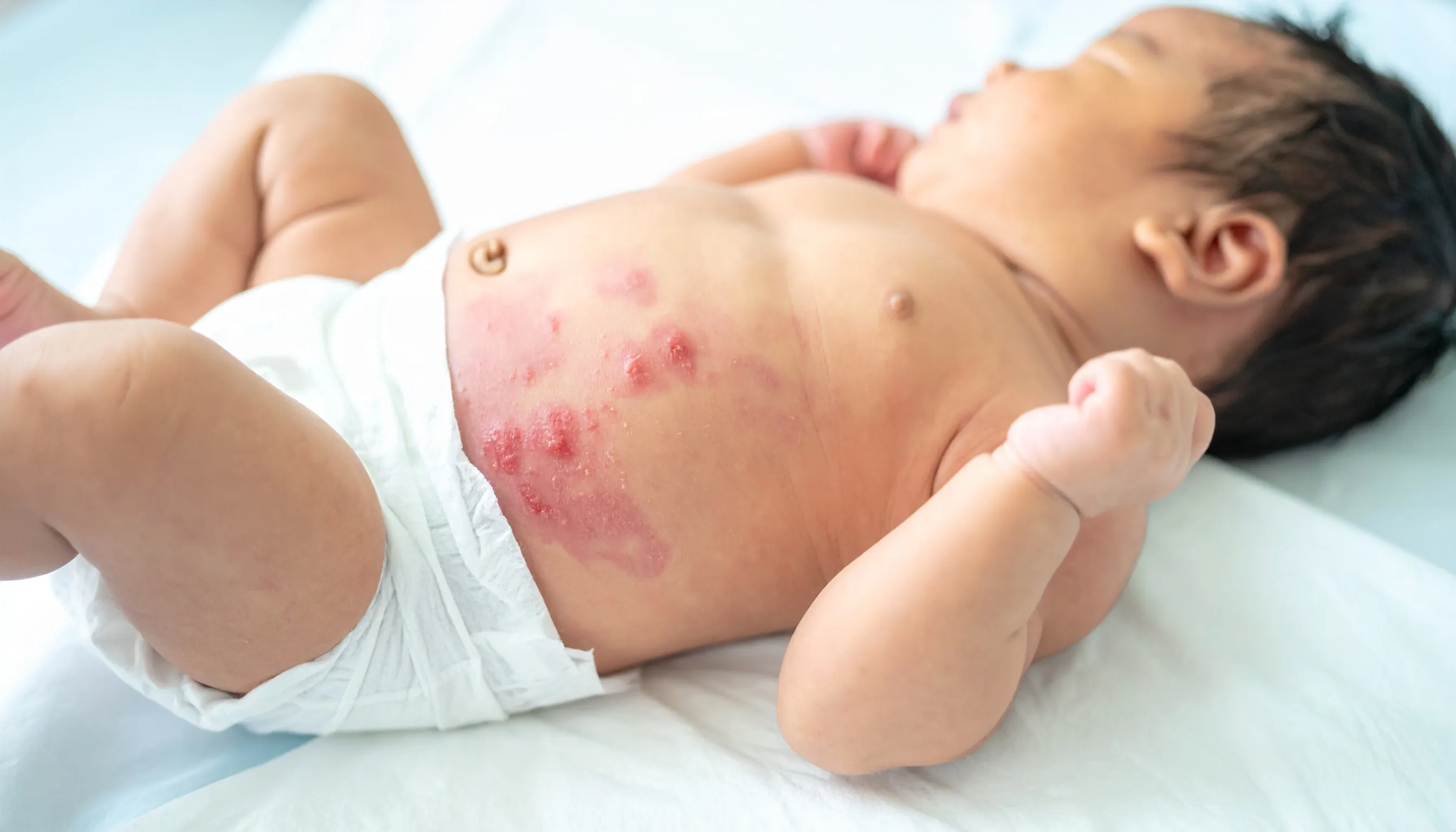
The most obvious sign is reddened, puffy skin in the diaper zone. Depending on severity, you may also notice:

  • Skin that looks raw or shiny in the creases and folds around the groin
  • Small red bumps or pimple-like spots scattered across the buttocks or thighs
  • Skin that appears slightly swollen or feels warm to the touch
  • Blisters or open sores in more severe cases

Your baby may seem fussier than usual, especially during diaper changes or when the area is touched or cleaned.

Could It Be a Fungal Rash?

A standard diaper rash tends to spare the deep skin folds. If you notice bright red patches spreading into the creases, with small red satellite spots at the edges, a yeast (candidal) infection is more likely. This type does not improve with regular barrier creams alone and needs antifungal treatment. If you are unsure, a paediatrician can tell the difference quickly.

Causes and Risk Factors

Diaper rash can develop when a baby’s delicate skin is exposed to moisture, friction, irritants, or infection, with certain feeding, hygiene, and health factors increasing the risk.

What Causes Diaper Rash?

Several things can irritate a baby's sensitive skin under a diaper:

  • Prolonged contact with wet or soiled diapers is the single most common trigger
  • Friction from the diaper rubbing against the skin during movement
  • Introducing new foods, which changes stool composition and increases frequency
  • Starting antibiotics, which can alter gut bacteria and make stools more irritating, or directly promote yeast overgrowth
  • Wipes, detergents, or diaper brands containing fragrances or harsh chemicals
  • A yeast or bacterial infection taking hold in the warm, moist environment

Why Does It Keep Coming Back?

Some babies have naturally sensitive skin and are prone to repeated flare-ups. Teething, illness, or any change in diet can bring on a new episode. Diaper rash in newborns is also common simply because their skin is still adapting to life outside the womb. Reviewing your routine, the products you use, and how often you change diapers usually uncovers the pattern. For broader newborn skin and hygiene care tips, Apollo's newborn care guide covers the basics that support healthy skin from the start.

Treatment Options for Diaper Rash

Diaper rash can often be managed with gentle skin care, frequent nappy changes, and protective barrier creams, while persistent or severe rashes may require treatment recommended by a healthcare professional.

How to Treat Diaper Rash at Home?

The first step is keeping the area clean and dry. At every diaper change:

  • Gently clean with warm water or unscented, alcohol-free wipes.
  • Pat dry rather than rubbing. Let the skin air-dry for a few minutes if possible.
  • Apply a thick layer of barrier cream before putting on a fresh diaper.

Choosing a Diaper Rash Cream

Barrier creams form a protective layer between your baby's skin and moisture. Look for products containing zinc oxide or petrolatum (white soft paraffin) as the active ingredient. These are the most evidence-supported options for mild to moderate diaper rash.

  • Zinc oxide creams sit on the skin surface and physically block moisture and irritants.
  • Petrolatum-based ointments are gentler on very raw skin and easier to apply without rubbing.

Apply the cream generously. A thin smear is not enough. The goal is a visible white coating that stays in place until the next change.

For general wound and skin care basics relevant to minor skin irritations, Apollo's resource library has practical guidance that complements diaper rash home care.

When Home Treatment Is Not Enough?

Mild cases should respond within two to three days of consistent care. If the rash is not improving, a doctor may prescribe a short course of topical antifungal cream for a yeast infection, or, rarely, a low-potency corticosteroid for a stubborn irritant rash. Never apply prescription steroid creams without medical advice.

Report adverse events to your healthcare provider or the relevant regulatory authority.

When to See a Doctor?

Most diaper rash resolves at home, but contact your paediatrician promptly if:

  • The rash has not improved after 2 to 3 days of diaper rash treatment at home
  • Fever is present alongside the rash
  • You see pus, oozing, or yellow crusting
  • The rash is spreading beyond the diaper area onto the abdomen or upper thighs
  • Your baby is in significant pain or refusing feeds
  • Blisters, open sores, or bleeding are present

For diaper rash in newborns under one month old, call your doctor early rather than waiting to see if it clears.

Contraindications and Precautions

Most cases of diaper rash can be managed with gentle skin care, but certain symptoms or underlying conditions may require additional precautions and medical evaluation.

Are Diaper Rash Creams Safe for All Babies?

Most zinc oxide and petrolatum-based barrier creams are considered safe for routine use. However, there are important caveats:

  • Topical corticosteroid creams should not be used in the diaper area without a doctor's prescription. The diaper acts like an occlusive dressing, dramatically increasing absorption and raising the risk of skin thinning and systemic side effects.
  • Talcum powder is not recommended for babies. Inhaling fine particles poses a real respiratory risk.
    Products containing boric acid, camphor, phenol, or salicylates are unsafe for infant skin and must be avoided entirely.
  • If your baby has a known allergy to any ingredient in a cream, check the label carefully or ask a pharmacist before use.
  • Babies with very sensitive or broken skin may react to preservatives in some formulations. Plain petrolatum is often the safest starting point in those cases.

When in doubt about which product suits your baby, a paediatrician or pharmacist can guide you based on your baby's specific history.

How to Prevent Diaper Rash?

Prevention is mostly about routine. A few consistent habits make a significant difference:

  • Change diapers frequently, ideally every two to three hours and immediately after any bowel movement, even at night if the baby wakes.
  • Give the skin some air time each day. Laying your baby on a waterproof mat without a diaper for 10 to 15 minutes allows the skin to breathe.
  • Use fragrance-free, alcohol-free wipes or plain warm water with cotton wool for cleaning.
  • Make sure the diaper fits correctly. One that is too tight creates friction; one that is too loose allows stool to spread.
  • Apply a thin layer of barrier cream at every change as a preventive measure, not just when redness appears.
  • When introducing new solid foods, introduce one at a time and watch for any increase in rash frequency that might point to a specific food trigger.
  • If your baby is on antibiotics, consider applying barrier cream more consistently throughout the course, as the risk of yeast overgrowth is higher during this period.

Conclusion

Diaper rash is a common skin problem in babies and is often caused by prolonged exposure to moisture, urine or stools, friction or irritation from products. Keeping the nappy area clean and dry, changing nappies regularly and using suitable barrier creams can help manage and prevent mild rashes. If the rash is severe, spreads, develops blisters or sores, appears infected, or does not improve with home care, seek medical advice. A paediatrician can help identify the underlying cause and recommend appropriate treatment.

FAQS

How long does diaper rash last?

With consistent home care, most mild cases clear up within two to three days. Severe or fungal rashes may take up to a week or longer, particularly if they require prescription treatment.

Is coconut oil good for diaper rash?

Coconut oil has mild moisturising and antibacterial properties, and many parents find it helpful for very mild redness. It is not a substitute for zinc oxide or petrolatum-based creams in moderate or persistent cases.

Can diaper rash spread to other body parts?

A straightforward irritant rash stays within the diaper zone. If you notice the rash spreading to the abdomen, back, or skin folds elsewhere on the body, it may indicate a yeast or bacterial infection that needs medical attention.

What is the fastest home remedy for diaper rash?

Keeping the area clean, dry, and covered with a thick zinc oxide barrier cream at every change is the most effective home approach. Letting the skin air-dry for a few minutes before applying cream speeds recovery noticeably.

Do cloth diapers cause less diaper rash than disposable ones?

The evidence is mixed. Modern disposables with absorbent cores keep skin drier than older designs, which may reduce rash risk. Cloth diapers, if changed very frequently and washed without harsh detergents, can also work well. The quality of the changing routine matters more than the diaper type.

Apollo 247 Floating Action Button