logo
0

Diapers Buying Guide: Best Types & Brands in India

Learn how to choose the right diaper for your baby based on size, fit, absorbency and skin comfort. Compare diaper types and brands and find practical tips for preventing diaper rash.

article image

Dr.Rohini priyanaka

Choosing the right diaper can help keep your baby's skin clean, dry and comfortable. The right size and fit can also reduce leakage and rubbing against the skin.

With different diaper styles, sizes and brands available, choosing a product can feel confusing. This guide explains the main types of diapers, how to choose the right size and fit, what to compare when selecting a brand, and how to help prevent diaper rash.

Types of Diapers Available in India

You can choose from several types of diapers. The right option depends on your baby's age, development, skin and your family's needs.

Tape-Style Diapers

Tape-style diapers have fastening tabs on both sides. You can adjust the fit around your baby's waist, which can make them convenient during the newborn period and when your baby is lying down during a diaper change.

During the first few weeks, keep the diaper edge below the umbilical cord stump so it does not rub against the area. For guidance on caring for the stump, see newborn umbilical cord care while diapering.

Pant-Style Diapers

Pant-style diapers have an elasticated waistband and leg openings and pull on like underwear. They can be convenient as your baby becomes more active and starts crawling, standing or walking.

Check the weight range on the pack when choosing a pant-style diaper. You can switch when the style fits your baby comfortably and meets your changing needs.

Cloth Diapers

Cloth diapers are reusable and come in different designs, including options with absorbent inserts and waterproof outer layers.

You need to wash cloth diapers thoroughly after each use and allow them to dry completely before using them again. They may suit families who prefer reusable products and have reliable access to laundry facilities.

Overnight or Highly Absorbent Diapers

Some diapers have a more absorbent design for periods when your baby sleeps for longer. However, an absorbent diaper does not mean that you should leave a wet or soiled diaper on for a fixed number of hours.

Check your baby's diaper regularly. Change it when it is wet or uncomfortable, and change a soiled diaper promptly. If your baby is sleeping comfortably with a wet diaper, you do not usually need to wake them solely for a diaper change unless your healthcare professional has advised you to do so.

How to Choose the Right Diaper Size and Fit

A good fit helps reduce leakage, rubbing and pressure on your baby's skin. Start with your baby's current weight, then check how the diaper fits around the waist and legs.
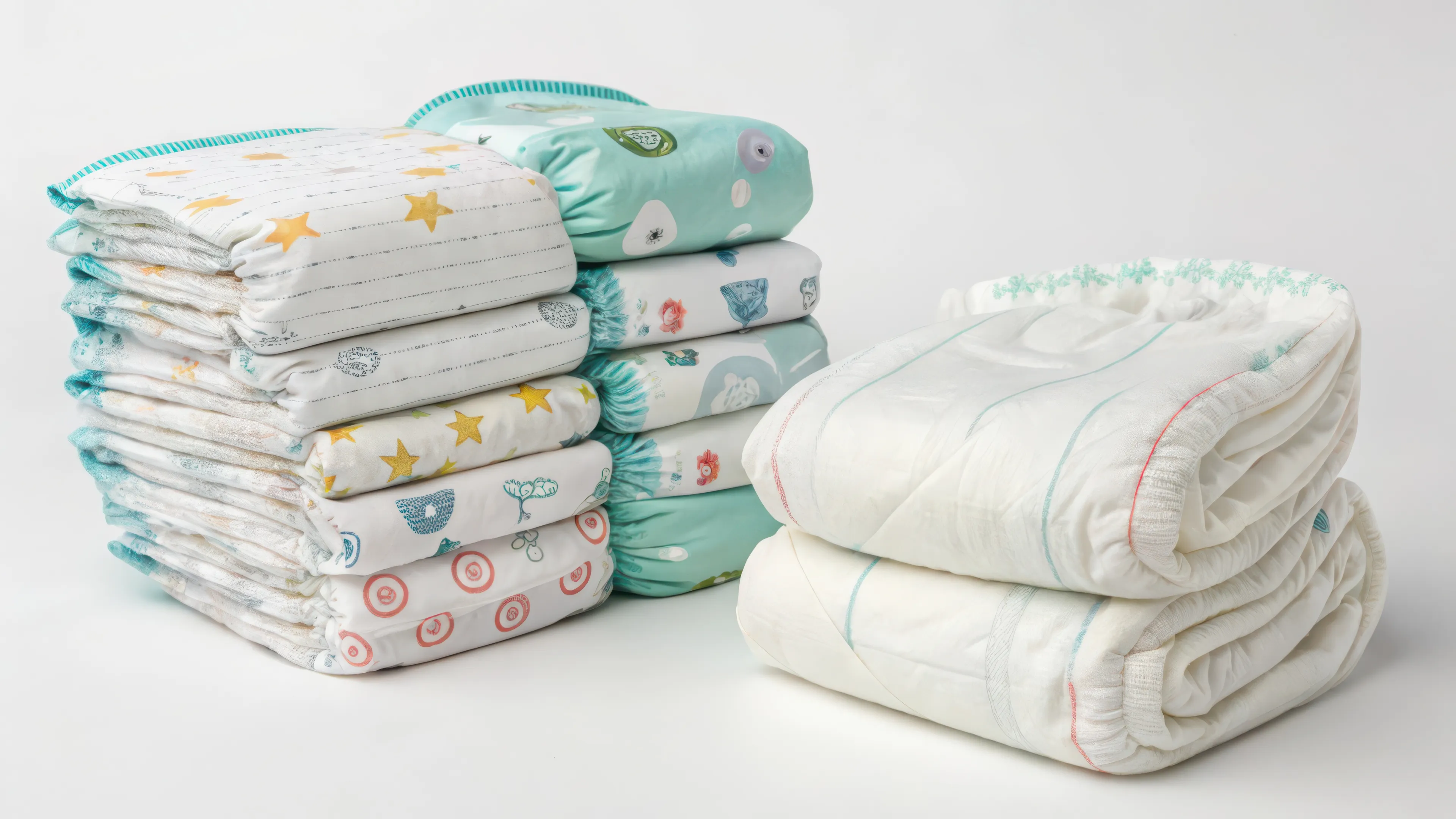
Weight-Based Sizing

Diaper sizes vary between brands. Check the weight range printed on the pack when choosing a size.

The ranges below can help you understand how diaper sizes are commonly labelled. Check the individual pack before buying because the weight ranges may differ between brands.

SizeExample weight range
Newborn / NBUp to 5 kg
Small / S4 to 8 kg
Medium / M7 to 12 kg
Large / L9 to 14 kg
XL / XXL12 kg and above

If your baby's weight falls within an overlapping range, check how the diaper fits rather than choosing a size based only on weight. Frequent leakage, tightness or marks on the skin may mean that you need to try another size.

Signs the Fit Is Wrong

Check the fit after putting on a fresh diaper. Look for:

  • Red marks or deep indentations around the waist or thighs after you remove the diaper
  • Frequent leakage around the legs or back
  • Gaps around the leg openings
  • The diaper sitting too low or not covering your baby's bottom properly
  • Rubbing or chafing around the waist or thighs

The diaper should sit securely around your baby's waist and legs without pressing into the skin. After fastening a tape-style diaper, make sure the leg cuffs sit around the legs rather than being tucked in.

Comparing Top Diaper Brands in India

Diaper brands in India offer different styles, sizes and features. Compare the product details that matter for your baby, then check the individual pack for the features available in the specific variant.

BrandCommon price positioningCommonly available optionsWhat to compare
PampersMid-range to premiumTape-style and pant-style diapersSize, fit, absorbency and features of the specific variant
HuggiesMid-range to premiumTape-style and pant-style diapersSize, fit, absorbency and materials of the specific variant
MamyPokoMid-range to premiumPant-style and other diaper optionsSize, fit, absorbency and features of the specific variant
Bella Baby HappyMid-rangeDisposable diaper optionsSize, fit, materials and absorbency
SupplesBudget to mid-rangeDisposable and pant-style optionsSize, fit, absorbency and price per diaper
LuvLapBudget to mid-rangeDisposable diaper optionsSize, fit, materials and absorbency

Prices and product features can vary by variant, pack size and retailer. Check the product packaging for the current details before buying.

If you are trying a new brand, consider buying a smaller pack first. A diaper that fits one baby well may not fit another baby in the same weight range in the same way.

If your baby has sensitive skin, you may prefer a fragrance-free product. However, terms such as “hypoallergenic” or “gentle” do not guarantee that a product will suit every baby.

Diaper Rash: Causes, Prevention and When to See a Doctor

Diaper rash can develop when moisture, stool, friction and contact with irritating substances affect the skin. A poorly fitting diaper can also increase rubbing and irritation.

Choosing a well-fitting diaper is only one part of protecting your baby's skin. Regular diaper changes, gentle cleaning and careful skin care also help.

Common Causes

Diaper-area irritation can be associated with:

  • Prolonged contact with urine or stool
  • Friction from a tight or poorly fitting diaper
  • Irritation from wipes, soaps, fragrances or other products
  • Frequent loose stools or diarrhoea
  • Changes in bowel movements
  • Antibiotic treatment, which can sometimes be associated with changes in the organisms living on the skin

A rash that does not improve or keeps returning may have another cause and may need medical assessment.

How Can You Help Prevent Diaper Rash?

You can help protect your baby's skin with these steps:

  • Check the diaper regularly and change it when it is wet or soiled.
  • Change a soiled diaper promptly to reduce contact between stool and the skin.
  • Clean your baby's skin gently with water and cotton or suitable baby wipes.
  • Pat the skin dry rather than rubbing it.
  • Apply a barrier cream if your baby is prone to irritation or if your healthcare professional recommends one.
  • Avoid talcum powder and avoid medicated creams unless a healthcare professional recommends them.
  • Make sure the diaper fits without rubbing or leaving deep marks.
  • Give your baby's skin some time without a diaper when practical, particularly if the skin is irritated.

You can also read this Apollo resource on treating minor skin irritation or wounds for information about minor skin irritation.

When Should You See a Doctor?

Mild diaper-area redness may improve with gentle skin care and regular diaper changes. Speak to your paediatrician if the rash does not improve, keeps returning or becomes worse.

Seek medical advice if you notice:

  • Blisters, open sores, bleeding or significant skin damage
  • Pus, marked swelling or increasing redness
  • A rash that spreads beyond the diaper area
  • Significant pain or discomfort
  • Fever or your baby appearing unwell
  • A rash that does not improve despite appropriate skin care

Do not assume that every persistent diaper rash is caused by the diaper. Your doctor can examine the skin and determine whether another cause or treatment needs to be considered.

Precautions When Choosing and Using Diapers

Most babies can use standard diapers. Some babies may need additional care if they have sensitive, damaged or medically fragile skin.

  • Sensitive or eczema-prone skin: If your baby develops irritation, consider a fragrance-free product and stop using products that appear to worsen the reaction.
  • Known material sensitivity: Check the product packaging for information about the materials used if your baby has a known allergy or sensitivity.
  • Broken or infected skin: If your baby's diaper-area skin is bleeding, significantly damaged or showing signs of infection, speak to your paediatrician.
  • Premature or very small newborns: Ask your neonatal or paediatric care team about diaper size and skin care if your baby's skin is particularly fragile.

Disposable diapers commonly contain absorbent materials that help retain urine. You do not need to avoid a diaper solely because it contains an absorbent gel material. If your baby develops redness or irritation after using a particular product, stop using it and speak to your healthcare professional.

Safety and Reporting

A diaper is a consumer product rather than a medicine. If your baby develops an unexpected skin reaction or you notice a problem with the product, seek medical advice when needed and contact the manufacturer using the details on the pack.

If you suspect that a diaper or diaper-care product has caused an unexpected reaction, keep the product packaging and note the product name, variant and batch or lot details if available. These details can help the manufacturer or healthcare professional assess the concern.

Diaper selection cannot replace medical assessment when your baby has persistent, severe or worsening skin symptoms. Follow your healthcare professional's advice if your baby has a skin condition or needs specialised skin care.

Conclusion

Choosing the right diaper involves more than selecting a brand. Check the weight range on the pack, make sure the diaper fits securely without rubbing, and compare the features that matter for your baby's skin and your daily routine.

Regular diaper changes and gentle skin care are just as important as the diaper you choose. If your baby's rash is persistent, severe or accompanied by other symptoms, speak to your paediatrician rather than continuing to change products without finding the cause.

FAQS

How often should you change your baby's diaper?

Check your baby's diaper regularly and change it when it is wet or soiled. Change a soiled diaper promptly. The timing varies between babies because urine and stool output, skin sensitivity and other factors differ.

Are cloth diapers better than disposable diapers?

Both can be used when you care for them correctly and keep your baby's skin clean and dry. Cloth diapers are reusable, while disposable diapers are convenient and ready to use. Your choice can depend on your baby's skin, your routine, laundry facilities and personal preference.

What size diaper does your baby need?

Start with your baby's current weight and check the weight range printed on the diaper pack. Then check the fit around the waist and legs. If the diaper leaves deep marks, causes rubbing or leaks frequently, try another size or style.

Can diapers cause rashes or allergic reactions?

Diapers can contribute to skin irritation through moisture, friction or contact with certain materials or added substances. A rash can also have other causes. If your baby develops persistent or worsening irritation, speak to your paediatrician rather than assuming the diaper is the only cause.

How long can a newborn stay in one diaper?

There is no fixed number of hours that applies to every newborn. Check the diaper regularly and change it when it is wet or soiled. Always change a soiled diaper promptly. If your newborn is sleeping comfortably with a wet diaper, you do not usually need to wake them solely for a diaper change unless your healthcare professional has given you different advice.

Apollo 247 Floating Action Button