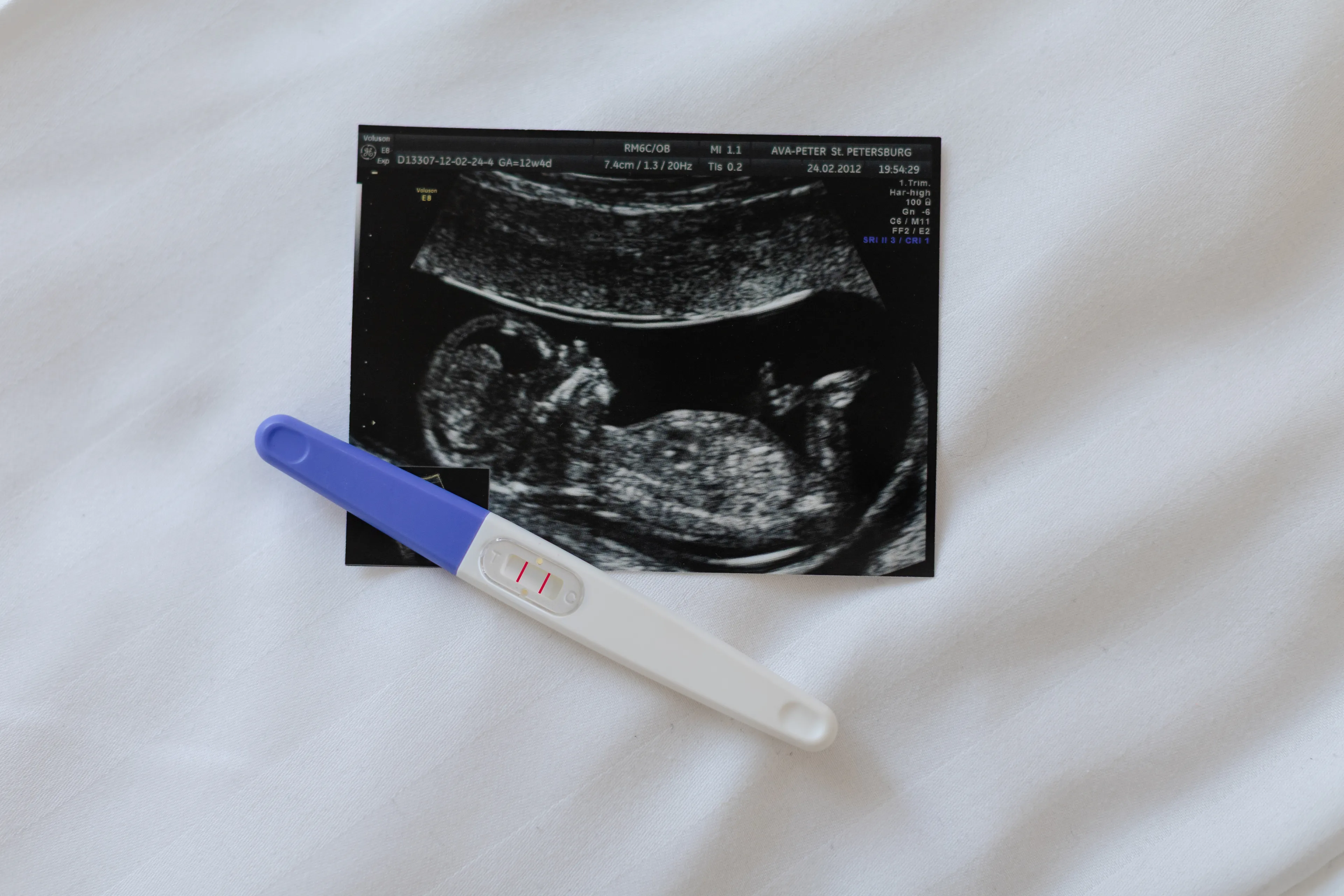
Timeline of Discharge and Other Early Pregnancy Signs
Discharge does not appear in isolation. It is part of a broader set of early pregnancy symptoms that evolve through the first trimester.
Weeks 1 to 4: Conception and Implantation
Hormonally, the body starts changing before you even miss a period. Progesterone rises after ovulation, and if fertilisation occurs, human chorionic gonadotropin (hCG) begins to be produced. You may notice slightly increased discharge around weeks 3 to 4, around the time implantation occurs. Some women also see a brief pink or brown spot at this point, along with mild pelvic cramping, breast tenderness, or a heightened sense of smell.
Weeks 4 to 6: Rising Hormones
This is when estrogen climbs more sharply, and leukorrhea typically increases noticeably. The white discharge early pregnancy sign is most likely to prompt questions during this window, because it may be heavier than what you are used to outside of pregnancy.
Nausea may begin during early pregnancy and can occur at any time of day. Symptoms vary considerably between individuals and may become more noticeable as pregnancy progresses. Fatigue can feel sudden and different from ordinary tiredness. Breasts may feel heavier or sore to touch.
Weeks 6 to 12: First Trimester Continues
Discharge generally stays consistent through the rest of the first trimester: clear to white, mild-smelling, and gradually increasing in volume. By the end of week 12, many women find they are more comfortable wearing a panty liner daily.
Nausea and fatigue are common during the first trimester, but their timing and severity vary considerably. Nausea often becomes more noticeable during the early weeks of pregnancy and may peak around the ninth week, while fatigue can persist or fluctuate throughout the first trimester. As pregnancy progresses, cervical mucus contributes to the formation of a mucus plug that helps protect the uterus from bacteria. Changes in discharge consistency can occur, but there is no need to assign a specific week when the mucus plug “fully forms.” The first trimester discharge timeline, in short, is one of gradual, steady increase rather than sudden dramatic change. Any abrupt shift in colour, smell, or consistency outside this pattern deserves attention.