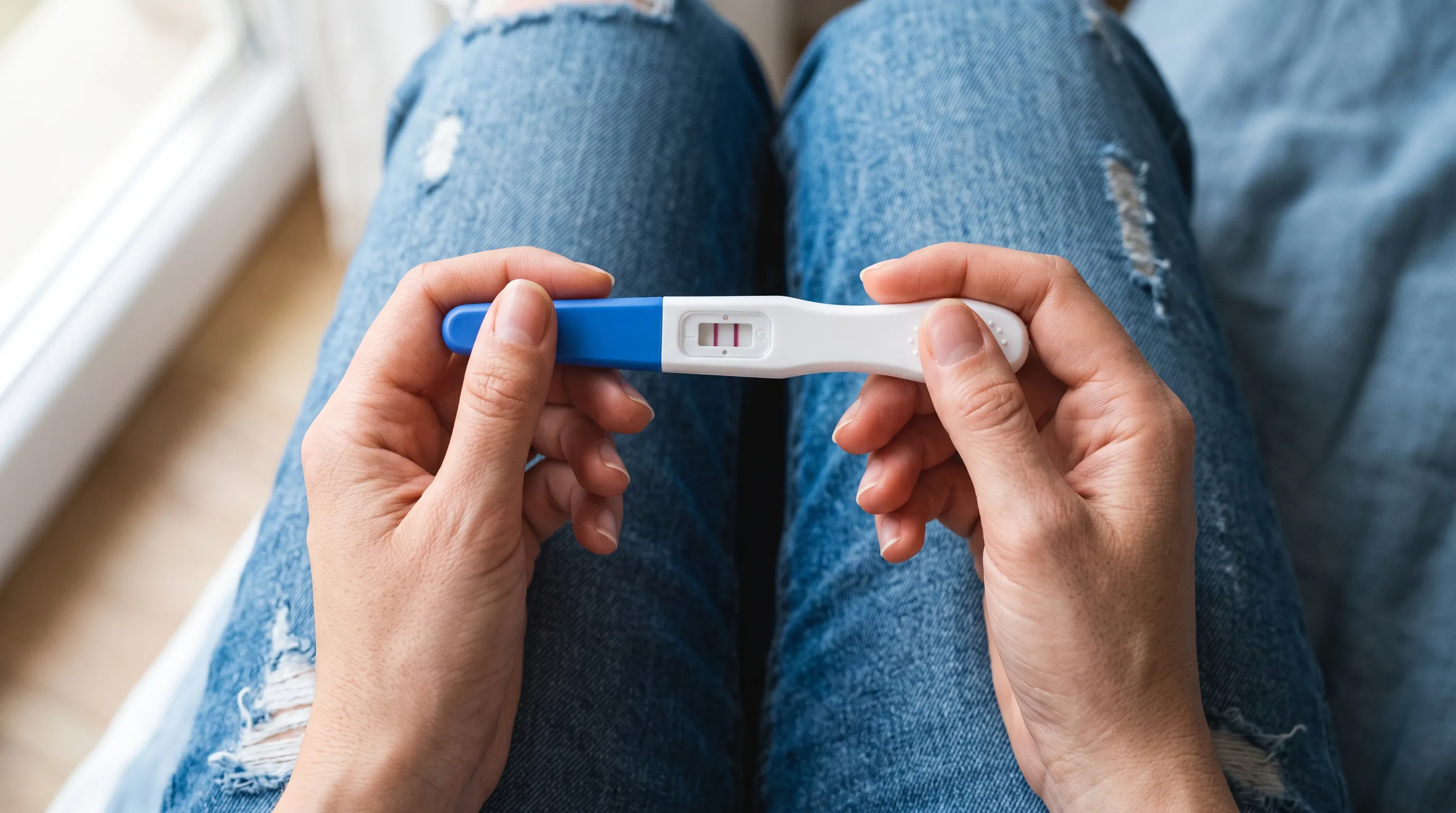
When to Take a Pregnancy Test
Home pregnancy tests detect human chorionic gonadotropin (hCG), a hormone produced after implantation. Its levels rise during early pregnancy, allowing a test to detect pregnancy once the concentration is high enough.
Most home pregnancy tests are designed to be used from the first day of a missed period. Some early-detection tests can be used sooner, but testing too early increases the likelihood of a false-negative result.
For a more reliable result, follow these steps:
- Take the test from the first day of your missed period, if your menstrual cycles are regular.
- If you do not know when your period is due or have irregular cycles, test at least 21 days after unprotected sex.
- Use your first morning urine if you are testing early, as it is usually more concentrated.
- Follow the instructions on the test kit, including the recommended time for reading the result.
A negative result before or shortly after a missed period does not always rule out pregnancy. If your period does not start, repeat the test after a few days. If you continue to get negative results but your period remains absent, consult your doctor.
A blood hCG test may be recommended when further assessment is needed. However, a positive pregnancy test alone does not confirm the location or viability of a pregnancy.