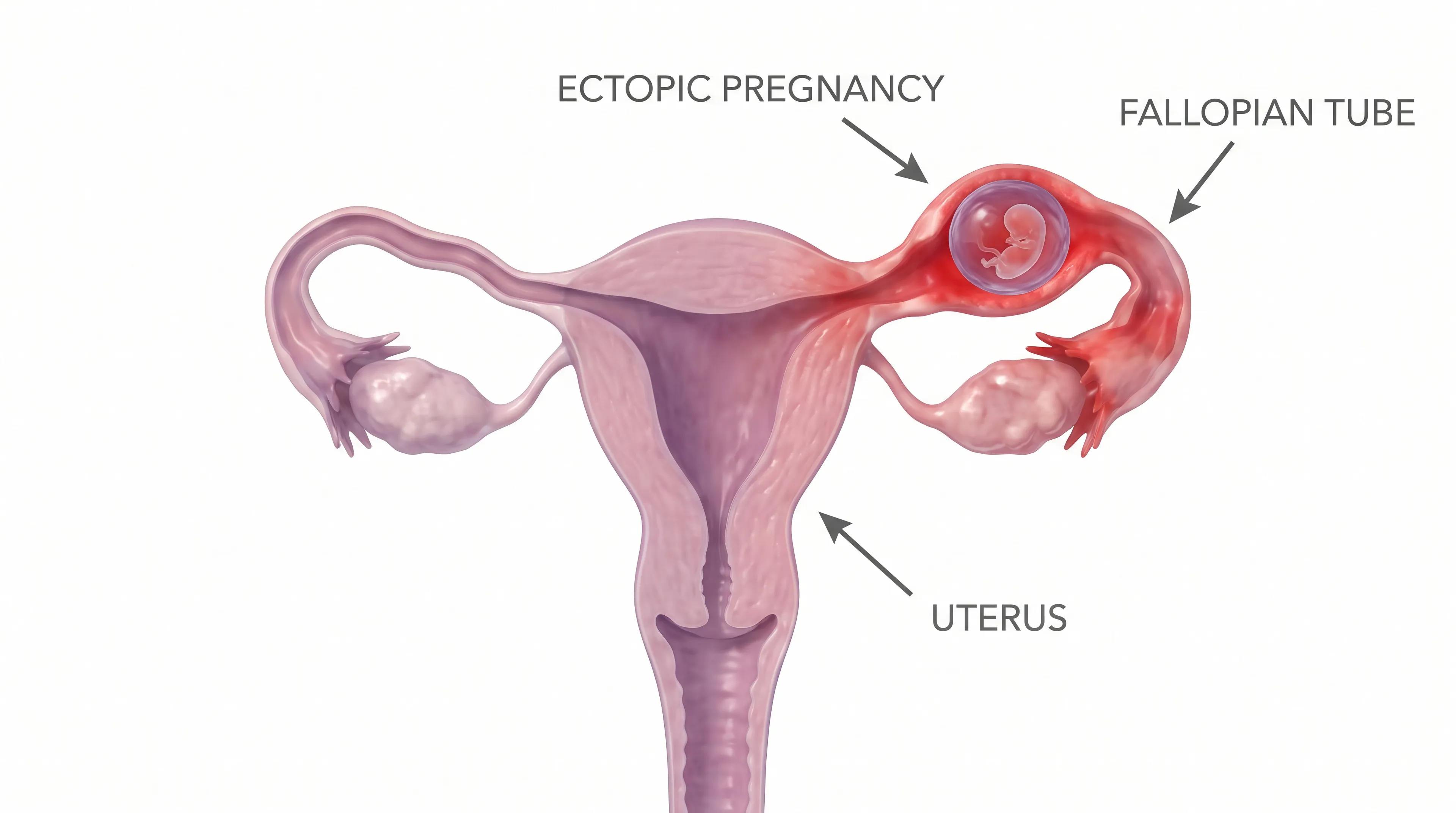
Ectopic pregnancy occurs when a fertilised egg implants outside the main cavity of the uterus, most commonly in a fallopian tube. It cannot develop normally and can become life-threatening if the pregnancy grows and causes internal bleeding. Symptoms may include a missed period, positive pregnancy test, lower abdominal or pelvic pain, vaginal bleeding, shoulder pain, dizziness, or fainting, although some women may initially have few symptoms. Diagnosis may involve quantitative hCG blood tests, transvaginal ultrasound, and repeat assessments when the pregnancy location is not immediately clear. Treatment depends on factors such as symptoms, pregnancy location, hCG levels, ultrasound findings, and overall health and may include close monitoring, medication with methotrexate, or surgery.
Severe or one-sided abdominal pain, heavy vaginal bleeding, shoulder pain, marked weakness, dizziness, or fainting during a possible or confirmed early pregnancy requires urgent medical attention, as these may indicate rupture and internal bleeding. Anyone diagnosed with or suspected of having an ectopic pregnancy should receive prompt care from a qualified obstetrician or other appropriate healthcare professional.