logo
0

Ectopic Pregnancy: Detection, Complications & Treatment

Learn about ectopic pregnancy signs, risk factors, HCG diagnostic testing, and the difference between medical (methotrexate) and surgical treatments.

article image

Dr.Rohini priyanaka

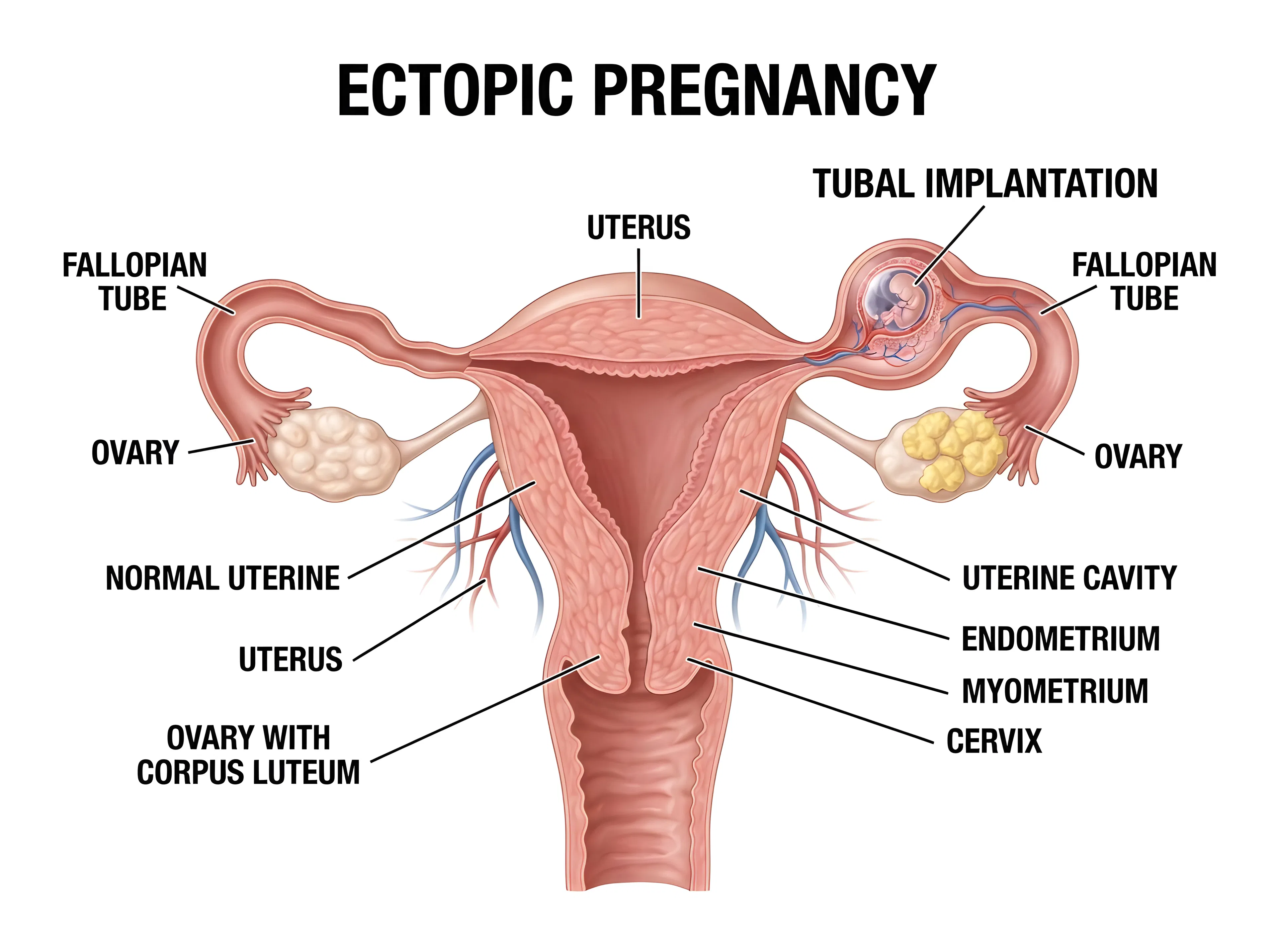
An ectopic pregnancy occurs when a fertilised egg implants outside the uterus, most often in a fallopian tube. Because the egg cannot develop normally in this location, the pregnancy is never viable, and if left untreated, the condition can become life-threatening. Understanding the early warning signs, the role of HCG testing, and the available treatment options can make a critical difference in outcomes.

What Is an Ectopic Pregnancy?

In a healthy pregnancy, a fertilised egg travels through the fallopian tube and implants in the lining of the uterus. In an ectopic pregnancy, implantation happens somewhere else, and the fallopian tube is the site in roughly 95% of cases. Less commonly, implantation occurs on the ovary, in the cervix, or within the abdominal cavity.

The fallopian tube is not designed to expand like the uterus. As the embryo grows, it puts the tube under increasing pressure. Without intervention, the tube can rupture, causing severe internal bleeding that becomes a surgical emergency within hours.

Causes and Risk Factors

No single factor always causes an ectopic pregnancy, but anything that slows or blocks the fertilised egg's journey through the fallopian tube raises the risk significantly.

Structural and infectious causes:

  • Pelvic inflammatory disease (PID), often caused by chlamydia or gonorrhea, can scar and narrow the fallopian tubes.
  • Previous tubal surgery, including a prior ectopic pregnancy treated surgically, leaves scar tissue that disrupts normal movement.
  • Endometriosis can cause tubal adhesions with similar effects.

Other recognised risk factors:

  • Conception following in vitro fertilisation (IVF) carries a slightly elevated ectopic risk, partly because of underlying tubal disease in women who need assisted reproduction.
  • An intrauterine device (IUD) is highly effective at preventing uterine pregnancy; if pregnancy does occur while an IUD is in place, the relative risk of it being ectopic is higher.
  • Smoking is associated with impaired tubal motility, increasing ectopic risk in a dose-related way.
  • Age above 35 is also linked to higher incidence, likely reflecting accumulated tubal damage over time.

Some women who develop an ectopic pregnancy have no identifiable risk factor at all, which is why any positive pregnancy test accompanied by pain or bleeding deserves prompt evaluation.

Early Warning Signs and Symptoms

Ectopic pregnancy symptoms usually appear between weeks 4 and 10 of pregnancy, though timing varies.

Common early signs include:

  • Sharp or cramping pain on one side of the lower abdomen or pelvis
  • Light vaginal bleeding or spotting, which may be darker than a normal period
  • Nausea and breast tenderness similar to a normal early pregnancy

These symptoms overlap with many other conditions, including miscarriage and ovarian cysts, which is why testing is essential rather than relying on symptoms alone.

Recognising a ruptured ectopic pregnancy:

A rupture produces a sudden, severe pain that is usually much worse than the cramping felt earlier. Other warning signs of a ruptured ectopic pregnancy include:

  • Pain that spreads to the shoulder tip (caused by blood irritating the diaphragm)
  • Dizziness, fainting, or feeling very unwell
  • Rapid heartbeat and pale, clammy skin

Shoulder-tip pain combined with abdominal pain in early pregnancy is a red-flag combination. Anyone experiencing these symptoms should go to an emergency department immediately, as every minute matters when internal bleeding is occurring.

Role of HCG Testing in Early Detection

Human chorionic gonadotropin (HCG) is produced by the developing placental tissue and is the hormone that makes a home pregnancy test positive. In a normal intrauterine pregnancy, serum beta-HCG levels roughly double every 48 to 72 hours in early pregnancy.

HCG levels in ectopic pregnancy tend to rise more slowly or plateau rather than doubling at the expected rate. Serial measurements taken 48 hours apart give doctors a trend to work with. A rise of less than 53% over 48 hours is considered a warning sign that the pregnancy may not be developing normally inside the uterus.

HCG testing is always interpreted alongside a transvaginal ultrasound. When HCG reaches a threshold level and no pregnancy sac is visible inside the uterus on ultrasound, suspicion for an ectopic pregnancy rises sharply. Neither test alone is definitive, which is why serial monitoring and clinical assessment together guide the diagnosis.

Early Warning Signs and Symptoms

Ectopic pregnancy symptoms usually appear between weeks 4 and 10 of pregnancy, though timing varies.

Common early signs include:

  • Sharp or cramping pain on one side of the lower abdomen or pelvis
  • Light vaginal bleeding or spotting, which may be darker than a normal period
  • Nausea and breast tenderness similar to a normal early pregnancy

These symptoms overlap with many other conditions, including miscarriage and ovarian cysts, which is why testing is essential rather than relying on symptoms alone.

Recognising a ruptured ectopic pregnancy:

A rupture produces a sudden, severe pain that is usually much worse than the cramping felt earlier. Other warning signs of a ruptured ectopic pregnancy include:

  • Pain that spreads to the shoulder tip (caused by blood irritating the diaphragm)
  • Dizziness, fainting, or feeling very unwell
  • Rapid heartbeat and pale, clammy skin

Shoulder-tip pain combined with abdominal pain in early pregnancy is a red-flag combination. Anyone experiencing these symptoms should go to an emergency department immediately, as every minute matters when internal bleeding is occurring.

Role of HCG Testing in Early Detection

Human chorionic gonadotropin (HCG) is produced by the developing placental tissue and is the hormone that makes a home pregnancy test positive. In a normal intrauterine pregnancy, serum beta-HCG levels roughly double every 48 to 72 hours in early pregnancy.
HCG levels in ectopic pregnancy tend to rise more slowly or plateau rather than doubling at the expected rate. Serial measurements taken 48 hours apart give doctors a trend to work with. A rise of less than 53% over 48 hours is considered a warning sign that the pregnancy may not be developing normally inside the uterus.

HCG testing is always interpreted alongside a transvaginal ultrasound. When HCG reaches a threshold level and no pregnancy sac is visible inside the uterus on ultrasound, suspicion for an ectopic pregnancy rises sharply. Neither test alone is definitive, which is why serial monitoring and clinical assessment together guide the diagnosis.

Contraindications and Precautions

Methotrexate is not appropriate for every patient. Clear contraindications include:

  • A ruptured or suspected ruptured ectopic pregnancy, where surgery is immediately necessary
  • Breastfeeding, as methotrexate passes into breast milk and is harmful to infants
  • Significant liver or kidney disease, because the drug is processed through these organs
  • Immunodeficiency or blood disorders that affect white cell or platelet counts
  • HCG levels above a threshold set by the treating physician, or ultrasound findings suggesting the pregnancy is too advanced for medical management
  • Inability to attend follow-up appointments, since monitoring is essential for safe treatment

Women with any of these conditions should be counseled about surgical options promptly.

Conclusion

An ectopic pregnancy is a critical, non-viable medical condition that requires prompt diagnosis and management to safeguard maternal health. Recognising early warning signs—such as pelvic pain, spotty bleeding, or shoulder pain—and seeking immediate medical care with HCG testing and ultrasound can prevent life-threatening complications like tubal rupture and severe hemorrhage. Whether managed early through non-surgical options like methotrexate or via surgery, timely intervention is essential for recovery and protecting future fertility.

FAQS

Can an ectopic pregnancy be saved?

No. An ectopic pregnancy cannot be moved to the uterus, and the embryo cannot survive outside it. Treatment focuses on removing the ectopic pregnancy to protect the mother's health.

How early can ectopic pregnancy be detected?

With serial HCG blood tests and transvaginal ultrasound, an ectopic pregnancy can often be suspected as early as 5 to 6 weeks of gestation, sometimes before any significant symptoms appear.

What is the survival rate of ectopic pregnancy?

When diagnosed and treated promptly, outcomes for the mother are very good. Delays in treatment, particularly if rupture occurs, increase the risk of serious complications, so early medical attention is essential.

Can you have a healthy pregnancy after an ectopic pregnancy?

Many women conceive and carry healthy pregnancies after an ectopic pregnancy, though the risk of another ectopic is somewhat higher. Your doctor can advise on monitoring in future pregnancies.

Does ectopic pregnancy always require surgery?

Not always. Women diagnosed early with a stable, unruptured ectopic pregnancy and low HCG levels may be treated successfully with methotrexate, avoiding surgery. However, a ruptured ectopic is always a surgical emergency.

Apollo 247 Floating Action Button