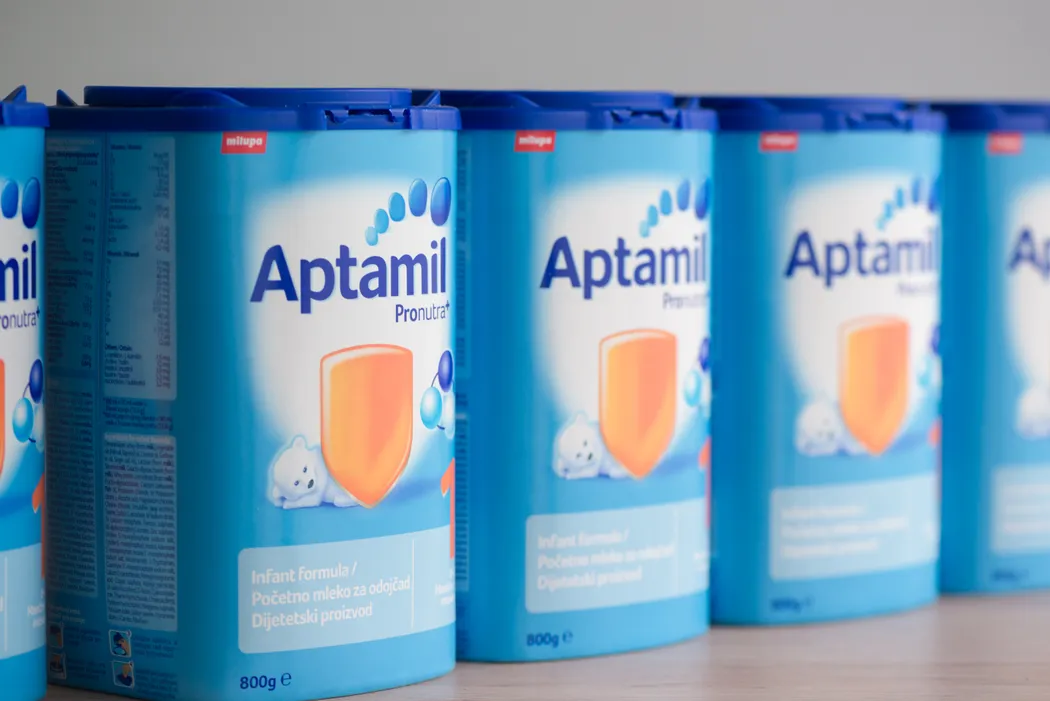
Learn about Aptamil Gold Stage 1 infant formula powder, including its nutrition, ingredients, stage progression, suitability, preparation, feeding and storage for babies aged 0 to 6 months.
Dr. Kamran
The first six months are an important period of growth and development, and choosing an infant formula can raise many questions for new and expecting parents. Aptamil Gold Stage 1 is an infant formula powder intended for babies from birth to 6 months. It provides protein, carbohydrates, fats, vitamins and minerals and contains DHA, ARA, prebiotics and five human milk oligosaccharides (HMOs).
This guide helps you understand Aptamil Gold Stage 1, including its nutritional composition, key ingredients, suitability for babies aged 0 to 6 months, progression to later stages, and how to prepare and store the formula safely.
What Is Aptamil Gold Stage 1?
Aptamil Gold Stage 1 is an infant formula powder formulated for babies from birth to 6 months. It is vegetarian.
The formula contains partially skimmed milk, demineralised whey and whey solids, lactose and vegetable oils, including canola and corn oil. It also contains DHA, ARA, vitamins and minerals, taurine, L-carnitine and mixed tocopherols.
Aptamil Gold Stage 1 contains a prebiotic blend of short-chain galacto-oligosaccharides (scGOS) and long-chain fructo-oligosaccharides (lcFOS) in a 9:1 ratio. It also contains five HMOs, 2'-fucosyllactose (2'-FL), 3-fucosyllactose (3-FL), lacto-N-tetraose (LNT), 6'-sialyllactose (6'-SL) and 3'-sialyllactose (3'-SL).
Aptamil Gold Stage 1 provides the macronutrients and micronutrients required as part of an infant's diet. Its formulation includes protein, carbohydrates, fats, vitamins, minerals, essential fatty acids and prebiotic components.
The main nutritional components include:
Nutritional component
Role in infant nutrition
Protein
Provides amino acids needed for growth and development
Carbohydrates
Provide energy
Fat
Provides energy and fatty acids
DHA
An omega-3 fatty acid that forms part of infant nutrition
ARA
An omega-6 fatty acid that forms part of infant nutrition
Vitamins
Support normal body functions and development
Minerals
Support normal growth and development
scGOS/lcFOS
Prebiotic components of the formula
Five HMOs
Complex carbohydrates included in the formulation
Aptamil Gold Stage 1 also contains omega-3 and omega-6 fatty acids, vitamin C, vitamin D and iron.
Prebiotics
Aptamil Gold Stage 1 contains scGOS and lcFOS in a 9:1 ratio. Prebiotics are non-digestible food components that can be utilised by certain microorganisms in the gut.
Human Milk Oligosaccharides
Aptamil Gold Stage 1 contains five HMOs, 2'-FL, 3-FL, LNT, 6'-SL and 3'-SL. HMOs are complex carbohydrates naturally present in human milk. The HMOs used in Aptamil Gold Stage 1 are not derived from human milk.
The inclusion of HMOs in infant formula does not make it equivalent to breast milk. Human milk contains a complex combination of nutrients and bioactive components that cannot be completely replicated in formula.
DHA and ARA
DHA and ARA are long-chain fatty acids that form part of infant nutrition. Aptamil Gold Stage 1 contains both DHA and ARA, along with omega-3 and omega-6 fatty acids.
How Does Aptamil Gold Stage 1 Support Infant Nutrition?
Aptamil Gold Stage 1 provides protein, carbohydrates, fats, vitamins and minerals as part of an infant's diet. DHA and ARA contribute to its fatty acid profile, while the prebiotic blend and HMOs are components of its formulation.
The formula also contains an optimised whey-to-casein ratio. Whey and casein are milk proteins that contribute to the overall protein composition of infant formula.
These nutrients support the normal nutritional needs of babies during early infancy. However, individual babies have different nutritional requirements, particularly when they have medical conditions or were born prematurely.
Aptamil Gold Stages: When Should You Move to the Next Stage?
Aptamil Gold Stage 1 is intended for babies from birth to 6 months. Later stages are formulated for older age groups as nutritional needs change during infancy and toddlerhood.
Stage
Age
Intended use
Stage 1
Birth to 6 months
Infant formula for early infancy
Stage 2
From 6 months
Follow-on formula for older infants
Stage 3
From 12 months
Formula for toddlers
Around 6 months, babies are generally ready to begin complementary foods alongside milk feeds. The transition from Stage 1 to a later stage should take the baby's age and nutritional needs into account.
Do not introduce a later-stage formula earlier than the age for which it is intended. If your baby was born prematurely, has poor weight gain or has other nutritional or medical needs, seek advice from a paediatrician before changing formula.
Who Can Use Aptamil Gold Stage 1?
Aptamil Gold Stage 1 is intended for babies from birth to 6 months. It can be used when formula feeding is needed and may also be used as part of combination feeding alongside breast milk.
Premature babies, infants with low birth weight and babies with certain medical conditions may have nutritional requirements that differ from those of healthy full-term babies. They may need specialised nutritional support.
If your baby has a medical condition, feeding difficulty, suspected allergy or poor weight gain, speak to a paediatrician before choosing or changing an infant formula.
When Is Aptamil Gold Stage 1 Not Suitable?
Aptamil Gold Stage 1 contains milk-derived ingredients and lactose. It is not suitable for babies with a known cow's-milk protein allergy unless specifically recommended by a healthcare professional.
Babies with certain medical or nutritional conditions may require a specialised formula rather than a standard infant formula.
Babies with rare disorders affecting lactose metabolism may also require specialist dietary management.
If your baby develops persistent vomiting, diarrhoea, blood in the stool, significant feeding difficulty or poor weight gain, consult a paediatrician.
Is Aptamil Gold Stage 1 Suitable for Babies With Cow's-Milk Protein Allergy?
No. Aptamil Gold Stage 1 contains milk-derived ingredients and is not suitable for babies with a known cow's-milk protein allergy unless specifically recommended by a healthcare professional.
Cow's-milk protein allergy can cause symptoms such as vomiting, diarrhoea, blood or mucus in the stool, skin reactions and feeding difficulties.
If cow's-milk protein allergy is suspected, a paediatrician can assess your baby's symptoms and recommend an appropriate feeding plan. Do not switch repeatedly between standard formulas without medical advice.
How to Prepare Aptamil Gold Stage 1 Safely?
Correct preparation of infant formula is essential. Poor hygiene can introduce harmful microorganisms, while incorrect dilution can make the feed too concentrated or too diluted.
Follow these steps when preparing a feed:
Wash your hands thoroughly before preparing the feed.
Clean and sterilise the bottle, teat and cap.
Boil fresh drinking water and allow it to cool to a lukewarm temperature.
Measure the required amount of water into the sterilised bottle.
Use only the scoop provided with the formula.
Add the required number of level scoops according to the feeding table.
Close the bottle and shake gently until the powder dissolves completely.
Check the temperature before feeding your baby.
The standard preparation is typically one level scoop for every 30 mL of water. The number of scoops and amount of water required per feed depend on your baby's age, so follow the feeding table on the pack.
Do not change the recommended powder-to-water ratio. Adding extra powder can make the feed too concentrated, while adding extra water can reduce its nutritional concentration.
Prepare feeds fresh and discard any formula left after feeding. Do not use a microwave to prepare or heat infant formula because uneven heating can create hot spots.
How Should Aptamil Gold Stage 1 Be Stored?
Store the powdered formula in a cool, dry place away from moisture and direct sunlight. Keep the tin tightly closed after every use.
Once opened, Aptamil Gold Stage 1 should be used within 3 weeks. Check the use-by date and follow the storage instructions on the packaging.
Prepared formula should be made fresh for each feed. Discard any formula left in the bottle after feeding.
How Much Aptamil Gold Stage 1 Should a Baby Drink?
The amount of formula a baby needs varies according to age, growth and individual feeding requirements.
Follow the feeding table on the pack for the recommended amount of water and number of scoops. Never change the powder-to-water ratio to increase or reduce the amount your baby drinks.
Babies may not finish every bottle. Slowing down, stopping sucking or turning away from the bottle can indicate that your baby has had enough.
Persistent poor feeding, frequent vomiting, feeding difficulties or inadequate weight gain should be assessed by a paediatrician.
Aptamil Gold Stage 1 and Breastfeeding
Breast milk is the preferred source of nutrition for infants when breastfeeding is possible and appropriate. Aptamil Gold Stage 1 can be used when formula feeding is needed, including as part of combination feeding.
If you are combining breastfeeding and formula feeding, breast milk and prepared formula can be offered separately. A healthcare professional can help you establish a feeding routine that meets your baby's nutritional needs.
Aptamil Gold Stage 1 and Lactose Intolerance
Aptamil Gold Stage 1 contains lactose. Lactose intolerance is uncommon in young infants, and symptoms such as gas, crying or changes in stool consistency alone do not establish lactose intolerance.
Congenital lactase deficiency is a rare condition in which a baby cannot properly digest lactose and requires specialist dietary management.
If your baby has persistent diarrhoea or other digestive symptoms, consult a paediatrician before changing to a lactose-free or specialised formula.
Can Aptamil Gold Stage 1 Cause Constipation or Gas?
Changes in feeding can affect stool frequency and consistency. Some babies may also experience gas, fussiness or occasional spit-up when their feeding pattern changes.
Constipation is more concerning when stools are hard or dry, difficult to pass or associated with significant discomfort. Do not dilute or concentrate infant formula to manage constipation.
Persistent constipation, repeated vomiting, diarrhoea, blood in the stool, feeding difficulties or poor weight gain should be assessed by a paediatrician.
When Should You Speak With a Paediatrician?
Speak to a paediatrician if your baby:
Was born prematurely or had a low birth weight
Has a known or suspected food allergy
Has persistent vomiting or diarrhoea
Has blood or mucus in the stool
Has ongoing constipation
Has difficulty feeding or swallowing
Has poor weight gain
Has a diagnosed gastrointestinal or metabolic condition
Requires specialised nutritional support
Seek urgent medical attention if your baby develops difficulty breathing, significant swelling of the face, lips or tongue, severe lethargy or other signs of a serious allergic reaction.
Precautions, Side Effects and Adverse Events
Changes in stool consistency, gas, fussiness or occasional spit-up can occur when an infant's feeding pattern changes. Persistent or severe symptoms should be assessed by a paediatrician.
Do not alter the recommended dilution or add medicines, supplements or other ingredients to the formula unless advised by a healthcare professional.
If you suspect an adverse reaction, seek medical advice and keep the product tin available. The batch number and use-by date may be useful when discussing the product with a healthcare professional.
Aptamil Gold Stage 1 is an infant formula powder intended for babies from birth to 6 months. It provides protein, carbohydrates, fats, vitamins and minerals and contains milk and whey proteins, lactose, DHA, ARA, prebiotics and five HMOs.
Choosing the appropriate stage and preparing the formula correctly are important for safe infant feeding. Follow the preparation and storage instructions carefully, and speak to a paediatrician if your baby has an allergy, persistent digestive symptoms, feeding difficulties, poor weight gain or other health concerns.
FAQs
Is Aptamil Gold Stage 1 suitable for newborns?
Yes. Aptamil Gold Stage 1 is formulated for babies from birth to 6 months. Breast milk is the preferred source of nutrition when breastfeeding is possible and appropriate. If formula feeding or supplementation is being considered, discuss your baby's nutritional needs with a healthcare professional.
When should I switch from Aptamil Gold Stage 1 to Stage 2?
Stage 1 is intended for babies from birth to 6 months, while Stage 2 is intended for older infants from 6 months. Around 6 months, complementary foods also become an important part of an infant's diet. If your baby has specific nutritional or medical needs, consult a paediatrician before changing formula.
How many scoops of Aptamil Gold Stage 1 should I use per feed?
The standard preparation is typically one level scoop for every 30 mL of water. The amount and number of feeds vary according to your baby's age and individual needs, so follow the feeding table on the pack.
Can Aptamil Gold Stage 1 be used alongside breastfeeding?
Yes. Aptamil Gold Stage 1 can be used as part of combination feeding when both breast milk and formula are given. If you are introducing formula while breastfeeding, a healthcare professional can provide guidance on your baby's feeding needs.
Is Aptamil Gold Stage 1 suitable for babies with cow's-milk protein allergy?
No. Aptamil Gold Stage 1 contains milk-derived ingredients and is not suitable for babies with a known cow's-milk protein allergy unless specifically recommended by a healthcare professional. A paediatrician can advise on an appropriate specialised formula.