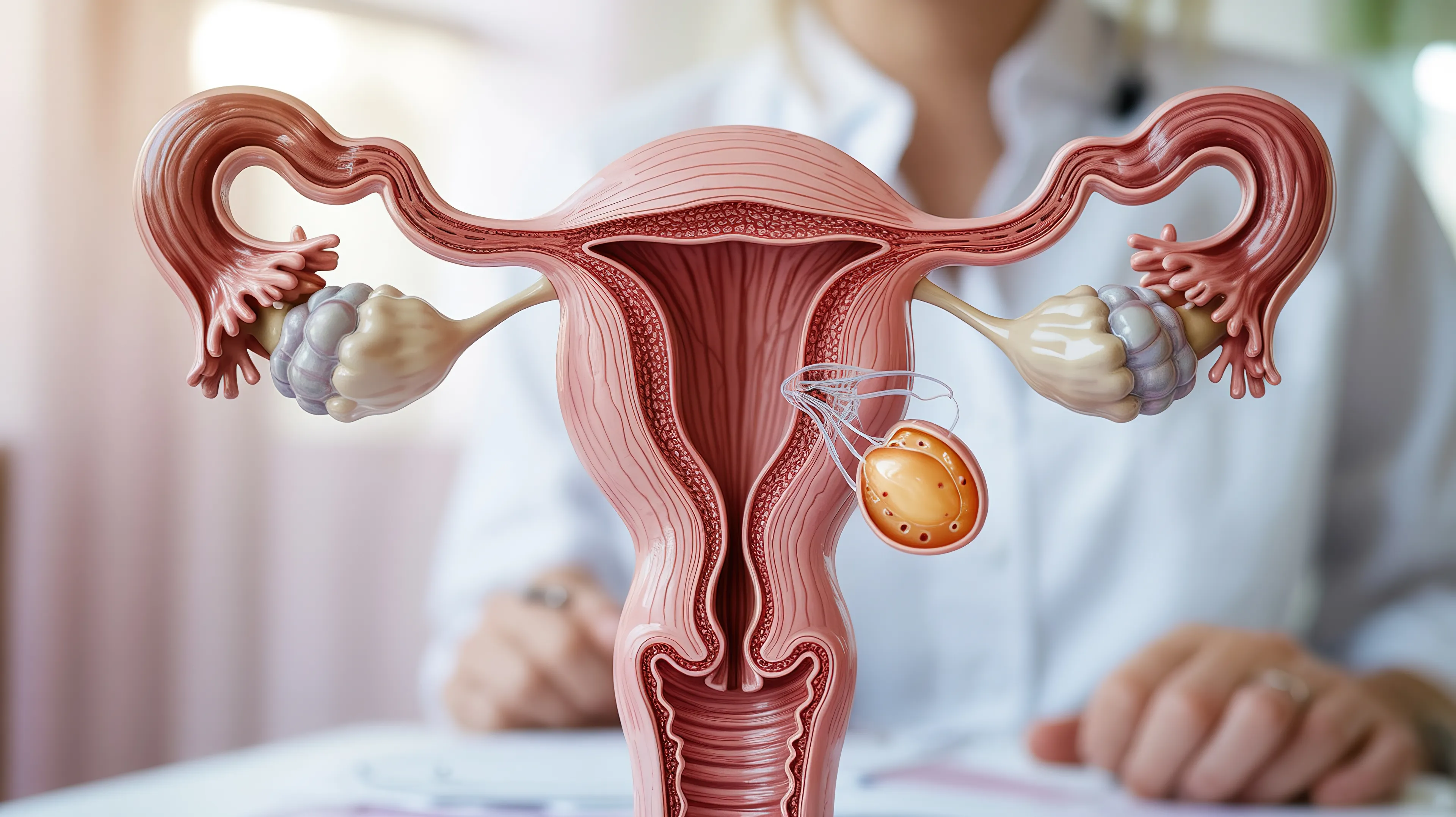
Internal Female Reproductive Organs and Their Functions
The internal organs carry out the core reproductive functions: egg production, fertilization, hormone regulation, and fetal development.
Vagina
The vagina is a muscular, elastic canal roughly 7 to 10 cm long that connects the vulva to the uterus. It receives the penis during intercourse, channels menstrual blood out of the body, and serves as the birth canal during vaginal delivery. Its walls produce secretions that maintain a healthy pH and protect against infection.
Uterus
The uterus is a hollow, pear-shaped muscular organ in the pelvis. Its inner lining, the endometrium, thickens each month to prepare for a fertilized egg. If fertilization does not occur, the endometrium sheds as a menstrual period. When pregnancy occurs, the uterus expands to house and nourish the growing fetus. The cervix, the uterus's lower narrow portion, produces mucus that changes consistency across the cycle, either helping or blocking sperm entry.
Fallopian Tubes
Two fallopian tubes, each roughly 10 cm long, extend from the upper corners of the uterus toward the ovaries. Finger-like projections called fimbriae catch the egg after it is released from the ovary. Fertilization typically happens inside a fallopian tube, and tiny hair-like cilia then move the fertilized egg toward the uterus for implantation. Blockage or damage to these tubes is a recognized cause of infertility.
Ovaries
The ovaries are two almond-shaped glands, one on each side of the uterus. They serve two major roles: releasing eggs and producing hormones. A person is born with all the eggs they will ever have. Each month during the reproductive years, one egg typically matures and is released during ovulation. The ovaries also produce estrogen and progesterone, which regulate the menstrual cycle, support pregnancy, influence bone density, and affect cardiovascular and mental health.