logo
0

Fibroids: Symptoms, Causes, and Treatment Options Explained

Learn about fibroid symptoms, causes, risk factors, fertility effects, diagnosis and treatment options, including medicines and surgery.

article image

Dr.Mayank

Fibroids are one of the most common gynaecological conditions, yet many women discover them only by accident during a routine scan. Understanding what fibroids are, how they affect the body, and what uterine fibroid treatment options exist can make it easier to understand a new diagnosis or unexplained symptoms.

What Are Fibroids?

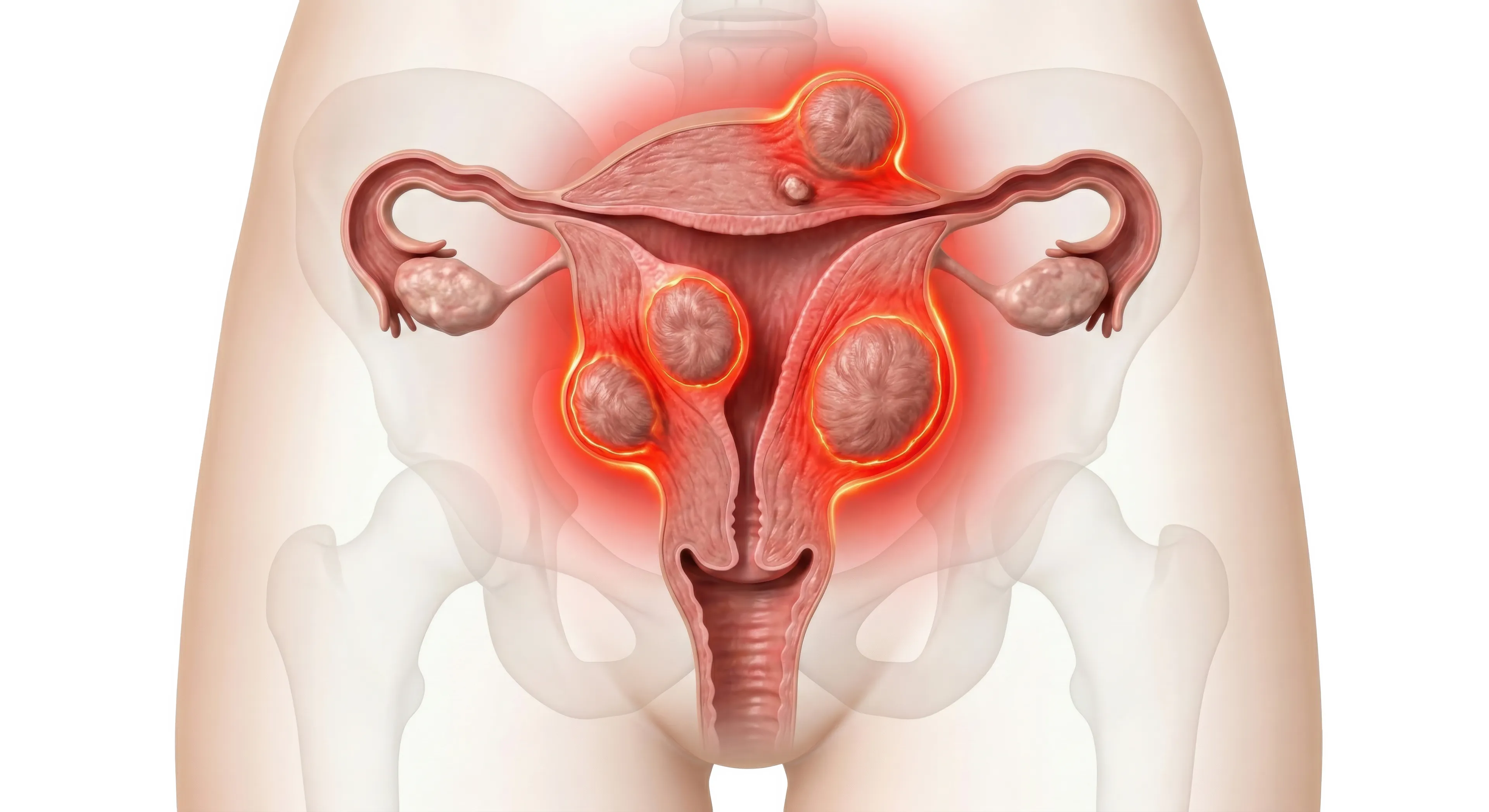
Fibroids, medically called leiomyomas or uterine fibroids, are non-cancerous growths that develop in or around the wall of the uterus. They are made of smooth muscle and fibrous tissue and can vary considerably in size.

Many women have fibroids during their reproductive years without ever knowing it because a significant number cause no symptoms. Fibroids are almost always benign. Leiomyosarcoma is a rare malignant tumour of the uterus, and current evidence does not support the idea that typical benign fibroids routinely transform into leiomyosarcoma. The risk of an occult leiomyosarcoma being found during surgery for a presumed fibroid is very low. A meta-analysis estimated this risk at approximately 1 in 2,000 surgeries, with prospective studies suggesting an even lower rate.

Types of Fibroids

The location of a fibroid inside or around the uterus can influence which symptoms it causes.

  • Intramural fibroids: These grow within the muscular wall of the uterus and are the most common type.
  • Submucosal fibroids: These develop just beneath the inner lining and bulge into the uterine cavity. Even relatively small submucosal fibroids can contribute to heavy menstrual bleeding.
  • Subserosal fibroids: These form on the outer surface of the uterus and may press on nearby organs such as the bladder or bowel.
  • Pedunculated fibroids: These are attached to the uterus by a thin stalk and can develop either towards the uterine cavity or on the outer surface. In some cases, the stalk can twist and cause sudden pain.

Symptoms of Fibroids

Fibroid symptoms range from completely absent to significantly disruptive. Most fibroids are asymptomatic, although a substantial minority cause symptoms that may require medical treatment. A review published in the International Journal of Gynecology & Obstetrics reports that most women with fibroids are asymptomatic, while around 30% develop severe symptoms requiring intervention.

When symptoms do appear, the most common include:

  • Heavy or prolonged menstrual bleeding, sometimes with large clots
  • Pelvic pressure or a dull aching pain in the lower abdomen
  • Bloating or a feeling of abdominal fullness
  • Frequent urination or difficulty emptying the bladder when a fibroid presses on it
  • Constipation or back pain caused by pressure on nearby structures
  • Pain during sex

Heavy menstrual bleeding is an important symptom that may lead to iron-deficiency anaemia over time. Anaemia can cause fatigue, breathlessness and dizziness.

Causes and Risk Factors

The exact reason fibroids develop is not fully understood, but several factors are associated with their development and growth.

Hormones play an important role. Fibroids are hormonally responsive and tend to grow during the reproductive years when oestrogen and progesterone are present. They commonly shrink after menopause.

Genetics also matter. Having a close family member, such as a mother or sister, with fibroids is associated with a higher risk. Other associated factors include:

  • Age, with the incidence of clinically diagnosed fibroids generally increasing through the reproductive years and reaching its highest levels around the 40s
  • Obesity, which has been associated with a higher risk of fibroids
  • Starting periods at a younger age
  • Some observational studies have found associations between dietary patterns and fibroid risk, although the evidence for specific foods remains inconsistent

Epidemiological research consistently finds that fibroids are more common among women of African ancestry and tend to develop at younger ages in this population. Reviews have also reported greater symptom severity and, in some studies, larger or more numerous fibroids. However, the reasons for these disparities are complex and are not explained by ancestry alone.

Fibroids, Fertility, and Pregnancy

The relationship between fibroids and fertility is complex, and the effect depends substantially on the number, size and location of the fibroids.

Many women with fibroids conceive naturally. However, evidence does not support assuming that fibroids have no effect on fertility in every woman. A systematic review found that fibroids affecting the uterine cavity, particularly submucosal fibroids, are more clearly associated with reduced implantation and pregnancy outcomes. The effect of other fibroid types on natural fertility is less certain.

Submucosal fibroids that distort the uterine cavity are therefore more likely to affect implantation. Some intramural fibroids may also affect fertility, particularly when they are large or alter the uterine cavity, although the evidence is less consistent.

Many women with fibroids have uncomplicated pregnancies. However, some studies have associated fibroids, particularly larger or multiple fibroids, with an increased risk of complications such as preterm birth, placental abruption, malpresentation and caesarean birth. The individual risk depends on factors including fibroid size, number and location.

Fibroids may also change in size during pregnancy. Some women experience pain from fibroid degeneration, particularly during the first or second trimester.

If fibroids and infertility are a concern, discuss the location and characteristics of the fibroids with a gynaecologist or fertility specialist. Removing a fibroid is not automatically necessary simply because fibroids are present.

Diagnosis of Fibroids

Fibroids are commonly identified during a pelvic examination or an imaging test performed for another reason. Standard diagnostic tools include:

  • Pelvic ultrasound: Transabdominal or transvaginal ultrasound is commonly used to identify the presence, number, size and location of fibroids.
  • MRI: MRI provides more detailed information about fibroid location, number and characteristics and may be particularly useful when treatment or surgery is being planned.
  • Sonohysterography: Saline is introduced into the uterine cavity during ultrasound to make abnormalities within the cavity, including submucosal fibroids, easier to identify.
  • Hysteroscopy: A thin camera is passed through the cervix to view the inside of the uterine cavity and, in some cases, treat submucosal fibroids.

A blood test to check haemoglobin may also be recommended when heavy menstrual bleeding raises concern about anaemia.

Treatment Options for Fibroids

There is no single treatment that is appropriate for every person with fibroids. The approach depends on symptoms, fibroid size and location, age, overall health and whether pregnancy is desired.

Watchful Waiting

If fibroids are small and causing no significant symptoms, your doctor may recommend monitoring rather than immediate treatment. Fibroids may remain stable for some time and commonly shrink after menopause.

Medication

Medicines can help manage symptoms, although most do not permanently eliminate fibroids.

  • Hormonal treatments: Combined hormonal contraceptives and progestin-based treatments may help reduce heavy menstrual bleeding, although they do not generally remove fibroids.
  • GnRH agonists: Medicines such as leuprorelin suppress ovarian hormone production and can temporarily reduce fibroid size and bleeding. They may be used before surgery in selected patients. Because prolonged GnRH agonist treatment can reduce bone mineral density, treatment duration is generally limited. The US prescribing information for leuprolide notes the risk of bone mineral density loss and limits its use for preoperative improvement in women with fibroids to a defined treatment course.
  • GnRH antagonist-based treatments: Newer oral medicines can also reduce heavy menstrual bleeding associated with fibroids. Their suitability depends on individual health factors and treatment goals.
  • Tranexamic acid and non-steroidal anti-inflammatory drugs: These medicines may help manage heavy menstrual bleeding and pain but do not shrink fibroids.

Non-Surgical Procedures

Several procedures can treat fibroids without removing the uterus.

  • Uterine artery embolisation: During UAE, small particles are injected into the blood vessels supplying the uterus. They reduce blood flow to the fibroids, causing them to shrink over time. The American College of Obstetricians and Gynecologists notes that the effect of UAE on future pregnancy is not clear, so women who may want to become pregnant should discuss this carefully with their gynaecologist.
  • Focused ultrasound procedures: These use focused ultrasound energy to heat and destroy targeted fibroid tissue without conventional surgical incisions. Suitability depends on the number, size and location of the fibroids.

Fibroid Removal Surgery

When fibroids cause significant symptoms or other treatments are unsuitable, surgery may be considered.

  • Myomectomy: This procedure removes fibroids while leaving the uterus in place. It can be performed through open surgery, laparoscopy or hysteroscopy, depending on the size and location of the fibroids. Myomectomy may be considered when preserving fertility is important.
  • Hysterectomy: This procedure removes the uterus and provides a definitive treatment for uterine fibroids. Because the uterus is removed, pregnancy is no longer possible afterwards.

Contraindications and Precautions

The suitability of a fibroid treatment depends on individual health factors, reproductive plans and the characteristics of the fibroids.

  • GnRH agonists: These medicines can cause a reduction in bone mineral density and are generally used for limited periods. Your doctor may consider your bone health and other risk factors before prescribing them.
  • Uterine artery embolisation: The effect of UAE on future pregnancy remains uncertain, so women who want to preserve their fertility should discuss alternative treatments and the available evidence with their specialist.
  • Hysteroscopic procedures: These procedures have recognised surgical risks, including uterine perforation and infection, although serious complications are uncommon.
  • Hormone-based treatments: These may not be appropriate for everyone. Your doctor should review relevant medical conditions, medications and risk factors before prescribing them.

Always consult your gynaecologist before starting or stopping any treatment. Report adverse events to your healthcare provider or the relevant regulatory authority.

When to See a Doctor?

Some fibroid-related symptoms need prompt medical attention. Seek medical care without delay if you experience:

  • Very heavy menstrual bleeding accompanied by weakness, dizziness, fainting or other symptoms of significant blood loss
  • Sudden or severe pelvic pain
  • A rapidly enlarging abdomen or a noticeable change in abdominal size
  • Symptoms of significant anaemia, such as severe fatigue, breathlessness or fainting

For milder but persistent symptoms, such as consistently heavy periods, pelvic pressure or ongoing pelvic discomfort, arrange a gynaecology appointment for assessment.

Conclusion

Fibroids are common benign growths that may cause no symptoms or may contribute to heavy menstrual bleeding, pelvic pressure, pain and, in some cases, fertility or pregnancy-related concerns. Their effects depend largely on their size, number and location.

Treatment is not always necessary. When symptoms require management, options range from observation and medication to procedures such as uterine artery embolisation or surgery. The appropriate choice depends on individual symptoms, overall health and reproductive plans. Discussing these factors with a gynaecologist can help determine whether monitoring or active treatment is appropriate.

FAQs

Can fibroids go away on their own?

Some fibroids remain stable or shrink without treatment, particularly after menopause when hormone levels decline. However, it is not possible to predict how an individual fibroid will behave, so your doctor may recommend monitoring based on its size, location and symptoms.

Do fibroids affect periods permanently?

Fibroids can cause heavy or prolonged menstrual bleeding, but the effect varies between individuals. Symptoms may improve after appropriate treatment and often lessen after menopause as fibroids shrink.

Is fibroid surgery safe?

Myomectomy and hysterectomy are established treatments for fibroids, but all surgical procedures carry potential risks. The appropriate procedure depends on factors such as fibroid size and location, symptoms, overall health and plans for future pregnancy.

Can fibroids come back after treatment?

New fibroids can develop after myomectomy, so recurrence is possible. Research has identified younger age at the time of surgery, multiple fibroids and a larger uterus among factors associated with recurrence.

Do fibroids increase cancer risk?

Fibroids are benign growths and are not generally considered precancerous. Leiomyosarcoma is a rare malignant tumour of uterine smooth muscle. Evidence suggests that an occult leiomyosarcoma found during surgery for presumed fibroids is very uncommon.

Apollo 247 Floating Action Button