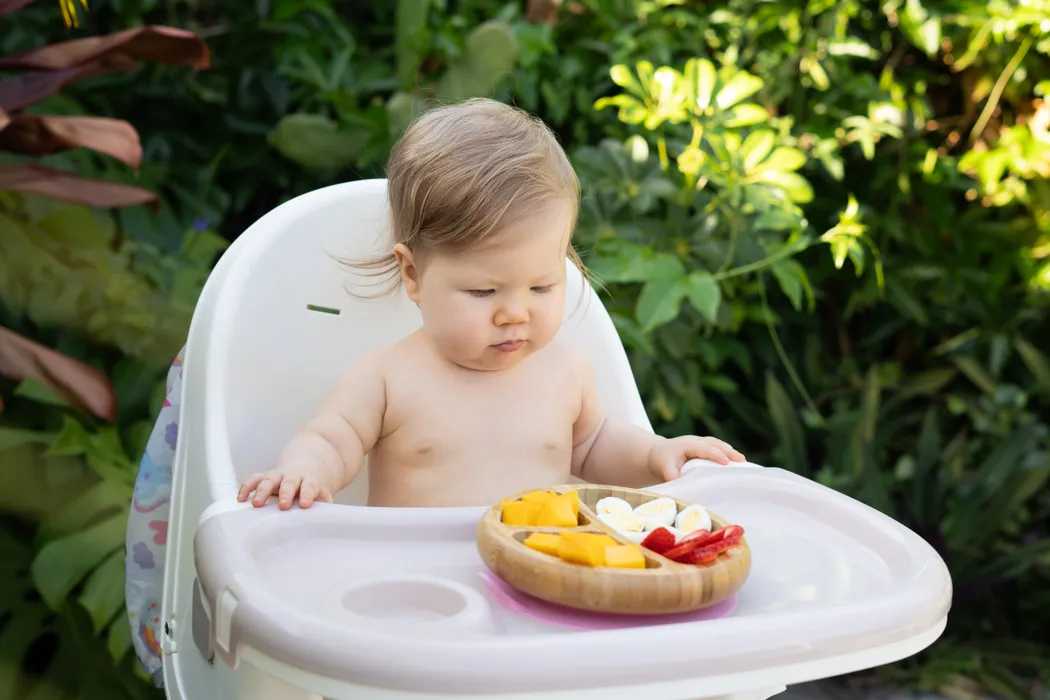
Choking Hazards and Safety Precautions
Choking hazards for babies are the most important safety consideration when starting finger foods. A baby's airway is narrow, and certain foods are shaped or textured in ways that make them particularly dangerous.
High-risk foods to avoid entirely at this age:
- Whole grapes, cherry tomatoes, or berries (always halve or quarter these)
- Whole nuts and nut pieces
- Raw, hard vegetables like raw carrot sticks or raw apple slices
- Large chunks of meat
- Popcorn, chips, or any hard, crunchy snack
- Round, firm foods like whole blueberries or whole chickpeas
Safe cutting shapes
Prepare foods according to your baby's developmental abilities. Soft foods can be offered as graspable pieces about the size and length of an adult finger when a baby is still using a whole-hand grasp. As the baby's fine-motor skills develop, smaller pieces can be offered. Always ensure food is soft enough to break apart easily in the mouth.
Supervision is non-negotiable
Always sit with your baby during meals. Never leave a self-feeding baby unattentive, even for a moment. Make sure your baby is seated upright in a high chair, not reclined.
Knowing the difference between gagging and choking is reassuring. Gagging can be a normal part of learning to eat and may involve coughing, retching or noisy sounds. Choking occurs when the airway is blocked and may prevent a baby from breathing, coughing or making sounds. Because choking can become life-threatening quickly, caregivers should learn age-appropriate infant choking first aid before introducing finger foods.