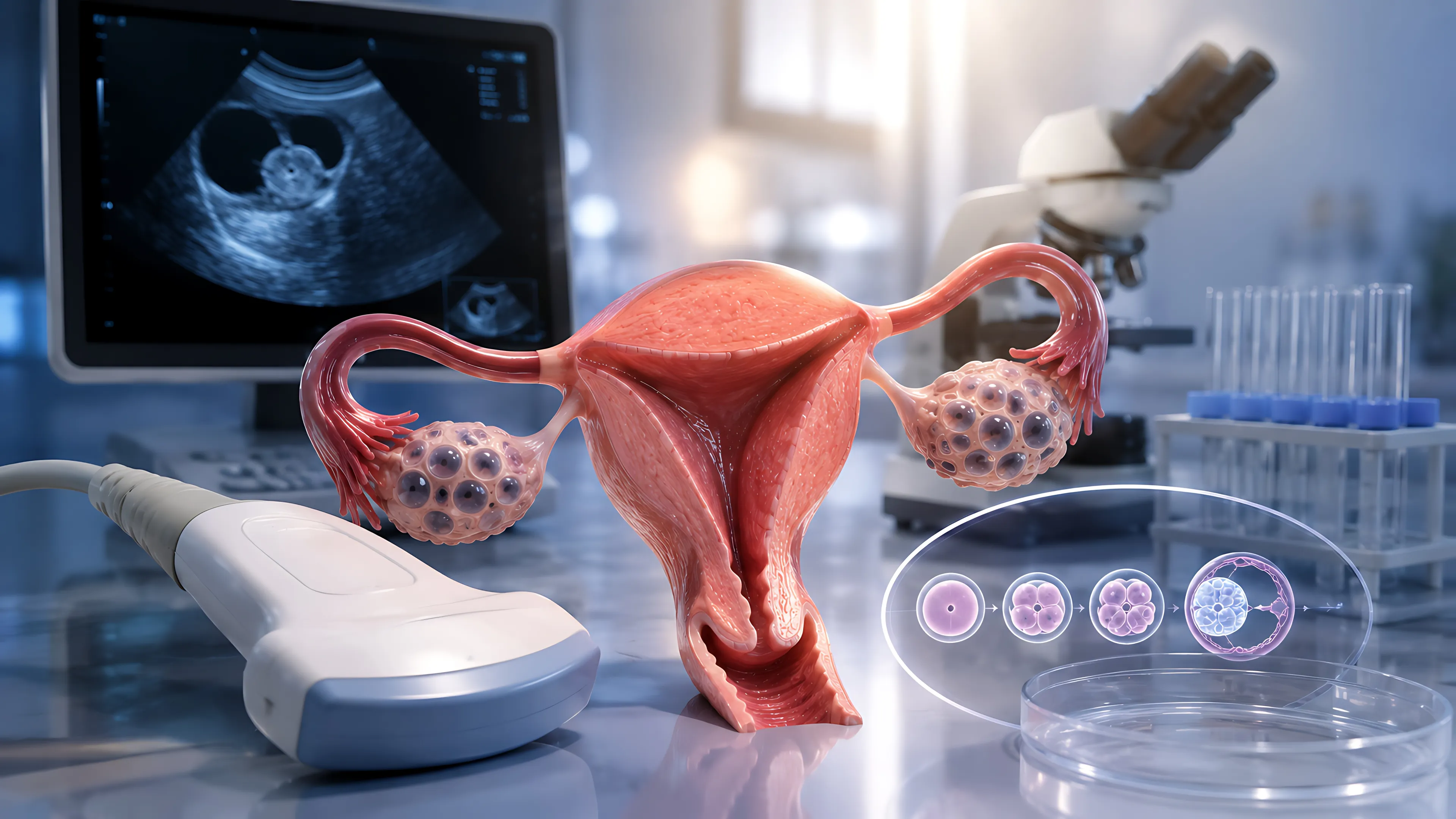
Follicular Study for Pregnancy: Ovulation Tracking Guide
Understand how a follicular study tracks ovulation via ultrasound, when to schedule scans, and how results guide conception planning.
Dr.Kamran
Trying to conceive can raise questions about whether you are ovulating regularly and when your most fertile days occur. If you have irregular menstrual cycles, difficulty identifying ovulation or are undergoing fertility treatment, your doctor may recommend a follicular study to monitor the development of follicles in your ovaries.
A follicular study for pregnancy involves a series of ultrasound scans that track follicle growth and help assess when ovulation is approaching or has occurred. The findings can help your gynaecologist plan the timing of intercourse or fertility procedures such as intrauterine insemination (IUI). Home ovulation test kits can also help identify the fertile window by detecting hormonal changes before ovulation. Understanding these methods can help you make informed decisions about your fertility care.
What Is a Follicular Study?
A follicular study, also called follicular monitoring or folliculometry, is a series of pelvic ultrasound scans performed during a menstrual cycle. It tracks the growth of ovarian follicles, which are small, fluid-filled structures that contain developing eggs.
During a typical menstrual cycle, several follicles begin to grow, but usually one becomes dominant. This follicle continues developing and may release a mature egg during ovulation. The ultrasound scans help your doctor monitor this process and assess changes in the uterine lining.
Your doctor may recommend a follicular study in situations such as:
Irregular menstrual cycles: To assess whether ovulation is occurring and help estimate its timing.
Difficulty conceiving: To investigate follicular development when pregnancy has not occurred after trying to conceive.
Suspected ovulation problems: To assess conditions such as polycystic ovary syndrome (PCOS) or anovulation, where an egg may not be released regularly.
Ovulation induction treatment: To monitor how your ovaries respond to medicines prescribed to stimulate follicle development.
Fertility procedures: To help plan the timing of IUI or other fertility treatment.
A follicular study provides information about follicle growth and possible ovulation. It does not assess every factor that affects fertility, such as fallopian tube function, egg quality, sperm health or whether fertilisation and implantation will occur.
A follicular study involves more than one ultrasound scan during the same menstrual cycle. The timing and number of scans depend on your cycle length, follicle development and whether you are undergoing natural-cycle monitoring or fertility treatment.
When Should You Do a Follicular Study?
For many natural or IUI cycles, the first monitoring scan is performed around day 9 or 10 of the menstrual cycle. Day 1 is the first day of menstrual bleeding. However, your doctor may recommend an earlier or later start depending on your usual cycle length and treatment plan.
In some treatment cycles, a baseline scan may be performed on day 2 or 3 to assess the ovaries and uterus before monitoring begins. If you have irregular or long cycles, your doctor may adjust the schedule to avoid missing the development of a dominant follicle.
What Happens During Each Scan?
The scan usually follows these steps:
Initial assessment: The sonologist examines both ovaries and records the number and size of visible follicles. The uterine lining, called the endometrium, is also measured.
Follow-up scans: Further scans are scheduled to monitor follicle growth. They may be performed every one to three days initially, with more frequent monitoring as the dominant follicle approaches maturity.
Assessment of ovulation: The sonologist looks for changes such as the collapse or disappearance of the dominant follicle, formation of a corpus luteum and sometimes a small amount of free fluid in the pelvis.
The monitoring period may involve several visits over a week or longer. There is no fixed number of scans for everyone. Your doctor will decide when monitoring can stop based on the findings and your treatment plan.
Why Is a Transvaginal Ultrasound Used?
A transvaginal ultrasound is commonly preferred for follicular monitoring because the probe is positioned close to the uterus and ovaries, providing detailed images of the follicles and endometrial lining.
An abdominal ultrasound may be used when a transvaginal scan is unsuitable or not preferred. It may require a comfortably full bladder to improve visibility. Your doctor or sonologist will explain the available approach and discuss your comfort and consent before the examination.
Reading Follicular Study Results: Follicle Size and Ovulation
Your follicular study report may include the size of the dominant follicle, the number of developing follicles and the thickness and appearance of the endometrium. These findings help your doctor assess how your cycle is progressing.
Follicle Size for Pregnancy: A General Reference
The dominant follicle is measured in millimetres. Its size changes as it develops, and measurements from successive scans help your doctor assess its growth.
Follicle development
Approximate diameter
Growing follicle
Varies, often below 15 mm
Developing dominant follicle
Around 15 to 17 mm
Mature or pre-ovulatory follicle
Commonly around 18 to 25 mm
After ovulation
Follicle may collapse or become less distinct
A dominant follicle commonly reaches approximately 18 to 25 mm around ovulation, although ovulation can occur at different sizes. Follicle diameter alone cannot confirm that an egg is mature or guarantee that it will be released. Your doctor considers the growth pattern, scan findings, cycle history and, when needed, hormone results.
What Is the Role of Endometrial Thickness?
The endometrium is the inner lining of the uterus, where an embryo may implant after fertilisation. Its thickness and appearance change throughout the menstrual cycle in response to hormones.
During follicular monitoring, the sonologist measures the endometrium and may describe its appearance as trilaminar, or three-layered, around the time of ovulation.
An endometrial thickness of around 8 mm or more is sometimes seen in cycles with favourable outcomes, but there is no single measurement that guarantees successful implantation. A thinner lining does not automatically mean pregnancy is impossible. Your doctor will interpret the measurement alongside the stage of your cycle, treatment and other clinical findings.
What Is a Corpus Luteum?
After ovulation, the ruptured follicle changes into a structure called the corpus luteum. It produces progesterone, a hormone that helps prepare and maintain the uterine lining for a possible pregnancy.
Your doctor may look for the corpus luteum during a follow-up scan. Its appearance, together with other ultrasound findings, can support the assessment that ovulation has occurred.
How Can an Ovulation Test Kit Help You Identify Your Fertile Window?
An ovulation test kit is a home urine test that detects a rise in luteinising hormone (LH). This hormone typically surges shortly before ovulation. A positive result suggests that ovulation may occur within approximately 24 to 36 hours, although the timing can vary.
You can use an Ovulation Test Kit at home to help identify your most fertile days and plan intercourse when trying to conceive.
Keep these points in mind when using an ovulation test kit:
Follow the instructions on the pack: The recommended testing time and method vary between brands.
Test at the appropriate time in your cycle: Start testing according to your usual cycle length and the kit instructions. If your periods are irregular, ask your doctor when to begin.
Look for the LH surge: A positive result indicates a rise in LH and suggests that ovulation may be approaching.
Plan intercourse during the fertile window: The most fertile period includes the five days before ovulation and the day of ovulation. Having intercourse every one to two days during this period can help improve the opportunity for conception.
Understand the limitations: An LH surge does not confirm that an egg has been released. False-positive or false-negative results can occur.
If you have PCOS, irregular cycles or persistently positive ovulation tests, interpreting the results may be more difficult because baseline LH levels can be elevated or hormonal patterns may be irregular. Your doctor may recommend ultrasound monitoring or blood tests for a clearer assessment.
Follicular Study vs Ovulation Test Kit Both methods can help you understand your cycle, but they provide different information.
Feature
Follicular study
Ovulation test kit
Method
Serial pelvic ultrasound scans
Home urine test
What it measures
Follicle growth and changes in the ovaries and uterine lining
Rise in urinary LH
Main purpose
Monitor follicular development and assess ovulation
Predict when ovulation may be approaching
Where it is performed
Ultrasound or fertility centre
At home
Limitations
Requires appointments and does not guarantee egg release or conception
LH surge does not confirm ovulation and results may be less reliable with PCOS or irregular cycles
Your doctor can advise whether a home ovulation test kit is sufficient or whether ultrasound monitoring would provide more useful information.
Using Follicular Study Results for Conception Planning
Follicular monitoring can help your doctor estimate when ovulation is approaching and plan the timing of conception-related activities or fertility procedures.
For natural conception, the fertile window includes the five days before ovulation and the day of ovulation. Having intercourse every one to two days during this period can help improve the opportunity for conception. Your doctor may use follicular scan findings or ovulation test results to help identify this window.
If you are undergoing IUI, the procedure is scheduled according to follicular development and the treatment protocol. In some cycles, your doctor may prescribe an hCG trigger injection to help time ovulation. Ovulation commonly occurs around 36 to 48 hours after an hCG trigger, but the timing and IUI schedule are decided by your fertility specialist.
In treatment cycles, monitoring also helps assess how many follicles are developing. This is important because an excessive response to ovulation-stimulating medicines can increase the risk of multiple pregnancy and ovarian hyperstimulation syndrome (OHSS). Your doctor may adjust medication doses, change the timing of treatment or advise cancelling a cycle if the response creates significant risks.
Follicular study results should always be interpreted as part of a wider fertility assessment. Your doctor may also recommend hormone tests, assessment of the fallopian tubes and a semen analysis for your partner, depending on your medical history.
Contraindications and Precautions for Follicular Study
Follicular monitoring is generally a safe, non-invasive ultrasound procedure. It does not use ionising radiation. However, the scanning method should be selected according to your medical needs, comfort and preferences.
Keep these points in mind:
Discuss the scanning method: If you are uncomfortable with or do not wish to undergo a transvaginal scan, discuss an abdominal ultrasound or other suitable approach with your doctor.
Inform the sonologist about relevant medical history: Mention previous pelvic procedures, vaginal or pelvic symptoms, anatomical conditions or any discomfort that may affect the examination.
Understand the procedure before it begins: Ask about the position of the probe, what the scan involves and whether you can stop the examination if you experience discomfort.
Follow your doctor's monitoring schedule: Do not change scan dates or start ovulation medicines or trigger injections without medical advice.
Discuss symptoms after the scan: Mild pressure or temporary discomfort may occur. Seek medical advice if you develop severe or persistent pain, fever or unusual bleeding.
A transvaginal scan is not automatically unsuitable because you have never had sexual intercourse. Your preferences, clinical circumstances and the availability of alternative imaging should be discussed with your healthcare professional.
When to Consult Your Doctor
Speak to your gynaecologist or fertility specialist if your scans show no dominant follicle developing, follicle growth is slower than expected, or ovulation is not confirmed. These findings may need further assessment, but they do not automatically mean that you cannot conceive.
Seek medical attention if you experience:
Severe or worsening pelvic pain: This needs assessment, particularly if you are taking medicines to stimulate ovulation.
Marked abdominal swelling or discomfort: This may require evaluation for ovarian enlargement or ovarian hyperstimulation syndrome.
Persistent nausea or vomiting: These symptoms, especially with abdominal swelling or reduced urination after fertility treatment, need prompt medical advice.
Fever or unusual vaginal discharge: These symptoms may indicate an infection and should be assessed.
Heavy vaginal bleeding: Seek medical advice if bleeding is heavier than your usual menstrual flow or is accompanied by significant pain.
If you are receiving fertility treatment, follow the specific instructions provided by your clinic about symptoms that require urgent review.
Conclusion
A follicular study for pregnancy helps your doctor monitor the growth of ovarian follicles, assess the uterine lining and estimate when ovulation may occur. Repeated ultrasound scans provide information that can help plan intercourse, IUI or other fertility treatment. An ovulation test kit offers another way to identify the LH surge and estimate when your fertile window is approaching.
However, follicle size, endometrial thickness and a positive ovulation test are not guarantees of conception. These findings need to be considered alongside your menstrual history, overall reproductive health and, when appropriate, your partner's fertility assessment. Discuss your results with your gynaecologist, follow the recommended monitoring schedule and seek advice about any concerns during your fertility journey.
FAQS
How many follicular studies are needed to get pregnant?
There is no fixed number of scans or cycles needed to achieve pregnancy. Several scans may be performed during one menstrual cycle to monitor follicle growth and ovulation. Some people conceive after one monitored cycle, while others may need monitoring over several cycles or additional fertility treatment. Your doctor will recommend a schedule based on your response and individual circumstances.
Is follicular study painful?
A transvaginal ultrasound may cause mild pressure or temporary discomfort, but it is generally well tolerated. If you experience significant pain or feel uncomfortable during the examination, tell the sonologist so they can pause or adjust the procedure.
What is the cost of a follicular study scan in India?
The cost varies depending on the city, diagnostic centre, number of scans required and whether the monitoring is part of a fertility treatment package. Since several visits may be needed during one cycle, ask the centre for the total estimated cost rather than the price of a single scan.
Can follicular study detect infertility causes?
A follicular study can identify certain issues, such as absent or delayed ovulation, changes in follicle development and abnormalities in the uterine lining. It may also provide information about ovarian response during fertility treatment. However, it cannot diagnose every cause of infertility. Your doctor may recommend additional tests, including hormone assessments, fallopian tube evaluation and semen analysis.
What happens if no dominant follicle is seen?
If no dominant follicle develops, it may indicate that ovulation is delayed or has not occurred in that cycle. This can happen for several reasons, including hormonal conditions such as PCOS. Your doctor may recommend further monitoring or investigations and discuss suitable treatment options if needed. It does not automatically mean permanent infertility.