logo
0

Follicular Study for Pregnancy: Guide to Ovulation Tracking

Learn how a follicular study tracks ovulation, what follicle size means, when to time intercourse and how the scans support pregnancy planning.
 

article image

Dr. Kamran

A follicular study for pregnancy is a series of ultrasound scans that monitor follicle development and help determine whether ovulation is occurring. It provides cycle-specific information about follicle growth and helps your doctor identify the fertile window. It may be recommended if you have irregular periods, suspected ovulation problems or difficulty conceiving.

Unlike a single ultrasound, follicular tracking involves several scans during the same menstrual cycle. This guide explains how the procedure works, what follicle measurements mean, when to time intercourse and how the findings can help guide fertility treatment.

What Is a Follicular Study for Pregnancy?

A follicular study is a series of pelvic ultrasound scans, usually performed using transvaginal ultrasound, to monitor the growth of ovarian follicles throughout your menstrual cycle. It helps your doctor assess whether a dominant follicle is developing and whether ovulation has occurred.

The study has two main purposes. It helps identify the likely timing of ovulation and provides information about follicular development. It can also help assess the uterine lining and identify certain ovarian abnormalities that may affect fertility.

A transvaginal scan (TVS) is commonly preferred because the ultrasound probe is closer to the ovaries, allowing clearer images of the follicles and endometrium. An abdominal ultrasound may be considered if a transvaginal scan is unsuitable.

How Follicular Tracking Works: Day-by-Day Process

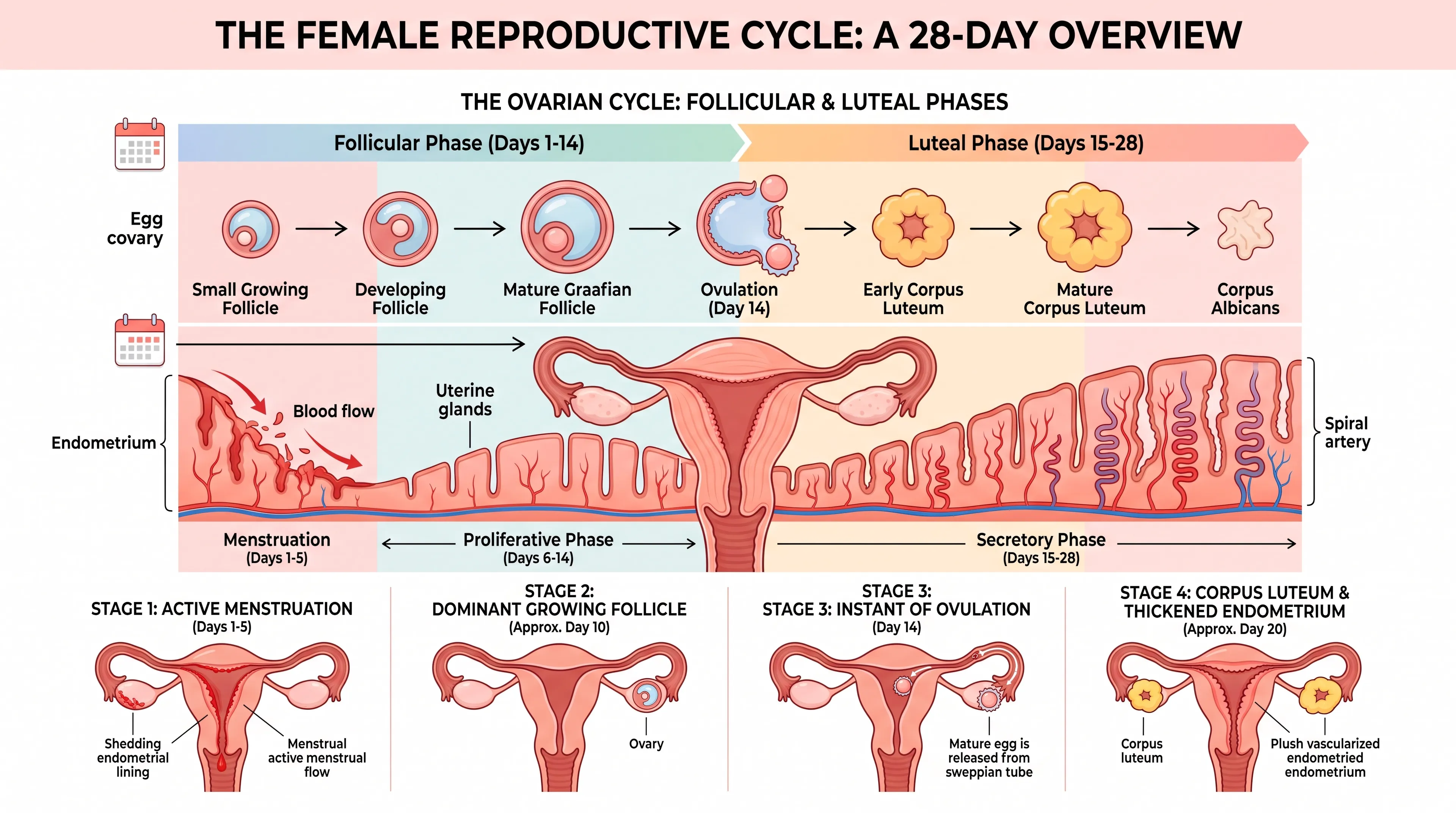
Follicular tracking usually begins around Day 9 or Day 10 of a 28-day menstrual cycle, with Day 1 being the first day of menstrual bleeding. However, the starting day varies depending on your cycle length, menstrual regularity and treatment plan.

During each scan, the doctor assesses:

  • The number and development of follicles in each ovary.
  • The diameter of the dominant follicle, measured in millimetres.
  • The thickness and appearance of the endometrium, which is the lining of the uterus.
  • The presence of free fluid in the pelvis, which may be seen after follicular rupture.

Most women require three to five scans during a monitored cycle, although the number varies. Early scans may be scheduled two to three days apart. As the dominant follicle approaches maturity, scans may be performed every one or two days to monitor its growth more closely.

The monitoring generally continues until ovulation is detected or the doctor determines that further scans are unnecessary. If the follicle does not rupture, additional assessment may be recommended depending on your treatment plan.

Using an Ovulation Kit Alongside Follicular Tracking

An  ovulation predictor kit  (OPK) is a home test that detects a rise in luteinising hormone (LH) in your urine. This rise usually occurs 24–36 hours before ovulation, making the kit useful for estimating your fertile window. Your doctor may recommend using an ovulation kit alongside ultrasound monitoring to help identify the likely timing of ovulation.

To use an ovulation kit, follow the manufacturer's instructions regarding the time of testing and urine collection. A positive result suggests that ovulation may occur soon, but it does not confirm that an egg has been released. This is particularly important if you have irregular cycles or PCOS, as LH levels may remain elevated or produce misleading results.

The monitoring generally continues until ovulation is detected or the doctor determines that further scans are unnecessary. If the follicle does not rupture, additional assessment may be recommended depending on your treatment plan.

Ideal Follicle Size for Ovulation and Conception

Follicle size provides useful information about follicular development and the likelihood of ovulation. A dominant follicle commonly reaches approximately 18–24 mm before ovulation, although the size at which it ruptures can vary.

Ovulation may occur naturally or be triggered with prescribed medication as part of fertility treatment. However, follicle size alone cannot confirm that a mature egg has been released.

An ultrasound may suggest follicular rupture if it shows:

  • A sudden reduction in follicle size or the disappearance of the previously dominant follicle.
  • Free fluid in the pouch of Douglas, the space behind the uterus.
  • A change in the follicle's shape, making it appear irregular or collapsed.

Following ovulation, the ruptured follicle develops into the corpus luteum, which produces progesterone to support the uterine lining during the early stages of a possible pregnancy.

Sometimes, a follicle undergoes luteinisation without releasing an egg. This is known as a luteinised unruptured follicle. Your doctor may consider this possibility if the ultrasound findings do not clearly demonstrate follicular rupture.

Best Time to Conceive After Follicular Study: Timing Intercourse

A follicular study helps your doctor estimate the fertile window based on follicular growth and the likely timing of ovulation. This can help you plan intercourse during the days when conception is possible.

The fertile window generally includes the five days before ovulation and the day of ovulation. Sperm can survive in the female reproductive tract for up to five days under favourable conditions, while an egg generally remains viable for approximately 12–24 hours after release.

Your doctor may recommend the following:

  • Have intercourse every one to two days as the dominant follicle approaches maturity.
  • Prioritise the days immediately before expected ovulation and the day of ovulation.
  • Follow your doctor's advice if you are undergoing ovulation induction or receiving a trigger injection, as the recommended timing may differ.

Intercourse before confirmed follicular rupture can be particularly useful because sperm may already be present in the reproductive tract when the egg is released.

Although follicular tracking helps refine the timing, ovulation can vary between cycles. The scan findings should therefore be interpreted alongside your menstrual history and any fertility treatment you are receiving.

Fertility Evaluation: What Else the Scan Reveals

A follicular study provides information beyond the timing of ovulation. It also allows your doctor to assess certain features of the ovaries and uterus that may be relevant to fertility.

The scan may help identify the following:

  • Endometrial thickness and pattern: The ultrasound measures the thickness and appearance of the uterine lining. Its development is influenced by hormonal changes during the menstrual cycle. A thin or irregular lining may warrant further assessment, although thickness alone cannot predict whether implantation will occur.
  • Polycystic ovarian morphology: An ultrasound may show an increased number of small follicles or other features associated with polycystic ovarian morphology. However, these findings alone do not confirm polycystic ovary syndrome (PCOS). Diagnosis also considers menstrual patterns, signs of androgen excess and other clinical findings.
  • Ovarian cysts: The scan may identify ovarian cysts or other abnormalities. Depending on their appearance and size, your doctor may recommend monitoring or further investigation before proceeding with fertility treatment.
  • Anovulation: If a dominant follicle does not develop or follicular rupture is not observed, your doctor may suspect anovulation, which means that ovulation is not occurring. Further assessment may be needed to establish the cause.

The findings are interpreted alongside other fertility investigations, which may include hormone tests, assessment of the fallopian tubes and semen analysis for your partner. A follicular study alone cannot establish the cause of infertility.

Contraindications and Who Should Avoid or Delay the Test

Follicular studies are generally safe and do not use ionising radiation. However, certain circumstances may require adjustments to the procedure or a discussion with your doctor before proceeding.

You should inform your doctor if you have any of the following:

  • Active pelvic or vaginal infection: If you have symptoms of an infection, your doctor may recommend an assessment before proceeding with a transvaginal scan. The decision depends on the infection and your symptoms.
  • Possible or confirmed pregnancy: If you may already be pregnant, inform your doctor before the scan. Ultrasound may still be appropriate when clinically indicated, but the need for repeated follicular monitoring should be reassessed.
  • Vaginal discomfort or anatomical concerns: Severe vaginal stenosis, certain anatomical differences or significant pain may make transvaginal scanning difficult. An abdominal ultrasound or another approach may be considered.
  • Anxiety or discomfort during the procedure: If you feel anxious about an internal scan, discuss your concerns with your doctor or sonographer beforehand. You can ask questions and request that the procedure be paused if you experience discomfort.

If you develop fever, unusual pelvic pain or abnormal vaginal discharge during your monitoring cycle, consult your doctor before your next appointment.

Medicines and Ovulation Induction: What to Know

Follicular studies are sometimes combined with ovulation induction, a treatment that uses medicines to stimulate the development and release of an egg. It may be recommended if you do not ovulate regularly or if your doctor identifies a specific reason to support follicular development.

Treatment depends on your diagnosis, hormone levels, medical history and response to previous cycles. It may involve oral medicines early in the menstrual cycle or injectable medicines to stimulate follicular growth. In some treatment plans, an injection is used to trigger ovulation once the follicle has reached an appropriate stage of development.

Your doctor will determine whether medication is necessary and select the appropriate treatment and dose. Do not start, stop or adjust fertility medicines without medical supervision.

Some ovulation induction medicines can cause side effects, including ovarian hyperstimulation syndrome (OHSS), a condition in which the ovaries become enlarged and may cause fluid accumulation. The risk varies according to the medication and your individual response.

Follow the instructions provided with your prescribed medicines and attend all recommended monitoring appointments. Consult your doctor promptly if you develop significant abdominal pain, marked bloating, persistent vomiting or difficulty breathing. Seek urgent medical attention if you experience severe symptoms or signs of an allergic reaction.

Conclusion

A follicular study is a useful way to monitor follicular growth and assess ovulation during a menstrual cycle. By tracking changes in follicle size and the uterine lining, it helps your doctor estimate the fertile window and identify findings that may warrant further investigation.

If you are trying to conceive, follicular tracking may help guide the timing of intercourse or fertility treatment. However, it cannot guarantee pregnancy or identify every cause of infertility. Your doctor can interpret the scan findings alongside your medical history and other investigations to determine the most appropriate next steps.

FAQS

How many follicular study scans are required to get pregnant?

There is no fixed number of scans required to conceive. Most monitored cycles involve three to five scans, although some women need fewer or more, depending on follicular growth and the timing of ovulation. The number of scans does not determine whether you will become pregnant.

Is follicular study painful?

A transvaginal follicular study may cause mild pressure or temporary discomfort, but it is generally well tolerated. The scan usually takes only a few minutes. If you experience significant discomfort, inform the sonographer so that the procedure can be paused or adjusted.

Can follicular study confirm infertility?

No. A follicular study can identify possible ovulation problems and certain ovarian or uterine abnormalities, but it cannot diagnose infertility on its own. A comprehensive fertility evaluation may also involve hormone tests, assessment of the fallopian tubes and semen analysis.
What is the cost of a follicular study scan?

The cost of a follicular study depends on the healthcare facility, location and number of scans required during your menstrual cycle. Since several appointments may be needed, ask your chosen Apollo facility for the current cost of the complete scan series before scheduling.

Does follicular study guarantee pregnancy?

No. A follicular study cannot guarantee pregnancy. It can help identify the likely fertile window and detect certain ovulation-related problems, but conception also depends on factors such as egg quality, sperm health, fallopian tube function and the uterine environment. Your doctor can use the findings to guide further fertility care.

Apollo 247 Floating Action Button