logo
0

Food Allergies in Babies: Signs and Common Triggers

Learn how to recognise food allergies in babies, including common symptoms, skin reactions, trigger foods, diagnosis, treatment, and when to seek medical help.

article image

Dr.Nallapu Siri

Starting your baby on solid baby food is an exciting developmental milestone. It is a time filled with adorable messy-face photos, new textures, and culinary discoveries. However, for many parents, this milestone also brings a wave of anxiety about the potential development of a food allergy in babies.

As you introduce new foods, you might find yourself closely monitoring your little one for any unusual skin changes or digestive issues. Recognising a food allergy rash or baby skin reaction is one of the most important skills you can develop during this transition.

While food allergies in babies can occur, it is crucial to understand the difference between a mild food sensitivity and a true, potentially serious baby food allergy. This comprehensive guide will help you spot food allergy symptoms in babies, understand common dietary triggers, and know how to support your child safely.

What Is a Food Allergy in Babies?

A food allergy occurs when the body's immune system mistakenly identifies a harmless food protein as a dangerous invader. In response, the immune system releases chemicals such as histamine to "fight off" the protein, triggering an inflammatory response.

This protective but misplaced reaction is what we refer to as a food allergy. When managing a food allergy in babies, it is important to know that a reaction can occur the first time a child tries a food, or it can develop after they have safely consumed the food several times before.

Understanding how a food allergy in a baby develops helps parents remain vigilant. Early identification of a food allergy in babies is key to preventing severe reactions and ensuring your child receives the right nutritional balance without unnecessary dietary restrictions.

Spotting the Signs: Symptoms of Food Allergy in Babies

Recognising baby food allergy symptoms quickly allows you to react appropriately. Allergic reactions can affect multiple systems in the body, including the skin, digestive tract, and respiratory system. These reactions can range from mild to life-threatening.

Mild to Moderate Allergy Symptoms in Babies

For many infants, the initial signs of a food allergy in a baby are relatively mild. These can include:

  • Skin Reactions: Redness, itching, or sudden outbreaks of dry, irritated patches.
  • Digestive Changes: Mild vomiting, spitting up more than usual, diarrhoea, or passing loose, mucus-filled stools.
  • Mild Respiratory Issues: Sneezing, a runny nose, or watery, itchy eyes.

If you observe these symptoms of an allergy in babies, stop feeding the suspected food and consult your paediatrician to discuss the next steps.

Severe Food Allergy Symptoms a Baby May Exhibit

In rare cases, a baby's allergic reaction to food can progress to anaphylaxis, a severe, life-threatening systemic reaction. Seek emergency medical care immediately if you notice any of these severe symptoms of food allergy in babies:

  • Difficulty breathing, shallow breathing, or persistent wheezing.
  • Swelling of the lips, tongue, face, or throat.
  • A pale, blue, or floppy appearance, which may indicate a sudden drop in blood pressure.
  • Repetitive, forceful vomiting shortly after eating.

Knowing these food allergy symptoms for babies ensures you can act swiftly in an emergency.

How to Identify a Food Allergy Rash Baby Reaction

Skin reactions are often the first visible indicators of a dietary issue. However, babies are prone to many harmless skin conditions, which can make it difficult for parents to distinguish between normal infant skin issues and a food allergy skin rash baby flare-up.

How Does a Food Allergy Look in Babies?

If you are wondering how a food allergy looks in babies, the presentation generally falls into two categories: hives and eczema.

  • Hives (Urticaria): A classic food allergy hive reaction on baby skin presents as raised, red, or pink welts. These welts resemble mosquito bites, often have a pale centre, and can appear suddenly anywhere on the body. Hives are highly itchy and can move from one area of the body to another.
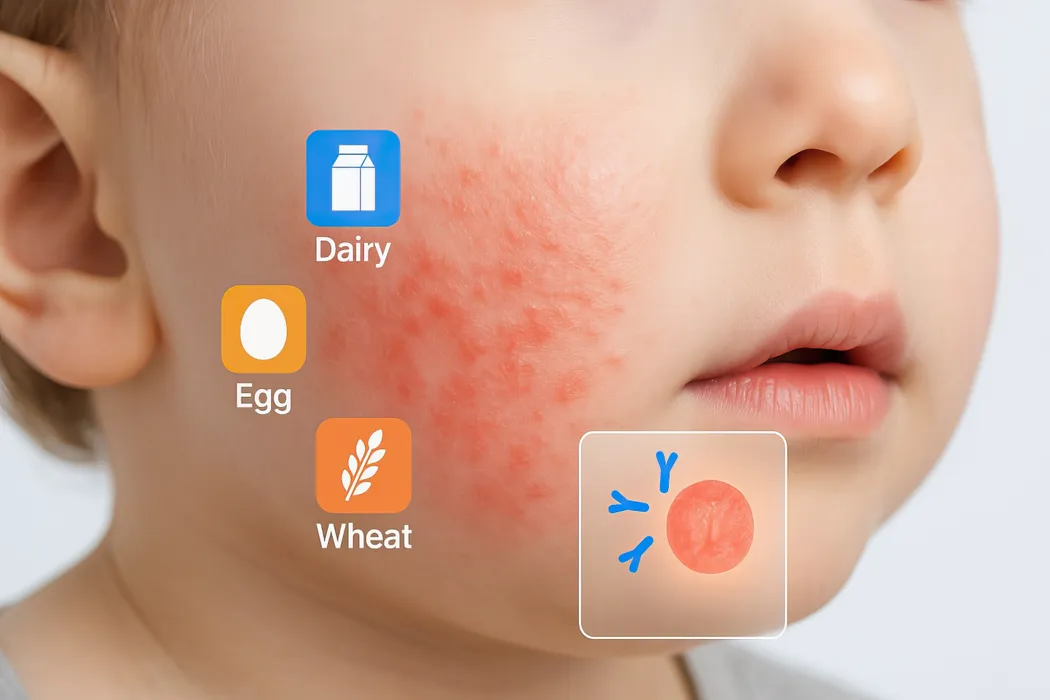
  • Eczema (Atopic Dermatitis): While eczema is not always caused by food, a food allergy skin rash in babies can cause existing eczema to flare up. This looks like patches of dry, scaly, red, and intensely itchy skin, particularly on the cheeks, elbows, and knees.

When a food allergy rash reaction occurs in a baby, it typically develops within minutes to two hours after consuming the trigger food.

To help you recognise these reactions, trusted clinical resources can provide useful references for understanding what hives and eczema flares may look like, such as:

Rash TypeVisual Appearance
Food Allergy HivesRaised, red or pink welts with pale centres
Eczema (Allergic Flare)Dry, scaly, red, itchy, and irritated patches
Common Heat RashTiny, clear or red bumps in skin fold

Location of the Rash: Face vs. Body

The location of a food allergy baby rash can provide useful information about the nature of the reaction:

  • On the Face: A baby food allergy rash on the face or a food allergy reaction on the baby's face can appear as redness, small bumps, or hives around the mouth, chin, and cheeks. Localised redness can also occur when food physically touches delicate facial skin and does not necessarily indicate a systemic allergy.
  • On the Body: A systemic reaction may cause a food allergy rash on the baby's back, chest, or tummy. A widespread rash that spreads rapidly to the limbs may be more concerning, particularly when accompanied by other allergy symptoms.
  • Mild vs. Severe Flares: A mild food allergy rash in a baby might consist of a few scattered pink spots. In contrast, more pronounced hives can cover large areas of the body and cause significant itching and discomfort.

The Baby Food Allergy List: Common Triggers

While a baby can theoretically develop an allergy to any food, a small group of foods is responsible for most food allergies. Knowing this baby food allergy list allows you to introduce these ingredients with appropriate care.

The Top 9 Allergic Foods for Babies

When introducing solids, pay close attention to this baby allergy food list:

  • Cow's Milk
  • Eggs
  • Peanuts
  • Tree Nuts: Such as almonds, cashews, and walnuts.
  • Soy
  • Wheat
  • Fish: Such as salmon or cod.
  • Shellfish: Such as shrimp or crab.
  • Sesame

These ingredients represent common food allergens that should be introduced appropriately and safely.

Can Fruits Cause Allergies? Apples and Bananas Explained

While less common than the major food allergens, some babies can experience reactions to fruits.

  • Bananas: Many parents ask, can banana cause allergy in babies? Yes, a banana allergy in babies is possible, although relatively uncommon. It can sometimes be associated with latex sensitivity, and a reaction may manifest as mild hives around the mouth.
  • Apples: If you are wondering, can apple cause allergy in babies? The answer is also yes. An apple allergy in babies can sometimes be associated with oral allergy syndrome, in which the immune system reacts to proteins in raw apple that resemble proteins found in certain pollens, resulting in localised lip or mouth irritation.

How to Identify and Diagnose a Food Allergy

Learning how to identify food allergy in babies requires a structured approach to introducing new foods. Follow these steps to support safe identification of possible reactions:

  • Introduce Foods One at a Time: Offer one new single-ingredient food at a time. This can make it easier to identify the potential cause if a reaction or digestive issue occurs.
  • Keep a Detailed Food Journal: Document what your baby eats, the time of day, and any physical changes you notice.
  • Recognise the Timing: Note how quickly symptoms appear. Some allergic reactions occur within minutes to a couple of hours after ingestion, while delayed reactions can take longer to appear.
  • Consult a Professional: If you are unsure whether your baby's symptoms indicate a food allergy or normal development, consult a paediatrician. They can refer you to a paediatric allergist for specialised testing, such as skin-prick tests or specific IgE blood tests.

Baby Food Allergy Treatment and Management

If your child is diagnosed with a food allergy, management relies on avoiding the trigger food and following a clear treatment plan for accidental exposure.

Baby Food Allergy Skin Rash Treatment

For mild skin reactions, such as a localised eczema flare or light hives, your paediatrician might recommend:

  • Gentle Skincare: Wash your baby's skin with lukewarm water and a mild, fragrance-free cleanser to remove any food residue.
  • Moisturisation: Apply a thick, hypoallergenic emollient to dry or eczematous skin to protect the skin barrier.
  • Cool Compresses: Place a clean, cool, damp cloth over the irritated area to soothe itching and reduce swelling.
  • Medical Treatments: Your paediatrician may recommend an appropriate topical treatment or an age-appropriate oral antihistamine. Always consult your doctor before administering these medicines to your baby.

General Baby Food Allergy Treatment

For systemic or severe allergies, the primary baby food allergy treatment is strict avoidance of the trigger food. This requires reading packaged food labels carefully, as allergen sources can appear under different names, such as "whey" or "casein" for milk.

If your baby is at risk of anaphylaxis, your doctor may prescribe an emergency epinephrine auto-injector. Ensure that all caregivers, family members, and childcare providers know how and when to use this life-saving device.

FAQS

How do I tell the difference between a heat rash and a baby food allergy rash?

A heat rash typically consists of tiny, pinhead-sized red bumps located in areas where sweat accumulates, such as skin folds, the neck, and the nappy area. It is rarely accompanied by other systemic symptoms. A food allergy rash in babies is more likely to present as raised, itchy hives or patch-like eczema, and it often occurs within two hours of eating a new food.

Can a food allergy rash appear hours or days after my baby eats a food?

Yes. While immediate-type allergic reactions can occur within minutes to two hours, delayed-type allergic reactions can take several hours or longer to develop. These delayed reactions may present with digestive symptoms or worsening eczema.

What should I do if my baby gets a mild rash around their mouth from food?

If your baby develops mild, temporary redness only where the food physically touched their skin, wash the area with lukewarm water and apply a gentle moisturiser. This can be a mild contact irritation rather than a true systemic allergy. However, if the rash spreads, develops into hives, or is accompanied by swelling or other symptoms, contact your paediatrician.

Is eczema a definitive sign that my baby has a food allergy?

No. Eczema is a common chronic skin condition in infants. While a food allergy can trigger or worsen an eczema flare-up, most cases of infant eczema are not caused by food allergies.

Will my baby eventually outgrow their food allergy?

Many children outgrow certain food allergies, particularly allergies to milk, eggs, soy, and wheat, by the time they reach school age. Allergies to peanuts, tree nuts, fish, and shellfish are more likely to persist, although a paediatric allergist can monitor your child's allergy over time.

Apollo 247 Floating Action Button