logo
0

Food for 6 Months Infant: Complete Feeding Guide

Starting solids at 6 months? Get a pediatrician-reviewed guide to age-appropriate foods, portions, allergens, and feeding schedules for your baby.

article image

Dr.Rohini priyanaka

Starting solid foods is one of the most exciting milestones of early parenthood, and it can feel equally overwhelming. Knowing what food for 6 months infant feeding looks like, and how to do it safely, makes a genuine difference to your baby's nutrition, growth, and long-term relationship with food. This guide covers everything from recognising readiness signs to building a simple feeding chart, so you can begin complementary feeding with confidence.

When and Why to Start Complementary Feeding at 6 Months

For the first six months of life, breast milk or formula provides complete nutrition. Around six months, a baby's iron stores from birth begin to deplete, and breast milk alone can no longer meet all their energy and micronutrient needs. This is why global health guidance consistently points to six months as the right time to begin complementary feeding for infants, while continuing breast milk or formula alongside solids.

Starting too early (before four months) carries real risks: an immature gut and kidneys, a higher chance of choking, and possible links to later obesity and food allergies. Starting too late means missing a critical window for iron intake, texture exposure, and flavour acceptance.

Signs Your Baby Is Ready for Solid Foods

Age alone is not enough. Most babies hit the six-month mark and also show these physical and developmental cues:

  • They can hold their head steady and upright without support.
  • They sit with minimal help and don't slump forward.
  • They show interest in food, watching your fork or reaching toward your plate.
  • The tongue-thrust reflex has faded, so food pushed into the mouth is no longer automatically pushed back out.
  • They can move food to the back of their mouth and attempt to swallow.

If your baby is six months old but not yet showing most of these signs baby ready for solids, speak with your pediatrician before starting. Premature babies should be assessed against their corrected age.

Age-Appropriate First Foods for 6-Month-Olds

The goal in the first few weeks is flavour exposure and learning the mechanics of eating, not calorie replacement. Textures should be smooth purees or very soft mashes. As swallowing improves, gradually thicken consistency over the following months.

Iron-Rich Foods (Prioritise These First)

Iron deficiency is the most common nutritional gap at this age. Good options include:

  • Pureed meat or poultry (chicken, fish)
  • Mashed cooked lentils (dal) and legumes
  • Iron-fortified infant cereals mixed with breast milk or formula

Vegetables and Fruits

These build acceptance of varied flavours early:

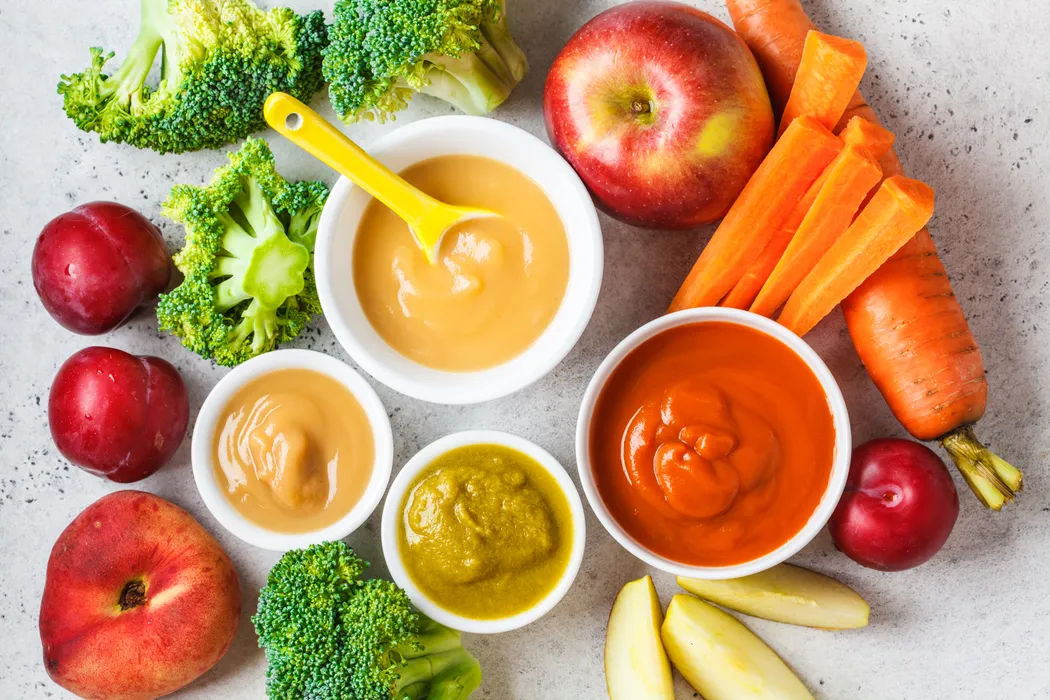
  • Soft-cooked, pureed vegetables: sweet potato, carrot, pumpkin, green peas
  • Mashed ripe fruit: banana, cooked apple, pear, avocado
  • Plain, unseasoned preparations only

Grains

  • Well-cooked rice, ragi (finger millet) porridge, or suji (semolina) thinned to a smooth consistency work well as baby weaning foods 6 months.

Texture Progression

StageTextureApproximate Age
Stage 1Smooth puree, no lumps6 months
Stage 2Soft mash, small soft lumps7 to 8 months
Stage 3Minced, finely chopped pieces9 to 12 months

Sample 6-Month Baby Feeding Chart

A 6 month baby food chart should be simple. At six months, one small meal a day is enough to begin. Milk feeds remain the main source of nutrition.
 

TimeFoodApproximate Portion
Morning (after milk feed)Iron-fortified ragi porridge or rice cereal1 to 2 tablespoons
MiddayBreast milk or formulaOn demand
AfternoonMashed banana or soft-cooked apple puree1 to 2 tablespoons
EveningBreast milk or formulaOn demand
NightBreast milk or formulaOn demand

After two to four weeks without issues, you can add a second small solid meal. By seven to eight months, most babies manage two solid meals daily; by nine to ten months, three meals. Always offer milk first until solids are well established.

Portions vary enormously between babies. Watch for hunger and fullness cues rather than aiming to finish a fixed quantity.

Introducing Allergens Safely

Early allergen introduction infants guidance has shifted considerably in recent years. Research now shows that introducing common allergenic foods from around six months (not avoiding them) may actually lower allergy risk.

The eight major allergens to introduce deliberately include eggs, peanuts, tree nuts, wheat, soy, fish, shellfish, and dairy.

How to do it safely:

  • Introduce one new food every three days. This "three-day rule" lets you identify any reaction before adding another new ingredient.
  • Start with a very small amount (a quarter teaspoon or less) and watch for 30 to 60 minutes.
  • Offer allergens during a meal you can monitor, not just before bedtime.
  • If there is no reaction after a few successful exposures, continue offering that food regularly.
  • A family history of food allergy or eczema does not mean you must avoid allergens, but discuss timing with your pediatrician first.

Signs of an allergic reaction include hives, swelling of the lips or face, vomiting, unusual fussiness, or difficulty breathing. If you see these, seek medical help immediately. Report adverse events to your healthcare provider or the relevant regulatory authority.

Foods and Practices to Avoid Before 12 Months

This is the contraindications section for complementary feeding. Some foods are unsafe or nutritionally inappropriate before the first birthday:

  • Honey: Carries a risk of infant botulism. Off-limits before 12 months without exception.
  • Cow's milk as a main drink: Cow's milk lacks adequate iron and has too much protein and sodium for infant kidneys. Small amounts used in cooking (yogurt, paneer) are fine, but not as a replacement for breast milk or formula.
  • Added salt and sugar: Infant kidneys cannot process excess sodium. Avoid all seasoning and sweeteners, including jaggery and honey-based syrups.
  • Whole nuts and large chunks: Hard foods and large pieces are choking hazards. Offer nut butters thinned into porridge or pureed form instead.
  • Unpasteurised foods and raw eggs: Risk of bacterial infection.
  • Low-fat or diet products: Infants need healthy fats for brain development. Do not use reduced-fat dairy or low-calorie foods.
  • Fruit juice: Offers sugar without the fibre of whole fruit. Unnecessary before age one.
  • Caffeinated drinks, carbonated drinks: Completely inappropriate for infants.

For broader newborn care essentials for new parents, including feeding and hygiene basics, explore this resource.

When to Consult a Pediatrician?

Most first foods for babies go smoothly, but watch for these situations that warrant a call or visit to your doctor:

  • Your baby consistently refuses all solid foods after two to three weeks of patient attempts.
  • You notice signs of an allergic reaction (hives, vomiting, swelling, breathing difficulty). Seek emergency care immediately for severe reactions.
  • Your baby gags severely or vomits repeatedly during every feeding attempt. Occasional gagging is normal; frequent, distressed gagging is not.
  • Poor weight gain or signs of nutritional deficiency (excessive tiredness, pallor).
  • You are unsure about feeding a baby with a diagnosed condition such as reflux, a cleft palate, or premature birth.

Starting solids is rarely an emergency, but it should not be a source of prolonged stress either. Your pediatrician can assess growth, check iron levels if needed, and adjust guidance for your baby specifically.

Medical Disclaimer: This article is for general informational purposes only and is not a substitute for professional medical advice, diagnosis, or treatment. Always consult a qualified healthcare provider before making changes to your infant's diet, especially if your baby has any health condition, allergy history, or was born prematurely. Individual needs vary; what works for one baby may not be right for another.
Conclusion

Starting complementary feeding at around six months is an important step in your baby's growth and development. Begin with small amounts of soft, nutrient-rich foods, particularly iron-rich options, while continuing breast milk or formula as the main source of nutrition. Introduce new flavours and textures gradually, follow your baby's hunger and fullness cues, and introduce common allergens carefully rather than avoiding them unnecessarily.

Every baby develops at a different pace, so feeding should be flexible and responsive rather than based on fixed portions or schedules. Avoid foods that can cause choking or are unsuitable before 12 months, and seek guidance from a paediatrician if your baby has feeding difficulties, allergies, poor weight gain, or was born prematurely. With patience, variety, and appropriate guidance, the transition to complementary foods can become a positive and enjoyable part of your baby's early development.

FAQS

How much food should a 6-month-old eat per day?

At six months, a baby typically starts with one to two tablespoons of a single food once a day. The amount increases gradually over weeks; by seven to eight months, most babies manage two small meals totalling around a quarter to half a cup of food daily.

Can I give water to a 6-month-old?

Small sips of water (around 60 ml per day) can be offered once solids begin, mainly to prevent constipation. Breast milk or formula should remain the primary fluid, and water should never replace milk feeds at this age.

Is rice cereal good for 6-month-old babies?

Plain rice cereal thinned with breast milk or formula is easy to digest and a traditional first food, but it offers little iron on its own unless it is iron-fortified. Iron-rich foods like pureed dal, meat, or iron-fortified multigrain cereals are nutritionally preferable as regular choices.

How many times a day should I feed solids at 6 months?

Start with one solid meal a day and build slowly. Most babies move to two meals by seven to eight months and three meals by nine to ten months, always alongside continued milk feeds.

Can I continue breastfeeding while starting solids?

Absolutely. Complementary feeding means adding solids to breast milk, not replacing it. Guidelines recommend continuing breastfeeding alongside solids up to two years or beyond, as breast milk continues to provide immune protection and important nutrients throughout infancy.

Apollo 247 Floating Action Button