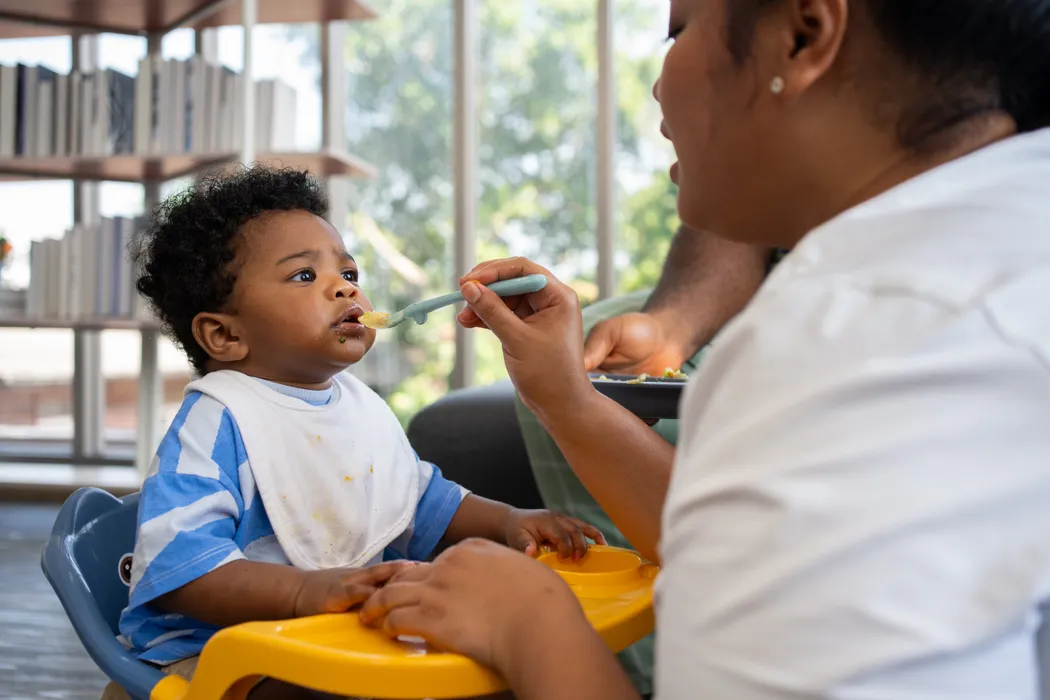
Food for Infants 6 Months: Complementary Feeding Guide
Learn about food for infants at 6 months, including first foods, meal ideas, safe textures, portion guidance, and foods to avoid.
Dr. Mayank
Starting solid food is one of the biggest milestones in your baby's first year, and it can feel both exciting and nerve-wracking. Choosing the right food for infants 6 months old sets the foundation for healthy eating habits, good nutrition, and a positive relationship with food for years to come. This guide walks you through every step, from spotting readiness signs to making simple meals at home, so you can feel confident rather than overwhelmed.
When and How to Start Complementary Feeding
Guidelines generally recommend introducing solid foods around 6 months of age while continuing breast milk or formula. Before this age, a baby's digestive system and kidneys are not mature enough to handle solid food safely, and breast milk or formula alone meets all their nutritional needs.
Signs Your Baby Is Ready
Not every baby is ready on the exact day they turn 6 months. Watch for these readiness cues before starting a complementary feeding guide:
Can hold their head steady and sit upright with minimal support
Shows clear interest in food, leaning forward or reaching toward your plate
Has lost the "tongue-thrust reflex" that automatically pushes food out of the mouth
Opens their mouth when a spoon comes close
If your baby cannot yet sit with support or still pushes food out with their tongue, give it another week or two before trying again.
Can I Start Solids Before 6 Months?
Starting before 4 months is not recommended and carries real risks, including choking, digestive discomfort, and a possible increase in allergy risk. If you feel your baby seems hungry or unsettled before 6 months, speak with your paediatrician before making any changes to feeding.
The goal in the first few weeks is exposure, not nutrition. Breast milk or formula remains the main source of calories. Think of early solids as practice. Following a 6-month baby food chart helps you track new foods systematically and spot any reactions early.
Week-by-Week Progression
Weeks 1 to 2:
Single-ingredient, smooth purees only. Start with one food at a time so you can identify any reaction. Good first foods for baby include:
Cooked and pureed rice (thin gruel or kanji)
Moong dal water or thin dal puree
Pureed ripe banana
Steamed and pureed apple or pear
Weeks 3 to 4:
Introduce more single-ingredient foods and gradually thicken the texture. You can begin simple two-ingredient combinations once each ingredient has been tested individually.
Ragi porridge (finger millet gruel)
Mashed sweet potato
Pureed carrot
Rice and moong dal khichdi (soft, no spices)
Portion sizes: Start with 1 to 2 teaspoons per sitting, once a day. By the end of the first month, most babies comfortably eat 2 to 4 tablespoons once or twice a day.
Texture: Everything at 6 months should be smooth enough to pour off a spoon or mash easily between two fingers. Lumps come later, usually around 8 to 9 months.
Baby Food Schedule 6 Months: A Sample Daily Routine
A simple baby food schedule at 6 months might look like this:
Time
Feed
Morning (wake-up)
Breast milk or formula
Mid-morning
1 to 2 tsp solid puree (new food trial)
Afternoon
Breast milk or formula
Evening
Breast milk or formula
Night
Breast milk or formula
Milk feeds still dominate the day. The one solid session is purely for learning and exploration at this stage.
Step-by-Step Weaning Method
Weaning here means gradually adding weaning foods for babies alongside milk feeds, not stopping breastfeeding. Here is how to do it safely.
Start with One Food: Choose a single-ingredient puree, such as rice gruel or banana puree.
Begin with Small Amounts: Offer 1–2 teaspoons once a day when your baby is alert and comfortable.
Follow the 3-Day Rule: Introduce one food at a time and wait 3 days while watching for rashes, vomiting, diarrhoea, or unusual fussiness.
Introduce the Next Food: If no reaction appears, introduce another new food and repeat the observation period.
Increase Gradually: Slowly increase the quantity and thickness as your baby shows interest and tolerates the food well.
Follow Baby’s Cues: Never force-feed. If your baby turns away or closes their mouth, stop and try again the following day.
What Is the 3-Day Rule?
The 3-day rule gives your baby's system time to react to a new food and gives you a clear window to identify any problem ingredient. If a rash or digestive upset appears, you will know which food caused it because nothing else changed. Once a food passes the 3-day test, it can become a regular part of the diet.
Easy Homemade Baby Food Recipes
Making food for infants 6 months at home is simpler than it looks. You need very few tools: a small saucepan, a blender or the back of a fork, and a fine strainer. No salt, sugar, honey, or spices in any recipe below. These homemade baby food recipes let you control every ingredient.
1. Rice Kanji (Rice Gruel)
A gentle first food that is easy to digest.
Wash 2 tablespoons of raw rice.
Cook in 1 cup of water until very soft and mushy, about 20 minutes on low heat.
Blend or pass through a strainer to get a smooth, pourable consistency.
Cool to room temperature before feeding.
2. Apple Puree
A naturally sweet puree most babies accept easily.
Peel, core, and chop half a ripe apple into small pieces.
Steam until completely soft, about 8 to 10 minutes.
Blend with 1 to 2 teaspoons of the steaming water until smooth and lump-free.
3. Moong Dal Khichdi
A protein and carbohydrate combination suitable from weeks 3 to 4.
Combine 1 tablespoon each of raw rice and washed yellow moong dal.
Add half a cup of water and pressure-cook until very soft.
Mash well with a fork or blend briefly. Thin with boiled water if needed. No salt, no ghee at this stage.
4. Ragi Porridge
Rich in calcium and iron, ragi is a well-established Indian weaning food.
Mix 1 tablespoon of ragi flour in 2 tablespoons of cold water to form a smooth paste.
Pour into half a cup of boiling water, stirring constantly.
Cook on low heat for 5 to 7 minutes until thickened. Cool before serving.
Avoid storing prepared purees for more than 24 hours in the fridge. Fresh is always preferable at this age.
Foods to Avoid and Allergy Precautions
Certain foods are not safe for babies under 12 months and must be completely avoided:
Honey: Avoid honey before 12 months because it can carry bacteria that cause infant botulism.
Cow’s Milk: Do not use cow's milk as the main drink before 12 months. Small amounts used in cooking may be discussed with your paediatrician.
Added Salt & Sugar: Avoid added salt and sugar in foods for young babies to support healthy eating habits and appropriate nutrition.
Choking Hazards: Avoid whole nuts and large pieces of firm food, which can pose a serious choking risk.
Unpasteurised Dairy: Avoid unpasteurised dairy products because they may contain harmful bacteria.
Caffeinated Drinks: Avoid caffeinated drinks such as tea and coffee, as they are not appropriate for infants.
Introducing Potential Allergens
Common allergens include peanuts, tree nuts, eggs, fish, wheat, and dairy. Introduce each one separately, following the 3-day rule, so any reaction can be traced to a specific food. Signs of an allergic reaction include hives, swelling around the mouth, vomiting, or breathing difficulty. If any of these appear, stop the food and seek medical care promptly.
Report adverse events or unexpected reactions to your healthcare provider or the relevant regulatory authority.
Contraindications and When to Consult a Doctor?
Some babies need individual guidance before starting any solid food. Speak with your paediatrician first if your baby:
Was born prematurely (before 37 weeks). Corrected age, not birth age, is used to assess readiness, and the gut may need more time to mature.
Has a low birth weight or has had poor weight gain
Has a known or suspected gastrointestinal condition such as reflux, malabsorption, or a surgical history
Has a strong family history of severe food allergies
Has any condition affecting swallowing or muscle tone
Premature babies are not automatically ready for solids at 6 months of birth age. A neonatologist or developmental paediatrician should guide the timing for this group.
Starting complementary feeding at around six months is an important milestone that helps your baby explore new tastes, textures, and eating skills while breast milk or formula remains the main source of nutrition. Begin with small amounts of simple, soft foods and gradually increase variety, quantity, and texture as your baby becomes comfortable. Introduce new foods thoughtfully, watch for signs of allergic reactions, and avoid foods that may pose health or choking risks. Most importantly, follow your baby's readiness cues and seek paediatric guidance if your baby was born prematurely, has feeding difficulties, poor weight gain, or an underlying health condition.
FAQs
How many meals should a 6-month-old eat per day?
At 6 months, one solid meal per day is enough, with breast milk or formula continuing as the main nutrition. By 7 to 8 months, most babies move to two solid sessions daily.
Can I give water to a 6-month-old baby?
Small sips of water (around 60 to 120 ml per day) can be offered once solids begin, but water should never replace a milk feed at this age. Always ask your paediatrician what is right for your baby's size and health.
What is the best time to introduce solids in a day?
Mid-morning works well for most families. Your baby is typically alert and not too hungry or too full, which makes them more willing to explore a new taste and texture.
Can I mix breast milk with baby food?
Yes, stirring a little expressed breast milk into a puree can thin it to the right consistency and makes the flavor familiar, which often helps babies accept new foods more easily.
How long should I continue breastfeeding after starting solids?
Guidelines generally recommend continuing breast milk alongside solid foods until at least 2 years of age, or for as long as mother and baby both wish to continue.