logo
0

Foods for Baby Brain Development

Discover the best foods for baby brain development, including nutrient-rich options that support healthy brain growth, learning, and overall development.
 

article image

Dr. Bhanu Prakash

From the moment your child is born, their brain is a busy hub of activity. During the first few years of life, a child's brain develops more rapidly than at any other stage. In fact, research from the Centre on the Developing Child at Harvard University shows that the brain creates more than one million new neural connections every second in the early years. To support this astonishing growth, providing the right nutrients is essential.

Choosing the right baby brain development food can give your little one the cognitive foundation they need for a lifetime of learning, memory, and emotional well-being. But with so much information available, knowing which food is good for baby brain development and how to transition through different age milestones can feel overwhelming.

This comprehensive, science-backed guide will walk you through the best food for baby brain development, from your baby's very first bites at six months to healthy snacks for active five-year-olds.
 

1. Why Nutrition Matters: Crucial Nutrients for Brain Growth
 

To understand which diet acts as the ultimate baby brain growth food, we must look at the specific nutrients that fuel a child's nervous system. The brain requires high amounts of energy and specific building blocks to build neural pathways, a process called myelination (which insulates nerve fibres to help signals travel faster).

When designing a nutritious baby mind development food plan, prioritise these key nutrients:

  • Docosahexaenoic Acid (DHA): This omega-3 fatty acid is a primary structural component of the brain and retina. Including plenty of DHA food for baby meals supports visual and cognitive development.
  • Iron: Crucial for oxygen transport and brain cell development. An iron deficiency in infancy can lead to cognitive and motor delays.
  • Choline: Vital for the creation of acetylcholine, a neurotransmitter that regulates memory, mood, and intelligence.
  • Zinc and Iodine: Essential minerals that support thyroid function, tissue growth, and cognitive processes.
  • Protein: The building blocks of brain tissue and neurotransmitters.
    By incorporating a variety of whole foods, you can ensure your child gets these vital components naturally.
     

2. Starting Strong: Brain Development Food for Babies (6 to 12 Months)
 

For the first six months of life, breast milk or infant formula provides all the nutrition your baby needs. Around six months, however, babies begin their exciting transition to solid foods. This is a critical window to introduce nutrient-dense options.

First Bites (6 to 8 Months)

When starting solids, finding the right food for brain development of a 6-month-old baby is crucial because their natural iron stores begin to deplete around this time.

  • 6 Months: A perfect 6-month baby brain development food is iron-fortified single-grain cereal mixed with breast milk or formula, or smooth, pureed beef or lentil paste. When choosing a starter brain development food for a 6-month-old baby, aim for easily digestible, iron-rich purees.
  • 7 Months: As your baby gets used to swallowing, try a brain development food for 7 months baby like pureed avocado. Avocados are packed with monounsaturated fats, which help brain development. Another excellent 7-month baby brain development food is pureed wild salmon, which acts as a fantastic DHA baby food.
  • 8 Months: Introduce a brain development food for an 8-month-old baby with a slightly thicker texture. Mashed hard-boiled egg yolks are packed with choline. For a tasty 8-month baby brain development food combination, blend mashed banana with unsweetened Greek yoghurt.

Advancing Textures (9 to 12 Months)

At this stage, babies are developing their "pincer grasp" and can handle soft finger foods.

  • 9 Months: A fantastic brain development food for 9 months baby is thoroughly mashed blueberries or small flakes of well-cooked, boneless salmon. Salmon is a premier DHA-rich food for baby meals, aiding both brain and eye development.
  • 10 Months: Offer a brain development food for 10 months; baby likes small, soft-cooked pieces of sweet potato or broccoli florets. Introducing a variety of textures and flavours at this age encourages healthy eating habits later on.

By selecting high-quality brain development baby food during the first year, you are laying a strong foundation for their sensory and motor skills. Focusing consistently on food for brain development in babies helps ensure they reach their developmental milestones on time.
 

3. Growing Fast: Brain Development Food for Toddlers (Ages 1 to 3)

Once your baby reaches their first birthday, their growth rate continues to soar, and so do their cognitive challenges. Toddlers are learning to talk, walk, and navigate complex emotional landscapes. Consequently, choosing the right brain development food for toddlers is more important than ever.

Nourishing One-Year-Olds

The transition to whole milk and table foods begins at twelve months. A balanced 1 year baby brain development food menu should focus on healthy fats and clean proteins.

  • Whole Milk Yoghurt: Full-fat dairy is essential, as young brains need fat to grow.
    Eggs: Provide a highly bioavailable source of choline and protein.
  • Traditional Dishes: If you are looking up traditional cultural options, such as baby ke brain development food ideas online, soft-cooked lentil khichdi with a teaspoon of ghee is a wonderful, nutrient-dense choice packed with protein and healthy fats.

Ensuring your child receives a diverse brain development food for 1 year baby routine helps keep their energy levels stable and their brains focused.

Brain Food for Two and Three-Year-Olds

During these active years, tantrums and picky eating can sometimes make mealtime difficult. However, keeping simple, brain-boosting finger foods on hand can make a big difference.

  • 2 Years: The ideal 2-year-old baby brain development food includes soft cheese cubes, steamed wild salmon patties, and oatmeal topped with ground chia seeds. Providing a varied 2-year-old baby brain development food diet ensures they get a steady supply of micronutrients. Keep in mind that a solid 2-year-old baby brain development food plan should limit added sugars, which can interfere with cognitive focus.
  • 3 Years: Three-year-olds love dip-based snacks. A healthy 3-year-old baby brain development food plate can include soft-cooked carrot sticks with hummus, or thin slices of apple with smooth almond butter. These snacks are widely considered the best food for toddlers' brain development because they combine healthy fats with complex carbohydrates.

Consistently offering a variety of toddler brain development food ensures their growing minds remain sharp and ready to learn.

4. Preschool and Beyond: Brain Development Food for 4 to 5-Year-Olds

By the age of four and five, children are preparing for preschool or kindergarten. Their cognitive tasks now require sustained attention, memory retention, and executive function.
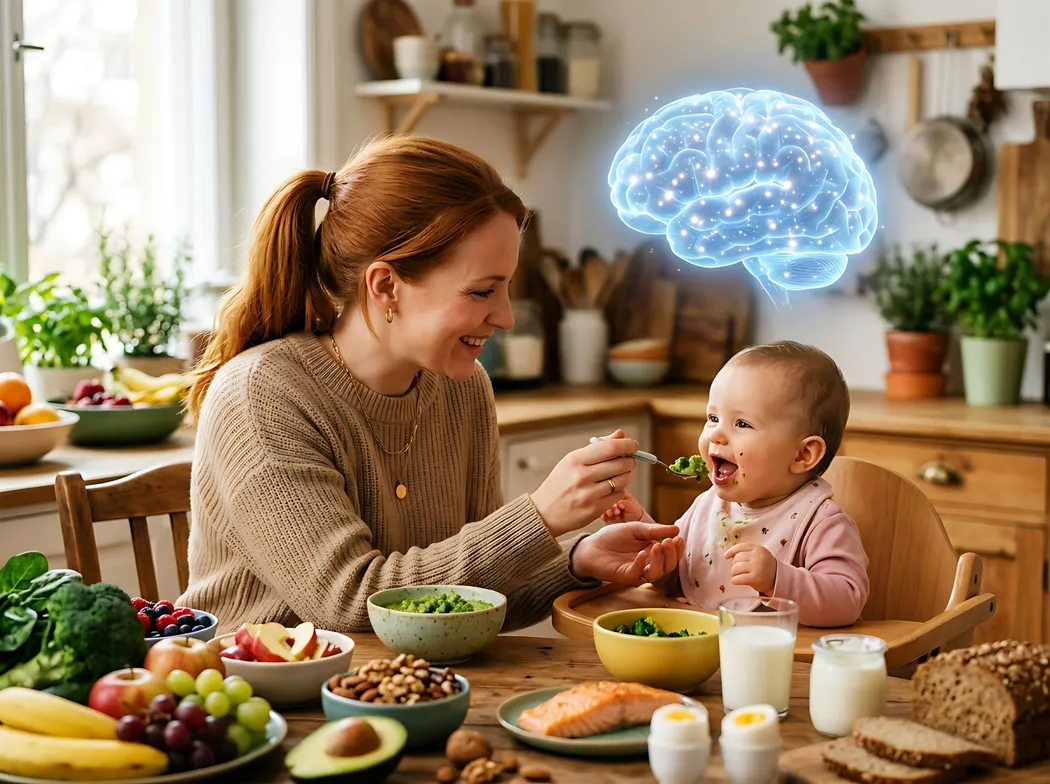
  • 4 Years: A great brain development food for 4 year baby includes whole-wheat wraps with turkey and avocado, or nutritious berry smoothies. Blueberries, often called "brain berries," are packed with antioxidants that protect brain tissue from oxidative stress.
  • 5 Years: Preparing a brain development food for 5 year baby means focusing on balanced meals that prevent afternoon energy slumps. A lunch of a whole-grain tuna salad sandwich (using low-mercury canned light tuna) provides high-quality DHA, complex carbs, and protein.

If you are wondering which food is best for baby brain development as they head into school, the answer lies in whole, unprocessed foods that keep blood sugar levels stable.

5. Top Superfoods for Your Baby's Brain

While overall dietary patterns matter most, certain ingredients stand out. If you want to know which foods increase baby brain development most effectively, consider adding these superfoods to your child's weekly menu.
 

SuperfoodKey Brain NutrientsHow to Serve It
EggsCholine, Protein, Vitamin B12Scrambled, hard-boiled, or mashed into a soft puree.
Wild SalmonDHA, Omega-3s, ProteinFlaked gently (ensure no bones) or baked into soft patties.
AvocadosMonounsaturated Fats, FolateMashed onto whole-grain toast or sliced into soft wedges.
Greek YogurtIodine, Protein, CalciumPlain, full-fat yoghurt mixed with pureed fruit or a pinch of cinnamon.
 
Beans & LentilsIron, Zinc, FibreWell-cooked and mashed into a spread or added to soups.
Leafy GreensFolate, Antioxidants, VitaminsFinely chopped and sautéed, or blended into fruit smoothies.
 

Adding these options to your weekly grocery list ensures you are serving the best brain development food for babies and toddlers alike. If you are looking for a reliable super food for baby brain development, wild salmon and eggs are your absolute best starting points.
 

Summary: Designing a Brain-Healthy Plate
 

Nourishing your child's mind doesn't have to be complicated. Whether you are selecting a food good for baby brain development for your infant, looking for a healthy baby brain food, or searching for a brain food for babies that your picky toddler will actually eat, the golden rule remains the same: focus on real, whole foods.

Minimise processed snacks, avoid added sugars, and emphasise healthy fats, clean proteins, and iron-rich ingredients. By doing so, you will easily provide the best food for brain development for babies and toddlers, setting your child up for a bright, healthy future.
 

FAQS

Which foods help baby brain development the most?

Foods rich in omega-3 fatty acids (specifically DHA), choline, iron, and zinc are the most beneficial. Excellent examples include wild salmon, eggs, whole-fat Greek yoghurt, avocados, iron-fortified grains, and leafy green vegetables.

When should I start giving my baby DHA-rich foods?

You can introduce DHA-rich foods, such as pureed wild salmon or mashed sardines, starting around 6 months of age, as soon as your baby is cleared by a paediatrician to begin eating solid foods.

Can I give my baby nuts or seeds for brain health?

Whole nuts and seeds are a choking hazard for babies and young toddlers. However, you can safely introduce them by thinning smooth peanut or almond butter with water, breast milk, or formula, or by stirring finely ground chia, flax, or hemp seeds into oatmeal and purees.

How does iron affect my baby's brain development?

Iron is vital for the development of brain tissue and the production of myelin, which insulates nerve fibres. An iron deficiency can lead to irreversible delays in cognitive, motor, and socio-emotional development.

Is full-fat dairy better than low-fat dairy for my toddler's brain?

Yes. The American Academy of Paediatrics (AAP) recommends whole-milk dairy products for children between ages 1 and 2, as dietary fat is crucial for rapid brain growth and myelination during this stage.

Apollo 247 Floating Action Button