logo
0

hCG Hormone Levels in Pregnancy: Normal Range Chart

Understand hCG hormone levels in pregnancy week by week, normal ranges, and what high or low levels may indicate. Reviewed by Apollo doctors.
 

article image

Dr.J.T.Hema Prathima

Finding out you are pregnant often starts with a number on a report, and understanding hCG hormone levels in pregnancy can feel overwhelming when you do not know what those numbers mean. Human chorionic gonadotropin, or hCG, is the hormone that signals pregnancy and keeps it progressing in the earliest weeks. Whether your doctor has ordered a blood test or you are trying to make sense of a home result, this guide walks you through normal ranges, what high or low levels can mean, and when to seek medical advice.

What Is hCG and Why Does It Rise in Pregnancy?

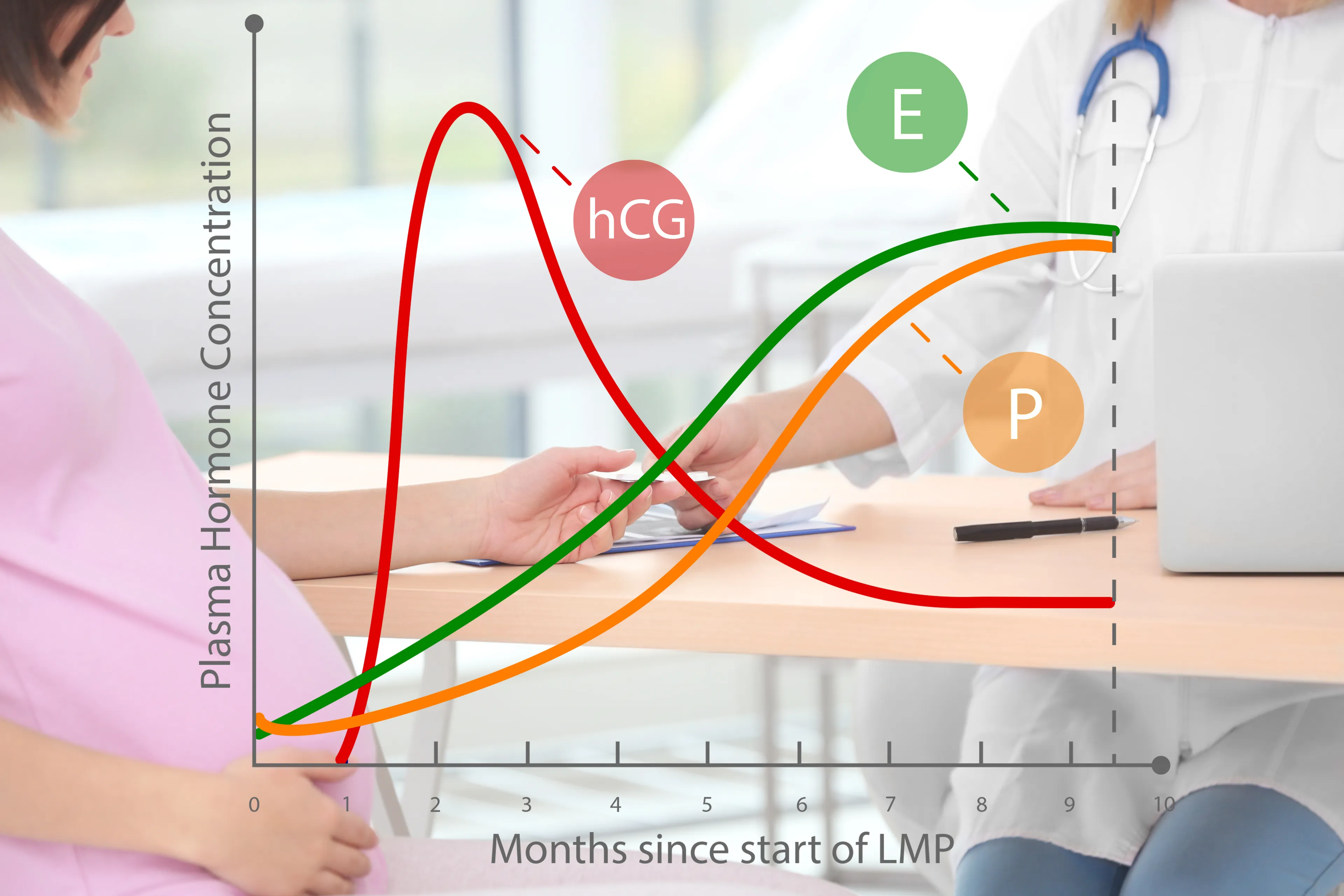
Human chorionic gonadotropin is a hormone produced almost exclusively by the placenta after a fertilised egg implants in the uterine lining. Its main job is to signal the corpus luteum (the remnant follicle left after ovulation) to keep producing progesterone, which prevents the uterine lining from shedding and protects the developing embryo.

hCG is detectable in the blood as early as 8 to 10 days after conception. Levels rise rapidly, often doubling every 48 to 72 hours during the first trimester. This sharp climb is why beta hCG levels in early pregnancy are so closely watched. After about 8 to 11 weeks, levels naturally plateau and then gradually decline for the rest of the pregnancy.

Normal hCG Levels by Week: Reference Chart

hCG is measured in milli-international units per millilitre (mIU/mL). The ranges below are widely used reference values, but every laboratory sets its own reference intervals. A single number means very little without context; the trend over serial tests matters far more.

Gestational Week (from last menstrual period) Typical hCG Range (mIU/mL)
3 weeks 5 to 50
4 weeks 10 to 426
5 weeks  19 to 7,340
6 weeks  1,080 to 56,500
7 to 8 weeks  7,650 to 229,000
9 to 12 weeks  25,700 to 288,000
13 to 16 weeks 13,300 to 254,000
17 to 24 weeks 4,060 to 165,400
25 to 40 weeks  3,640 to 117,000

   
This hCG levels chart by week shows just how wide the normal range is, particularly in early pregnancy. A result that looks alarming in isolation may be perfectly normal once your gestational age and your lab's specific reference range are factored in. Always interpret results with your obstetrician rather than against an online chart alone.

What Do High hCG Levels Indicate?

A result above the expected normal hCG range in pregnancy does not automatically mean something is wrong. Several explanations are common.

  • Carrying twins or higher-order multiples is one of the most frequent reasons hCG runs higher than expected, because more placental tissue produces more hormone.
  • Inaccurate dating is another possibility. If ovulation happened earlier than assumed, the pregnancy may simply be further along than the dates suggest.
  • A molar pregnancy (gestational trophoblastic disease) causes markedly elevated hCG because abnormal placental tissue grows unchecked. This is less common but requires prompt medical evaluation.
  • Certain rare germ-cell tumours can also produce hCG, though these are unrelated to normal conception.

High hCG levels meaning twins is a popular question, and while it is plausible, an ultrasound is the only reliable way to confirm a multiple pregnancy. Do not draw conclusions from a single number.

What Do Low hCG Levels Indicate?

Low hCG levels cause concern mainly when levels fail to rise at the expected rate over serial draws, or when they fall outright. Possible explanations include:

  • A pregnancy that is earlier in dates than assumed (incorrect dating is the most benign reason).
  • Threatened or impending miscarriage, where the placenta is not developing adequately.
  • Ectopic pregnancy, where the embryo has implanted outside the uterus, most often in a fallopian tube. This is a medical emergency requiring urgent attention.

A single low reading at an uncertain gestational age can still be entirely normal. What matters more is the rate of rise. If levels are doubling appropriately every 48 to 72 hours, the pregnancy is generally progressing. Your doctor will usually repeat the hCG blood test pregnancy 48 hours later to assess the trend before drawing any conclusions.

Contraindications and Cautions for hCG Testing

hCG testing is a safe blood draw, but there are important limitations to understand before relying on the results.

  • Certain fertility treatments use hCG injections to trigger ovulation. A blood test taken too soon after such an injection can produce a false-positive result unrelated to pregnancy.
  • Rare medical conditions, including some kidney disorders that reduce hCG clearance or certain non-pregnancy tumours, can cause elevated readings.
  • Home urine tests detect hCG but are less sensitive and cannot reliably track the small changes that matter for early pregnancy monitoring. A serum beta hCG blood test in pregnancy is far more precise for this purpose.
  • Anyone who has recently had a miscarriage, termination, or an ectopic pregnancy treated with medication should not use a single hCG reading to confirm a new pregnancy, as residual hCG may still be circulating.

Who should not rely solely on hCG testing: Anyone with a history of ectopic pregnancy, recurrent pregnancy loss, symptoms of pain or bleeding, or those undergoing fertility treatment needs serial testing and ultrasound alongside hCG results. A single reading is never enough for clinical decision-making in these situations.

Report adverse events related to any medication given during fertility treatment or pregnancy management to your healthcare provider or the relevant regulatory authority.

When to See a Doctor About Your hCG Levels?

Most hCG monitoring is routine, but certain symptoms alongside an abnormal result warrant prompt medical attention.

Seek urgent care if you experience:

  • Vaginal bleeding, whether light spotting or heavier flow
  • One-sided lower abdominal or pelvic pain, which can indicate an ectopic pregnancy
  • Severe nausea, vomiting, or uterine cramping
  • A significant drop in hCG levels confirmed across two or more blood draws

Even without symptoms, consult your obstetrician if your hCG is not rising as expected on serial testing. Early review can make a meaningful difference in outcomes.

As you move through a healthy pregnancy and prepare for your new arrival, reading newborn care tips after delivery can help you feel ready for what comes next.

Prescribing information disclaimer: This article does not constitute medical advice or a prescription. Any medication used in the context of fertility treatment or pregnancy management should be taken only under the supervision of a qualified healthcare professional. Do not self-medicate based on hCG results.

Conclusion

hCG hormone levels can provide valuable information about early pregnancy, but a single result cannot determine whether a pregnancy is progressing normally. Reference ranges are broad and vary with gestational age, while the pattern of change on serial tests can provide more useful information during the early weeks. Your doctor may also use ultrasound findings and your symptoms to understand what the hCG results mean.

If your hCG level is unexpectedly high, low, rising slowly, or falling, avoid drawing conclusions from the number alone. Repeat testing may be recommended, particularly when pregnancy dates are uncertain or there is concern about miscarriage or ectopic pregnancy. Seek prompt medical attention for vaginal bleeding, severe or one-sided pelvic pain, dizziness, or other concerning symptoms. Appropriate medical follow-up can help interpret hCG results accurately and guide the next steps in your pregnancy care.

FAQS

What is a good hCG level at 4 weeks pregnant?

At 4 weeks from the last menstrual period, hCG typically falls between 10 and 426 mIU/mL, though the range is very wide. A result within this window, combined with an appropriate rise on a repeat test 48 hours later, is generally reassuring.

Can hCG levels predict miscarriage?

No single reading can predict a miscarriage with certainty. However, levels that plateau or fall steadily before 8 to 10 weeks, rather than continuing to rise, can be an early warning sign that warrants urgent review by your doctor.

How often should hCG levels double?

In a healthy early pregnancy, hCG generally doubles every 48 to 72 hours up to about 6 weeks, then the doubling time slows. After 10 weeks, levels begin to decline naturally, so doubling is no longer a useful measure.

Does hCG level indicate the baby's gender?

No. hCG is produced by placental tissue regardless of the embryo's sex, and no reliable evidence links hCG levels to fetal gender. Fetal sex can only be determined through ultrasound or genetic testing.

What is a normal hCG level for a positive pregnancy test?

Most home urine tests detect hCG at 20 to 25 mIU/mL or above. A serum hCG blood test in pregnancy can detect levels as low as 5 mIU/mL, making it useful for very early confirmation or monitoring in high-risk situations.

Apollo 247 Floating Action Button