logo
0

Level of hCG in Pregnancy: Normal Ranges and What They Mean

Learn about hCG levels in pregnancy, normal ranges by week, how hCG changes during early pregnancy, and what high or low results may mean.
 

article image

Dr. J.T.Hema Prathima

Understanding the level of hCG in pregnancy can feel both reassuring and confusing, especially during those anxious early weeks. Human chorionic gonadotropin (hCG) is the hormone that confirms a pregnancy exists, and tracking how it changes helps doctors check whether a pregnancy is developing as expected. Whether you have just seen a positive test or your doctor has ordered repeat blood work, this guide explains what the numbers mean and when to seek advice.

What Is hCG and Why Is It Measured in Pregnancy

hCG stands for human chorionic gonadotropin. After a fertilised egg implants in the uterine lining, the developing placenta begins producing this hormone. Its main job is to signal the body to keep producing progesterone, which maintains the uterine lining and supports the early pregnancy.

hCG is also the hormone thathome pregnancy test stripsdetect. Levels rise rapidly in early pregnancy, making it a reliable marker for confirming that implantation has occurred. Doctors measure it for two reasons: to confirm a pregnancy is present, and to monitor whether it is progressing normally.

Normal hCG Levels by Week (Chart)

The range of "normal" for hCG is very wide. Two healthy pregnancies can have vastly different numbers at the same gestational age and both result in healthy babies. The table below shows approximate ranges in milli-international units per millilitre (mIU/mL), with gestational age counted from the first day of the last menstrual period (LMP).

Gestational Week (from LMP)  Approximate hCG Range (mIU/mL)
3 weeks 5 to 50
4 weeks  10 to 425
5 weeks    19 to 7,340
6 weeks  1,080 to 56,500
7 to 8 weeks   7,650 to 229,000
9 to 12 weeks    25,700 to 288,000
13 to 16 weeks  13,300 to 254,000
17 to 24 weeks4,060 to 165,400
25 to 40 weeks3,640 to 117,000

     
These are general reference ranges, and individual laboratory values may differ. Always interpret results alongside your doctor's assessment, not in isolation.

A single hCG number tells you less than the trend over time. Doctors typically look at at least two measurements taken 48 hours apart to understand how the level is changing.

How hCG Confirms and Monitors Pregnancy

A home pregnancy test detects hCG in urine and gives a positive or negative result, usually from around the day of a missed period. It cannot tell you the exact number.

An hCG blood test for pregnancy,  specifically a quantitative beta hCG test (sometimes called a "beta hCG" or serum hCG), measures the precise amount in the bloodstream. This is useful when a doctor needs to confirm a pregnancy early, rule out an ectopic pregnancy, or track progress after a concern is raised.

The doubling-time rule

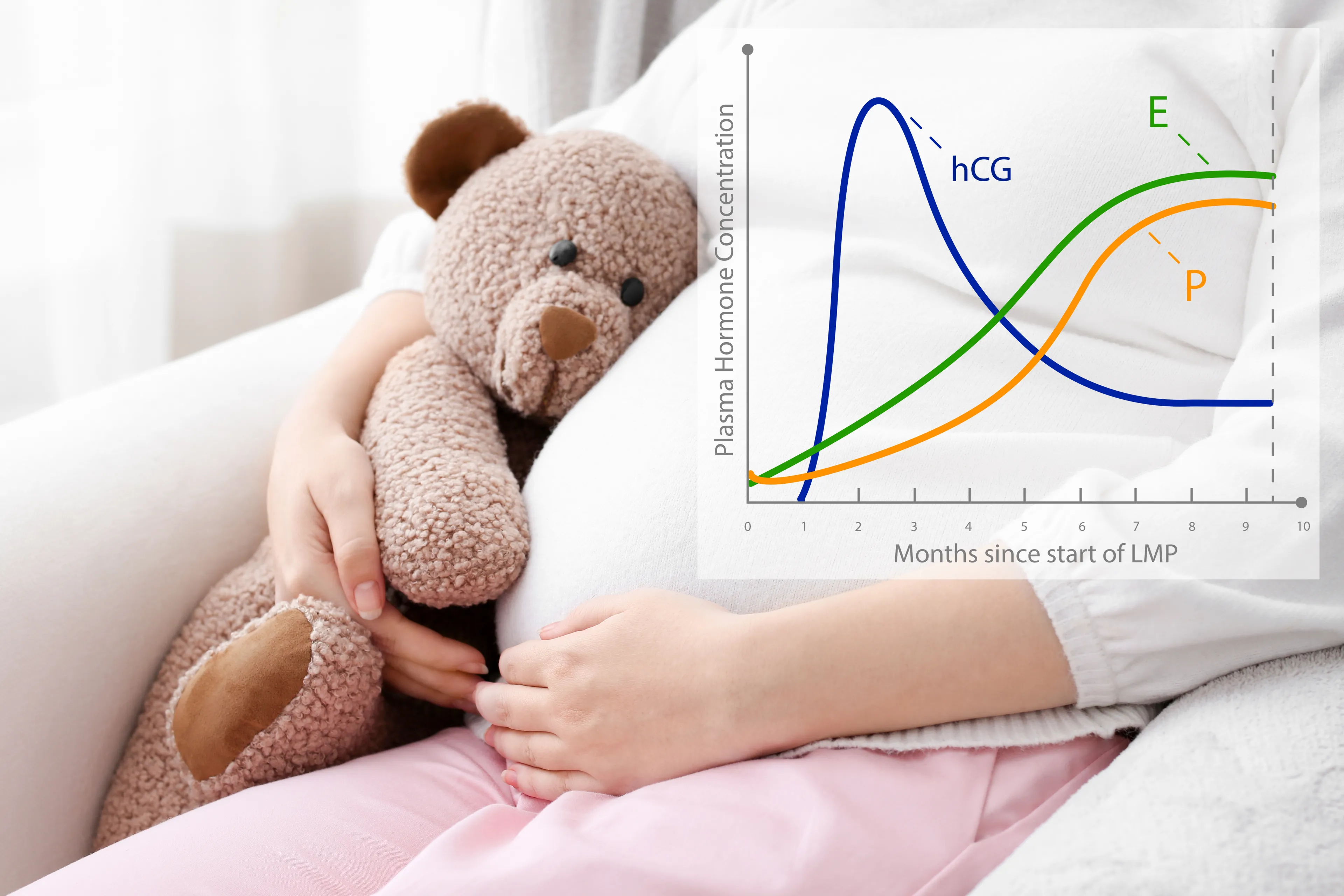
In a healthy early pregnancy, beta hCG levels typically double roughly every 48 to 72 hours up to about 6 weeks, after which the rate of rise slows. Levels peak around 8 to 10 weeks, then gradually decline and plateau for the rest of the pregnancy.

Two values taken 48 hours apart showing at least a 66 percent rise are generally considered a reassuring pattern. Serial measurements always matter more than any single reading.

What High or Low hCG Levels Can Indicate

Abnormal hCG values are a signal for further investigation, not an automatic diagnosis. Clinical context, ultrasound findings, and symptoms all matter.

Higher-than-expected levels may be linked to:

  • A multiple pregnancy, such as twins or triplets. hCG levels with twins can be significantly higher than singleton levels.
  • A molar pregnancy, where abnormal placental tissue forms in place of a normal embryo.
  • Incorrect dating of the pregnancy.

Lower-than-expected or slowly rising levels may suggest:

  • Early pregnancy loss or threatened miscarriage.
  • An ectopic pregnancy, where implantation has occurred outside the uterus.
  • Inaccurate gestational dating.

Low hCG levels causes are not always alarming. Some women naturally start with lower numbers and still carry to term. That said, an hCG that is not rising appropriately always warrants medical review rather than watchful waiting at home.

Contraindications and Precautions for hCG Testing

hCG testing is generally safe, but certain situations affect accuracy or interpretation.

  • Fertility treatments: hCG injections used to trigger ovulation can cause falsely elevated hCG readings for up to two weeks after the injection.
  • Rare medical conditions: Some tumours that produce hCG can cause unexpected positive results unrelated to pregnancy.
  • Dilute urine: Drinking large amounts of fluid can dilute urine and reduce the sensitivity of a home pregnancy test. First-morning urine is usually more concentrated and may provide a more reliable result.
  • Testing too early: Testing before implantation and sufficient hCG production can result in a false-negative pregnancy test, even when pregnancy is present.

Self-diagnosis is not appropriate. Anyone who receives an unexpected result should discuss it with a healthcare provider rather than drawing conclusions from an online chart alone. Report adverse events to your healthcare provider or the relevant regulatory authority.

When to Consult a Doctor About hCG Levels?

A single reading outside the chart range is rarely an emergency on its own, but certain situations need prompt attention.

Seek care promptly if you experience:

  • Vaginal bleeding or spotting in early pregnancy alongside abnormal hCG trends.
  • Severe one-sided abdominal or pelvic pain, which can be a sign of ectopic pregnancy.
  • hCG levels that are falling when they should be rising.
  • Levels that are not doubling within the expected timeframe on serial testing.
  • Any result your doctor has flagged as concerning.

Once a healthy pregnancy is confirmed and progressing well, the focus shifts from monitoring hCG to routine antenatal care. If you are approaching the later stages of pregnancy or have just delivered, Apollo's newborn care guide after birth covers practical next steps for your baby's first days.

Conclusion

The level of hCG in pregnancy changes significantly throughout the first trimester. It generally rises rapidly during early pregnancy, reaches a peak, and then gradually decreases. Because normal hCG ranges are broad and can vary between pregnancies, a single result should not be interpreted on its own. Doctors may use repeat beta-hCG testing, ultrasound findings, gestational age, and symptoms to assess whether a pregnancy is developing as expected. If your hCG result falls outside the expected range, discuss it with your healthcare provider before drawing conclusions.

FAQS

What is the normal hCG level to confirm pregnancy?

Any hCG level above 5 mIU/mL is generally considered a positive result, though most doctors look for levels above 25 mIU/mL for a firm confirmation. A value in this range, combined with a positive urine test and clinical assessment, is usually sufficient to confirm a pregnancy.

How quickly do hCG levels rise in early pregnancy?

In a healthy pregnancy, hCG typically doubles every 48 to 72 hours during the first 6 weeks. The rate of rise then slows as levels approach their peak around 8 to 10 weeks, after which they gradually decrease and remain stable through the rest of pregnancy.

Can hCG levels indicate the gender of the baby?

No. hCG levels do not reliably indicate fetal sex. While some older studies noted slightly higher average levels in pregnancies carrying female fetuses, the overlap between groups is too large to be meaningful for any individual pregnancy. Gender is determined by ultrasound or genetic testing.

What happens if hCG levels don't double?

Levels that rise more slowly than expected, or that plateau and fall early, may indicate a miscarriage or ectopic pregnancy. However, some healthy pregnancies also rise more slowly. Your doctor will usually combine hCG trends with ultrasound findings before drawing any conclusion.

Is a home pregnancy test as accurate as a blood hCG test?

A urine home test is reliable for confirming a pregnancy but cannot measure the exact level of hCG. A quantitative beta hCG blood test gives a precise number, making it more useful when a doctor needs to track progression, detect an ectopic pregnancy, or monitor a high-risk situation.

Apollo 247 Floating Action Button