logo
0

HCG Levels in Pregnancy: Normal Range Week by Week

Learn about hCG levels in pregnancy, normal ranges by week, how hCG changes during early pregnancy, and what high or low results may mean.
 

article image

Dr. Mayank

Few moments carry as much weight as waiting for a pregnancy test result. Understanding hcg levels pregnancy tests measure can help you make sense of those numbers and know what questions to ask your doctor. HCG, or human chorionic gonadotropin, is the hormone at the heart of every pregnancy test, and its rise and fall tells an important story about how a pregnancy is progressing.

What Is HCG and Why It Matters in Pregnancy

Human chorionic gonadotropin is a hormone produced by the cells that eventually form the placenta. It appears in your blood and urine very soon after a fertilised egg implants in the uterine wall, usually around 10 to 14 days after conception.

HCG does two critical things early in pregnancy. First, it signals the body to keep producing progesterone, which maintains the uterine lining and prevents a period. Second, rising HCG is what pregnancy tests detect to confirm a pregnancy has begun. Because it appears so early, it is often the first measurable sign that something has changed.

Normal HCG Levels by Week of Pregnancy

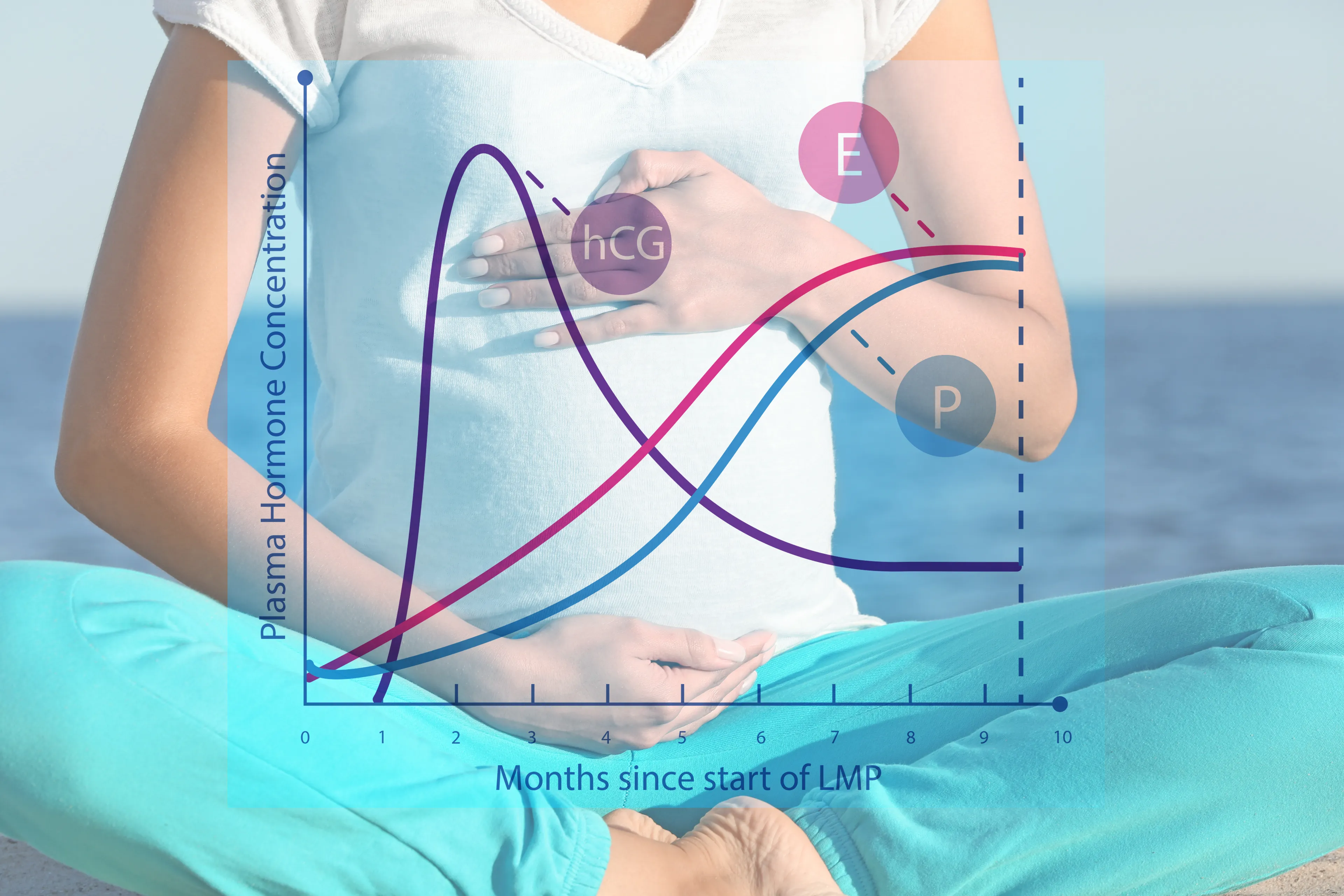
HCG values vary enormously from person to person, and a single reading rarely tells the whole story. What matters most is the trend: in a healthy early pregnancy, HCG typically doubles roughly every 48 to 72 hours up to about 8 to 10 weeks, then gradually declines to a steady level for the rest of pregnancy.

The table below is a general reference. Lab ranges differ, so always compare your result to your own lab's reference values.

HCG Levels Chart Pregnancy Reference Table

Gestational Week (from LMP) Approximate HCG Range (mIU/mL)
3 weeks  5 to 50
4 weeks10 to 750
5 weeks  200 to 7,000
6 weeks  200 to 32,000
7 to 8 weeks 3,500 to 160,000
9 to 12 weeks   32,000 to 210,000
13 to 16 weeks  9,000 to 210,000
17 to 24 weeks  1,400 to 53,000
25 weeks to term  940 to 60,000

 
These ranges are broad by design. A level of 300 mIU/mL at 5 weeks can be perfectly normal, just as a level of 5,000 mIU/mL can be. No single number predicts outcome. Serial measurements and ultrasound together give a clearer picture.

Types of HCG Tests: Blood vs Urine

There are two main ways to test for HCG, and they serve different purposes.

  • Urine Pregnancy Test: A urine test, such as a home pregnancy strip or clinic dipstick, gives a simple positive-or-negative result. It is convenient and can usually detect hCG around the time of a missed period, but it does not measure the exact amount of hCG in the body.
  • HCG Blood Test:An hCG blood test, often called a beta-hCG test, is a quantitative test that measures the exact hCG concentration in mIU/mL. Beta-hCG can sometimes be detected in blood before a missed period, making the test more sensitive than a urine test. When doctors need to monitor whether hCG is rising appropriately or investigate a possible pregnancy complication, they may repeat the test, commonly about 48 hours apart, to assess the pattern of change.

If you have had an early pregnancy concern flagged, or if your doctor wants to monitor you closely, an hcg blood test pregnancy result gives far more actionable information than a home test.

What High or Low HCG Levels Could Mean?

A result outside the expected range does not automatically signal a problem. Context matters greatly, and only your doctor can interpret what a number means for your specific situation.

Low HCG Levels Meaning

Low hcg levels meaning can vary widely. Possible explanations include:

  • Dates may be off and the pregnancy is earlier than calculated.
  • The egg implanted later than usual, giving HCG less time to build up.
  • A threatened or early miscarriage, where levels may fail to rise properly.
  • An ectopic pregnancy, where the egg has implanted outside the uterus. This is a medical emergency needing immediate attention.

A single low reading is not a diagnosis. A repeat test 48 hours later showing appropriate doubling is reassuring. One that shows a slow rise or a fall warrants further investigation.

High HCG Levels Causes

Higher-than-expected levels also have several explanations:

  • A twin or multiple pregnancy, since more than one placenta produces more HCG.
  • Dates that are earlier than thought, making the pregnancy appear further along.
  • A molar pregnancy, a rare condition where abnormal placental tissue grows without a viable embryo.

High hcg levels causes should always be discussed with your doctor, who will likely order an ultrasound to clarify the picture. Never adjust any treatment or make decisions based on a number alone.

Contraindications and Who Should Avoid Self-Testing Conclusions

HCG testing has important limitations worth understanding clearly.

A positive HCG result confirms that pregnancy hormone is present, but it cannot confirm:

  • Whether the pregnancy is in the correct location (not ectopic)
  • Whether the embryo is developing normally
  • Whether the pregnancy will continue

Certain situations require urgent medical review rather than self-interpretation:

  • Any vaginal bleeding in early pregnancy
  • One-sided pelvic or abdominal pain
  • Shoulder-tip pain, which can indicate internal bleeding from an ectopic pregnancy
  • Levels that plateau or fall in early pregnancy

Women who have had a recent miscarriage, fertility treatment, or an ectopic pregnancy in the past should not rely on home test strips or single readings. Residual HCG can remain detectable in blood for weeks after a pregnancy loss, giving misleading results.

Report adverse events or unexpected symptoms related to any test or treatment to your healthcare provider or the relevant regulatory authority.

When to Consult Your Doctor About HCG Results?

If your HCG result shows anything other than a steady, expected rise in an uncomplicated early pregnancy, speak to your doctor promptly. Do not wait if you experience:

  • Bleeding, even light spotting, before 12 weeks
  • Cramping that feels different from mild period-like aches
  • Severe nausea or vomiting that prevents you from keeping fluids down
  • Any pain in your shoulder tip or one side of your abdomen

An early conversation with your doctor can mean earlier access to ultrasound confirmation, which is the only way to verify where a pregnancy is and whether it is developing. As your pregnancy progresses and you approach your due date, planning ahead for newborn care after delivery becomes equally important, and your care team can guide you through each stage.

HCG numbers on their own are never the final word. They are one piece of information that your doctor uses alongside your history, symptoms, and scan findings to give you a complete picture.

Conclusion

HCG levels are an important marker of early pregnancy and typically rise rapidly during the first few weeks before reaching a peak and gradually declining. Because normal hCG ranges vary widely between pregnancies, a single result should not be interpreted on its own. Your doctor may recommend repeat beta-hCG testing and ultrasound examinations to assess how the pregnancy is progressing. If your hCG level is higher or lower than expected, it does not necessarily mean there is a problem, but it may require further evaluation in the context of your symptoms, gestational age, and other test results.

FAQS

What is a normal HCG level at 5 weeks pregnant?

At 5 weeks from the last menstrual period, HCG levels typically range from about 200 to 7,000 mIU/mL, though values outside this range can still be normal. The trend over 48 hours matters more than any single reading, so your doctor may order a repeat test to check the doubling pattern.

Can HCG levels predict twins?

Higher-than-expected HCG for a given week can suggest a twin pregnancy, since two placentas produce more of the hormone. However, HCG alone cannot confirm multiples. An ultrasound, usually around 6 to 8 weeks, is needed to see how many embryos are present.

How quickly do HCG levels fall after miscarriage?

After a pregnancy loss, HCG generally halves every 48 to 72 hours and can take anywhere from a few days to several weeks to return to undetectable levels, depending on how high the levels were. Your doctor will monitor serial beta hcg levels to confirm they are falling as expected.

Is it normal for HCG levels to vary between labs?

Yes. Different laboratories use different assays and reference ranges, so a result from one lab may not be directly comparable to a result from another. Always compare your numbers to the reference range printed on your own lab report, and let your doctor interpret trends across tests run at the same facility.

Do HCG levels indicate a baby's gender?

No. HCG is produced by placental cells and is present in all pregnancies regardless of the baby's sex. There is no reliable evidence that HCG levels or patterns can predict whether you are carrying a boy or a girl.
Apollo 247 Floating Action Button