HCG Range for Pregnancy: What Your Levels Mean at Each Stage
Understand normal hCG range for pregnancy by week, what high or low levels indicate, and when to consult your doctor. Doctor-reviewed guide.
Dr. Mayank
Getting your hCG results back can feel equal parts reassuring and confusing. The hCG range for pregnancy shifts dramatically week by week, and a single number rarely tells the full story. Understanding what your levels mean, and why the trend over time matters more than any one reading, can help you have a more informed conversation with your doctor.
What Is hCG and Why Is It Measured in Pregnancy
Human chorionic gonadotropin (hCG) is a hormone produced by the cells that eventually form the placenta. It begins appearing in the bloodstream shortly after a fertilised egg implants in the uterine wall, typically around 6 to 12 days after conception.
hCG serves two key purposes in early pregnancy. First, it signals the body to maintain the corpus luteum, which keeps progesterone levels high enough to sustain the pregnancy before the placenta takes over. Second, its presence in urine and blood is what makes both home pregnancy tests and laboratory tests work.
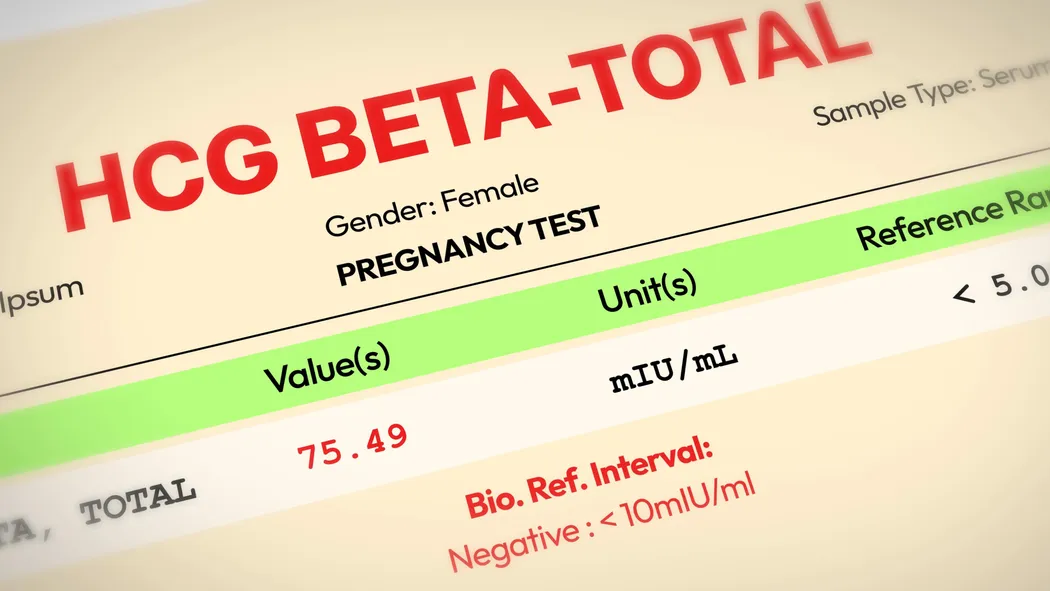
An hCG blood test in pregnancy is more sensitive than a urine strip. It can detect the hormone earlier and, crucially, measure the exact amount, which gives doctors information about how a pregnancy is progressing, not just whether it exists.
One of the most important things to understand about hCG levels by week is that the reference ranges are very wide. Two women at exactly the same stage of pregnancy can have levels that differ by thousands of units and both be perfectly healthy.
The table below shows approximate ranges based on weeks from the last menstrual period (LMP). These are general reference values used across clinical practice; your laboratory may report slightly different units or cut-offs.
Weeks from LMP
Approximate hCG Range (mIU/mL)
3 weeks
5 to 50
4 weeks
10 to 430
5 weeks
200 to 7,200
6 weeks
200 to 32,000
7 to 8 weeks
3,500 to 160,000
9 to 12 weeks
5,000 to 290,000
13 to 16 weeks
13,000 to 254,000
17 to 24 weeks
4,000 to 165,000
25 to 40 weeks
3,500 to 117,000
This hCG levels chart for pregnancy shows that levels typically peak around weeks 8 to 11, then gradually fall and plateau for the rest of the pregnancy. A blood level above 25 mIU/mL is generally considered a positive result, though a repeat test 48 hours later helps confirm a rising pattern.
No single reading confirms a healthy pregnancy on its own. Gestational dating, symptoms, and ultrasound findings all factor into the picture.
What Low hCG Levels Might Indicate
Low hCG levels in early pregnancy, or levels that are not rising as expected, can have several explanations.
Incorrect pregnancy dating: If your last menstrual period (LMP) date is uncertain or ovulation occurred later than expected, your HCG level may appear lower than the expected range for your estimated gestational age.
Threatened miscarriage or early pregnancy loss: A pregnancy loss may cause HCG levels to rise more slowly, plateau, or begin to decrease. Repeat testing and ultrasound may be needed to assess the pregnancy.
Ectopic pregnancy: When an embryo implants outside the uterus, HCG levels may rise more slowly than expected in some cases. An ectopic pregnancy requires prompt medical evaluation because it can become a serious, potentially life-threatening condition.
A single low reading does not confirm a problem. Many women whose normal hCG levels in early pregnancy start at the lower end of the range go on to have healthy pregnancies. Your doctor will usually request a repeat test 48 to 72 hours later to assess the trend before drawing any conclusions.
What High hCG Levels Might Indicate
Levels higher than expected for gestational age are also worth investigating, but there is rarely cause for immediate alarm.
Multiple pregnancy: Carrying twins or higher-order multiples can result in higher HCG levels because more placental tissue may produce more of the hormone.
Pregnancy dating differences: If the pregnancy is further along than estimated, HCG levels may appear higher than the expected range for the calculated gestational age.
Molar pregnancy: A molar pregnancy involves abnormal growth of placental tissue and can cause unusually high HCG levels. It is uncommon but requires prompt medical evaluation and appropriate follow-up.
High hCG levels meaning a problem is not automatic. Your doctor will correlate the result with an ultrasound and clinical examination before drawing conclusions.
hCG Doubling Time and What It Means
In a healthy early pregnancy, hCG levels typically double roughly every 48 to 72 hours up until around weeks 8 to 10. After that, doubling slows and levels plateau.
This is why a single hCG blood test in pregnancy rarely answers every question. Two serial measurements taken 48 hours apart give far more useful information than one reading in isolation.
A rise of at least 60 to 66 percent over 48 hours is generally considered reassuring in early pregnancy. A slower rise, a plateau, or a fall prompts closer evaluation. That said, some healthy pregnancies show slower doubling early on and still progress well, so any trend is always assessed alongside ultrasound findings and your symptoms.
When to Consult Your Doctor About hCG Levels
Numbers on a report should never replace a conversation with your healthcare provider. Contact your doctor promptly if you notice:
Vaginal bleeding of any amount in early pregnancy
Sharp or one-sided pelvic pain, which can signal an ectopic pregnancy requiring emergency care
Severe nausea, vomiting, or signs of dehydration
An hCG level that is falling or not rising on repeat testing
Significant worry or uncertainty about your results
One-sided pelvic pain combined with a slow-rising hCG warrants urgent evaluation, not a wait-and-see approach. Early intervention for ectopic pregnancy is critical.
Report adverse events or unexpected symptoms to your healthcare provider or the relevant regulatory authority.
Contraindications and Precautions for hCG Testing
hCG testing is a diagnostic tool, not a medication, so there are no contraindications to the test itself in the way there are for drugs. However, several factors can affect the accuracy of results.
Fertility treatments containing hCG: Fertility treatments that use hCG injections to trigger ovulation can cause a false-positive result on both urine and blood pregnancy tests for some time after the injection. Follow your fertility specialist's advice about when to test.
Certain medications: Some medicines, including certain treatments used in cancer care, may affect hCG test results. Tell your doctor and the laboratory about all medicines and supplements you are taking.
Laboratory differences: Different laboratories may use different testing methods, assays, and reference ranges. Comparing results from different laboratories can therefore be misleading. When monitoring hCG over time, using the same laboratory where possible can make comparisons more consistent.
Diluted urine: Drinking large amounts of fluid can dilute urine and reduce the ability of a urine-based pregnancy test to detect hCG. Blood tests are generally not affected by urine dilution.
If you are unsure whether something you are taking could affect your result, ask before the test rather than after.
Conclusion
HCG levels can vary widely between pregnancies, so comparing a single result with a reference range is not enough to determine whether a pregnancy is progressing normally. In early pregnancy, the change in HCG over time, together with gestational age, symptoms, and ultrasound findings, provides a more meaningful assessment. Lower-than-expected levels may be related to incorrect dating or pregnancy complications, while higher levels can occur with multiple pregnancies, differences in gestational age, or, rarely, conditions such as molar pregnancy. If your HCG result is outside the expected range or you have pain, bleeding, dizziness, or other concerning symptoms, consult your healthcare provider promptly.
FAQS
What is a good hCG level at 4 weeks pregnant?
At 4 weeks from your last menstrual period, hCG levels can range anywhere from about 10 to 430 mIU/mL and still be normal. A single number matters less than whether the level is rising appropriately on a repeat test 48 hours later.
Can hCG levels indicate the gender of the baby?
No reliable link has been established between hCG levels and foetal sex. Gender determination requires an ultrasound or, when clinically indicated, genetic testing.
How often should hCG levels be tested?
In early pregnancy with no complications, serial testing every 48 to 72 hours is standard practice until a heartbeat is confirmed on ultrasound. After that, routine repeat hCG testing is generally not needed unless a clinical concern arises.
Does hCG level indicate a healthy pregnancy?
hCG is one useful marker, but it does not confirm a healthy pregnancy on its own. Doctors use it alongside ultrasound findings, symptoms, and gestational age to build a complete picture.
What happens if hCG levels don't rise?
Levels that plateau or fall in early pregnancy can indicate a miscarriage, an ectopic pregnancy, or rarely another condition. Your doctor will arrange further testing, which may include repeat blood work and an ultrasound, to determine the cause and the appropriate next steps.