logo
0

hCG Range for Pregnancy: Normal Levels by Week

Understand normal hCG range for pregnancy week by week, what high or low levels mean, and when to consult your doctor. Doctor-reviewed guide.
 

article image

Dr.Kamran

Human chorionic gonadotropin, commonly called hCG, is one of the earliest measurable signs that a pregnancy has begun. Understanding the hCG range for pregnancy helps you make sense of your test results, ease anxiety, and have more informed conversations with your doctor. Whether you are watching numbers after a positive home test or monitoring a high-risk pregnancy, knowing what these levels mean matters.

What Is hCG and Why It's Tested

hCG is a hormone produced by the cells that eventually form the placenta. It begins rising shortly after a fertilised egg implants in the uterine wall, usually around six to ten days after conception. This early surge is exactly what home pregnancy tests detect.

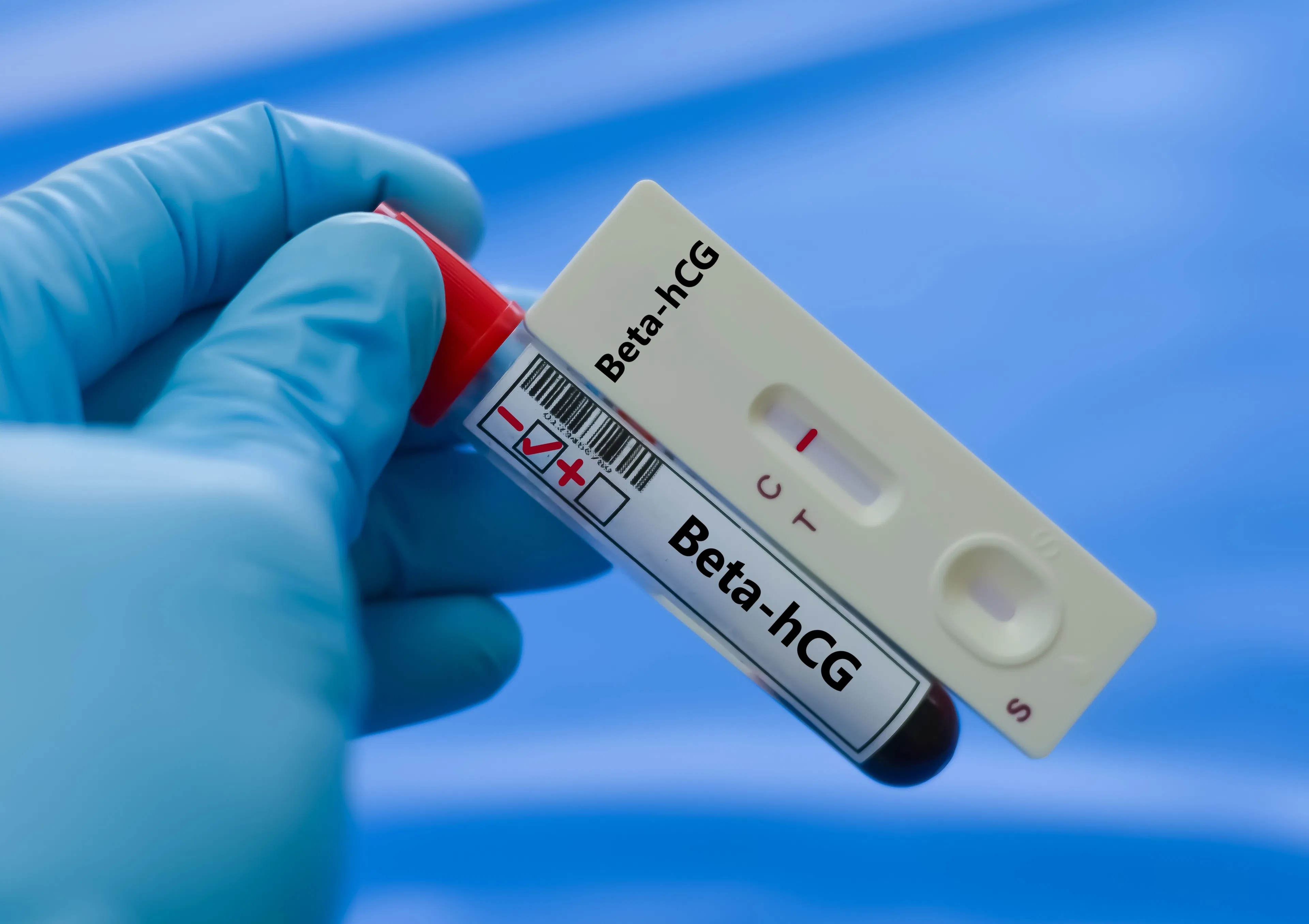
A beta hCG range is measured through a blood test or a urine test. The blood version, specifically a quantitative serum hCG blood test, gives a precise number in milli-international units per millilitre (mIU/mL). Doctors use this to:

  • Confirm a pregnancy is present
  • Check that early pregnancy is progressing normally
  • Investigate concerns like bleeding or pelvic pain
  • Monitor recovery after a pregnancy loss or certain conditions

hCG also supports progesterone production in early pregnancy, which helps maintain the uterine lining until the placenta takes over fully.

Normal hCG Range for Pregnancy by Week (Chart)

The most important thing to know about the hCG levels by week chart is that the ranges are extremely wide. Two healthy pregnancies can show levels that differ by a factor of ten, and both can be perfectly normal. A single number rarely tells the full story. What matters more is whether levels are rising appropriately over time.

The table below reflects general reference ranges used in clinical practice. Your laboratory may use slightly different intervals, so always interpret your result alongside your doctor's guidance.

Gestational Week (from LMP) Typical hCG Range (mIU/mL)
3 weeks 5 to 50
4 weeks10 to 425
5 weeks19 to 7,340
6 weeks1,080 to 56,500
7 to 8 weeks7,650 to 229,000
9 to 12 weeks 25,700 to 288,000
13 to 16 weeks13,300 to 254,000
17 to 24 weeks4,060 to 165,400
25 to 40 weeks3,640 to 117,000

Levels typically peak around 8 to 11 weeks, then gradually fall and plateau for the rest of the pregnancy. After this natural decline, hCG is no longer used as a primary marker of pregnancy health.

A note on dating: Gestational age calculated from your last menstrual period (LMP) may differ from the age calculated from the conception date. Always confirm dating with your doctor or an ultrasound scan.

What High or Low hCG Levels Can Indicate?

A result outside the expected range is not automatically cause for alarm, but it does deserve follow-up.

When Levels Are Higher Than Expected?

Higher-than-expected hCG can sometimes point to:

  • A multiple pregnancy. hCG levels in twins are typically higher than in a singleton pregnancy because more placental tissue is producing the hormone.
  • A molar pregnancy, where abnormal tissue grows in place of a normal placenta. This is rare but requires prompt medical management.
  • An incorrect gestational age calculation, meaning the pregnancy may simply be further along than estimated.

When Levels Are Lower Than Expected?

Low hCG levels causes include:

  • A possible miscarriage, particularly when levels drop or fail to rise on serial tests.
  • An ectopic pregnancy, where the embryo implants outside the uterus. Low or slowly rising hCG combined with pain or bleeding needs urgent evaluation, as this can be a medical emergency.
  • A gestational age that is earlier than assumed.

No single hCG reading is diagnostic on its own. Doctors rely on serial measurements taken 48 to 72 hours apart, often alongside ultrasound findings, before drawing any conclusions about pregnancy viability or complications.

Contraindications and Precautions for hCG Testing and Use

A routine hCG blood test pregnancy check has no meaningful contraindications; it is a straightforward blood draw. However, hCG is also used as a medication in certain fertility and hormonal treatments, and this is where contraindications become clinically relevant.

hCG-based treatments are generally not suitable for people with:

  • Known or suspected hormone-sensitive cancers (such as certain breast, ovarian, or uterine cancers)
  • Uncontrolled thyroid or adrenal disorders
  • Ovarian cysts not related to polycystic ovarian syndrome
  • A known allergy or hypersensitivity to hCG or any component of the preparation
  • Active thromboembolic (blood clot) disorders

Caution is also needed in people with a history of ovarian hyperstimulation syndrome (OHSS), asthma, epilepsy, migraine, or cardiac or kidney impairment. If you are pregnant and being monitored with serial hCG tests rather than receiving hCG as a treatment, these cautions do not apply to the test itself.

Always inform your doctor about all medications, supplements, and existing medical conditions before starting any hCG-related intervention.

Report adverse events to your healthcare provider or the relevant regulatory authority.

When to Consult Your Doctor?

You do not need to panic over a single number that looks slightly off. But there are specific situations where calling your doctor promptly is the right move.

Seek medical advice if you notice:

  • hCG levels that drop significantly between two tests taken 48 to 72 hours apart, especially in the first trimester.
  • Levels in very early pregnancy (before six weeks) that do not rise by at least 50 to 66 percent over 48 to 72 hours.
  • hCG that is not detectable or is extremely low when a positive urine test has already been obtained.
  • Any vaginal bleeding or cramping alongside abnormal hCG results.
  • Severe one-sided pelvic pain, shoulder tip pain, or dizziness, which may point to an ectopic pregnancy and require immediate attention.

Normal hCG range for pregnancy monitoring is just one part of the picture. Your doctor will combine these numbers with clinical symptoms and ultrasound findings to guide next steps. As you move toward delivery and the weeks that follow, it helps to have good information ready at each stage. Apollo's newborn care guide after delivery is a useful resource to bookmark as your due date approaches.

Conclusion

hCG levels can provide useful information during early pregnancy, but there is no single hCG number that defines a normal or healthy pregnancy. Reference ranges vary widely by gestational age, laboratory, and individual, while the pattern of change over time often provides more useful information than one isolated result. Doctors may combine serial hCG testing with symptoms and ultrasound findings to assess how a pregnancy is progressing.
If your hCG result is higher or lower than expected, avoid interpreting it on its own or assuming that it confirms a complication. Follow your doctor’s advice about repeat testing and ultrasound, particularly if you have bleeding, pelvic pain, dizziness, or other concerning symptoms. Understanding your results in the context of your pregnancy dates and clinical findings can help ensure appropriate care and timely medical attention when needed.

FAQS

What is a good hCG level at 4 weeks?

At four weeks of pregnancy (calculated from your last menstrual period), hCG typically falls between 10 and 425 mIU/mL. The range is wide because implantation timing varies, so a single value within this window is generally reassuring.

Can hCG levels indicate twins?

Yes, hCG levels in a twin pregnancy tend to run higher than in a singleton, because two placentas produce more of the hormone. That said, hCG alone cannot confirm twins; an ultrasound is needed to see how many embryos are present.

How fast should hCG levels rise?

In very early pregnancy, up to about six weeks, hCG generally doubles roughly every 48 to 72 hours. After that, the doubling time slows and levels eventually plateau, so rapid doubling is mainly relevant in the first few weeks.

What is considered a low hCG level?

A level below the lower limit for your gestational week, or one that fails to rise appropriately on serial testing, is considered low. Low hCG levels causes range from a very early pregnancy to a potential miscarriage or ectopic pregnancy, and your doctor will assess the pattern over multiple draws rather than a single result.

Does hCG level confirm pregnancy viability?

Not on its own. A rising hCG is a positive sign, but viability is confirmed by seeing a foetal heartbeat on ultrasound. Normal hCG levels in early pregnancy that are rising appropriately are encouraging, but they need to be considered together with clinical findings and imaging.

Apollo 247 Floating Action Button