logo
0

Homogenized Definition Milk: Meaning, Process & Infant Use

Learn what homogenised milk means, how it is processed, how it differs from pasteurised milk, and when cow's milk is suitable for infants.

article image

Dr.Mayank

Homogenised Milk: Definition, Process, and Infant Nutrition Guide

Understanding what goes into your baby's feeding choices can feel overwhelming, especially with so many options on shelves. Knowing what homogenised milk means, how the process works, and when this type of milk is appropriate for infants helps parents make informed decisions. This guide breaks it all down in plain language.

What Does Homogenised Milk Mean?

Homogenised milk is milk that has been mechanically processed to break down its fat globules into uniformly small particles so they stay evenly distributed throughout the liquid, rather than rising to the surface as cream.

In practical terms, the homogenised milk meaning is straightforward: the fat does not separate as readily. You get a more consistent distribution of fat throughout the milk, from the top of the container to the bottom. Without this process, milk naturally separates into a thicker cream layer on top and a thinner liquid below. Homogenisation reduces that separation, giving commercially sold milk its familiar smooth, consistent appearance.

The word "homogenised" refers to making something uniform throughout. So when you see homogenised on a milk carton, it simply indicates that the milk fat has been processed to remain more evenly dispersed throughout the milk.

The Process Explained: How Is Milk Homogenised?

The homogenisation process of milk is a physical treatment, not a chemical one. No additives are required for the process. Here is what happens:

  • Milk is pumped through a high-pressure homogeniser. For conventional dairy milk, homogenisation pressure is commonly in the range of 100 to 250 bar, although the pressure can vary depending on the product and processing equipment.
  • As milk passes through a narrow gap in the homogenising valve under high pressure, mechanical forces break large fat globules into much smaller droplets. Homogenisation can reduce the average fat globule size from around 3.5 micrometres to below 1 micrometre under appropriate processing conditions.
  • These smaller fat droplets interact with milk proteins, particularly casein, which helps stabilise them and keep them dispersed throughout the milk.
  • The result is a more stable emulsion, with fat distributed more evenly throughout the milk and a reduced tendency to form a visible cream layer.

The machine used is called a high-pressure homogeniser or homogenising valve. It is essentially a high-pressure pump fitted with a homogenisation device and adds nothing to the milk. The exact position of homogenisation in the dairy-processing line can vary. It may be carried out before or after certain heat-treatment stages depending on the type of milk and processing system.

One important distinction: homogenisation changes the physical structure and distribution of fat globules but does not serve as a microbial safety treatment. That job belongs to pasteurisation or another validated heat-treatment process.

Homogenised vs Pasteurised Milk: Key Differences

Parents often ask whether homogenised and pasteurised milk are the same thing. They are not. These are two separate processes with different purposes.       

FeatureHomogenisationPasteurisation
PurposeEven fat distributionKilling harmful bacteria
MethodHigh-pressure mechanical forceHeat treatment
Changes to milkFat globule size reducedHarmful microorganisms reduced
Effect on safetyNoneMakes milk safe to drink
Effect on textureSmooth, cream does not separateMinimal texture change

Most commercially sold milk in India is both pasteurised and homogenised. Pasteurisation is an important food safety step. Homogenisation is a quality and texture step. You can have milk that is pasteurised but not homogenised, where cream still rises to the top. For infants and children, pasteurisation is the critical safety requirement; homogenisation is secondary from a safety standpoint.

Why Does Homogenisation Matter for Infant Nutrition?

When parents ask what is homogenised milk and why it is relevant for babies, three areas stand out: digestibility, fat absorption, and nutrient consistency.

The smaller fat globules produced by homogenisation present a larger surface area for digestive enzymes. Some studies suggest that homogenisation can affect the digestion and absorption of milk fat, though research specifically in infants is limited and does not establish a clear nutritional advantage of homogenised cow's milk.

Because fat does not separate as readily in homogenised milk, each serving delivers a more consistent distribution of fat. Growing children have high calorie and fat needs, so consistency in what they receive matters. With non-homogenised milk, the fat content can vary between the cream layer and the liquid underneath.

Does homogenisation destroy nutrients? No, not in any clinically meaningful way. Calcium, protein, and added vitamin D remain intact. The process is physical, so nutritional changes are minimal compared with some high-heat treatments.

That said, is homogenised milk good for babies under 12 months? No, and this is not about homogenisation itself. Cow's milk as a whole, regardless of how it is processed, is not appropriate as a primary drink for infants under one year. The concern is the milk type, not the mechanical step.

Choosing the Right Milk for Your Infant

Understanding the types of milk for infants helps parents avoid common mistakes. Paediatric guidelines follow a clear order of preference:
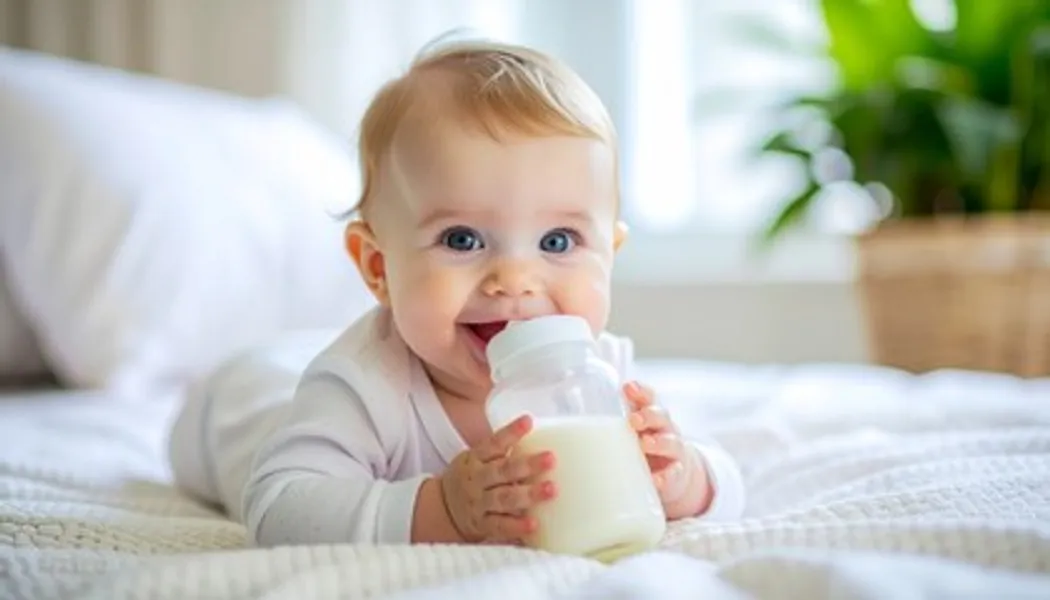
  • Breast milk is the first choice from birth through at least 12 months, and longer if mother and baby are able and willing.
  • When breastfeeding is not possible or insufficient, an age-appropriate iron-fortified infant formula is the recommended alternative.
  • Whole homogenised cow's milk can be introduced as a main drink only after 12 months of age.

Before the first birthday, cow's milk of any type lacks adequate iron and does not provide the nutritional composition required to serve as an infant's primary milk source. Early introduction of cow's milk as the main milk drink may contribute to iron deficiency and, in some infants, gastrointestinal blood loss.

Among the types of milk for infants older than 12 months, whole homogenised cow's milk is generally appropriate because toddlers need dietary fat for brain development. Skimmed or low-fat milk is usually not recommended for children under two years for this reason, unless advised by a healthcare professional.

For a broader overview of caring for your newborn in the early weeks, including feeding basics, see this newborn care essentials guide.

Always confirm the right milk type and timing with your child's paediatrician, as individual needs vary based on growth, allergies, and health history.

<Shop Feeding Essentials for Baby>

Contraindications and Precautions

Homogenised cow's milk is not suitable for everyone. Do not offer it as a primary drink to:

  • Infants under 12 months, as it cannot meet their complete nutritional needs and may contribute to iron deficiency when used as a primary milk source.
  • Children diagnosed with cow's milk protein allergy (CMPA), where immune reactions to casein or whey proteins can cause rashes, vomiting, wheezing, or other symptoms.
  • Infants or children with confirmed lactose intolerance, who may need lactose-free or other nutritionally appropriate alternatives under medical guidance.
  • Babies with specific metabolic or gastrointestinal conditions where standard cow's milk is contraindicated by a treating physician.

If your child develops any reaction after consuming milk, including skin changes, digestive upset, or respiratory symptoms, contact your paediatrician promptly. If breathing difficulty, facial or throat swelling, or other severe allergic symptoms occur, seek urgent medical attention.

Conclusion

Homogenised milk is milk that has undergone a physical process to reduce the size of its fat globules and keep them more evenly distributed throughout the milk. Although homogenisation affects the physical properties of milk, it does not make cow's milk suitable for infants under 12 months.

For babies, the key consideration is the nutritional suitability of the milk rather than whether it is homogenised. Breast milk or an appropriate infant formula should remain the primary milk source during the first year. After 12 months, pasteurised whole cow's milk can generally be introduced as part of a varied and balanced diet. If a child has an allergy, lactose intolerance, or another medical condition, consult a paediatrician before making changes to their milk intake.

Frequently Asked Questions

Is homogenised milk healthy?

For children over 12 months and most adults, whole homogenised milk is a nutritious source of calcium, protein, and fat. It is widely available and nutritionally comparable to non-homogenised milk with a similar fat content.

Does homogenisation destroy nutrients?

No. Homogenisation is a physical process that affects fat globule size and distribution but does not significantly alter the protein or mineral content of milk.

Can newborns drink homogenised milk?

No. Newborns and infants under 12 months should receive breast milk or an appropriate infant formula as their primary milk source. Cow's milk, whether homogenised or not, is not suitable as a primary drink at this age.

What is the difference between homogenised and full-cream milk?

Full-cream or whole milk refers to fat content, meaning no fat has been removed. Homogenised refers to fat distribution. Full-cream milk can be homogenised or non-homogenised; most full-cream milk sold commercially in India is both.

Is homogenised milk better than raw milk?

Homogenisation and pasteurisation serve different purposes. Homogenisation reduces fat separation, while pasteurisation reduces harmful microorganisms. Raw milk has not been pasteurised and may carry harmful bacteria such as Salmonella and E. coli, as well as other pathogens. For infants and young children, pasteurised milk is the safer choice.

Is homogenised milk suitable after 12 months?

For most healthy children over 12 months, pasteurised whole cow's milk can be included as part of a varied diet. It should not replace other important foods, particularly iron-rich foods, and excessive milk intake should be avoided

Apollo 247 Floating Action Button