logo
0

How Many Hours Diapers Can Be Used: Expert Guide

Learn how often to change your baby’s diaper, when overnight wear is acceptable, signs a diaper needs changing, and how to prevent diaper rash.

article image

Dr.Mayank

Knowing when to change your baby’s diaper is an important part of everyday care. Frequent changes help keep your baby’s skin clean and dry, reduce prolonged contact with urine or stool, and improve comfort. However, no single number of hours applies to every baby or every diaper.

A wet diaper doesn't always need to be changed at a fixed interval. Instead, consider how wet the diaper is, whether it contains stool, your baby’s age and skin condition, and whether it’s leaking or causing discomfort. This guide explains how often to change a diaper during the day and night, the signs that it needs changing, and how to reduce the risk of diaper rash.

How Many Hours Can a Diaper Be Worn Safely?

There is no universal maximum number of hours that a baby can wear a diaper. During the day, many babies need several changes because they urinate frequently and may have bowel movements at different times.

Generally, change a wet diaper when it becomes noticeably wet, heavy, or uncomfortable, rather than waiting for a specific number of hours. Younger babies may need more frequent changes because they feed and urinate often.

Change a diaper with stool as soon as possible. Stool can irritate the skin more readily than urine, particularly when it remains in contact with the skin for an extended period.

What about overnight diaper wear time?

You do not necessarily need to wake a sleeping baby solely to change a wet diaper if the baby is comfortable, the diaper is adequately absorbent, and there is no stool or leakage. Many babies can therefore wear a wet diaper for several hours overnight.

However, overnight care depends on your baby’s age, feeding needs, skin sensitivity and overall health. Newborns may need frequent feeding and monitoring, so follow the advice of your healthcare professional. If your baby has frequent diaper rash, sensitive skin or a condition requiring closer monitoring, you may need to change the diaper more often.

An overnight diaper is designed to provide greater absorbency, but higher absorbency doesn't mean you should leave it on indefinitely.

Factors That Affect Diaper Change Frequency

Every baby has a different pattern of urination and bowel movements. The following factors can influence how often you need to change a diaper.

Age and feeding

Newborns usually need frequent diaper changes because they feed often and may pass urine and stool several times throughout the day.

Breastfed newborns may have frequent bowel movements, particularly during the early weeks. Formula-fed babies can have a different stool pattern. As babies grow, bowel movements may become less frequent, although individual patterns vary.

Rather than following a fixed number of changes, watch your baby’s output and overall wellbeing.

How wet the diaper is

Change a diaper that feels heavy, looks swollen, or is clearly wet. Some disposable diapers have a wetness indicator that changes colour when urine is present. This can be a useful visual cue, particularly for new parents.

A wetness indicator is not a substitute for checking whether the diaper contains stool or whether your baby appears uncomfortable.

Diaper absorbency

Different diapers have different absorbency levels. A more absorbent diaper may help keep the skin drier and reduce leakage, particularly during sleep.

However, don't use absorbency as a reason to delay a change when the diaper is soiled, leaking, or causing irritation.

Your baby’s skin

Babies with diaper rash, eczema, or particularly sensitive skin may benefit from more frequent changes to reduce prolonged exposure to moisture and irritants.

If your baby develops repeated or persistent skin irritation despite appropriate diaper care, speak with your paediatrician.

Signs a Diaper Needs Changing

Instead of watching the clock alone, check the diaper and your baby’s cues.

  • The diaper feels noticeably heavy or wet
  • The diaper looks swollen
  • The wetness indicator has changed colour, if present
  • There is any visible stool
  • The diaper is leaking around the legs or waist
  • Your baby seems uncomfortable, fussy or unsettled
  • The skin around the diaper area looks red or irritated

A bowel movement is a reason to change the diaper promptly. Gently clean the diaper area and allow the skin to dry before putting on a fresh diaper.

What Happens If a Diaper Is Left on Too Long?

Prolonged contact with moisture, urine and stool can irritate the skin and weaken its protective barrier. This can contribute to diaper rash, particularly when combined with friction or sensitive skin.

A single delayed diaper change does not usually cause a serious problem. However, regularly leaving wet or soiled diapers unchanged for long periods can increase the likelihood of skin irritation.
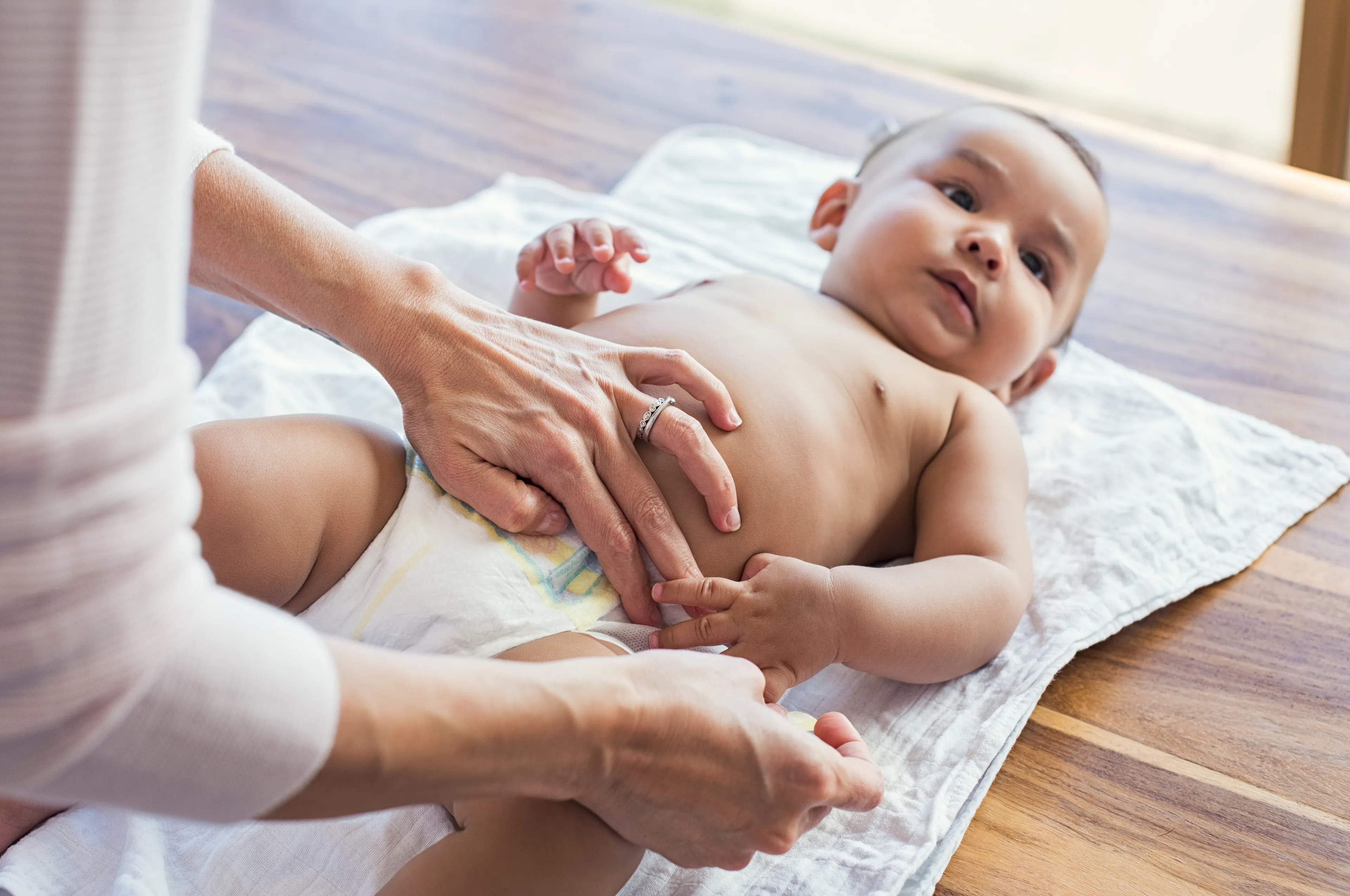
Diaper rash can cause redness, soreness and discomfort. More severe irritation may lead to raw, cracked or broken skin, which can become infected.

There is not enough evidence to say that leaving a wet diaper on for a particular number of hours directly causes a urinary tract infection. Good hygiene and prompt changes after bowel movements are still important, particularly because stool can contain bacteria that may spread to the urinary tract.

To help protect your baby’s skin:

  • Change soiled diapers promptly.
  • Change wet diapers when they become noticeably wet or heavy.
  • Clean the diaper area gently with water or suitable baby wipes.
  • Pat the skin dry instead of rubbing.
  • Give the skin some time to dry before putting on a fresh diaper when practical.
  • Consider a suitable barrier cream if your baby is prone to diaper rash or has mild irritation.
  • Avoid products containing unnecessary fragrance if your baby has sensitive skin.

When to Consult Your Doctor?

Most mild diaper irritation improves with appropriate care. Consult your doctor if your baby’s rash is persistent, severe or getting worse.

Seek medical advice if:

  • The rash does not improve despite appropriate diaper care.
  • You notice blisters, open sores, bleeding, crusting or pus.
  • The rash is spreading beyond the diaper area.
  • Your baby has a fever or seems unwell.
  • The skin is very painful, raw or significantly swollen.
  • The rash has small red spots around the edges or in nearby skin folds, which can occur with certain fungal rashes.
  • Your baby develops repeated diaper-area rashes or skin problems.

Avoid using antifungal medicines, steroid creams, antibiotics or other medicated products on your baby’s diaper area unless recommended by a healthcare professional. Some medicines may not be suitable for babies, and the occlusive environment under a diaper can affect how medicines are absorbed through the skin.

Precautions and Safe Diaper Care

A few simple precautions can make diaper changes safer and more comfortable for your baby.

  • Never leave your baby unattended on a raised changing surface, even for a moment.
  • Keep diapers, wipes and other supplies within reach before starting a change.
  • Avoid talcum powder because inhaling fine powder can harm a baby’s lungs.
  • If your baby has sensitive skin, consider fragrance-free products and stop using any product that appears to cause irritation.
  • Do not use antiseptics, steroid creams or antifungal treatments routinely unless advised by a healthcare professional.
  • Follow the diaper manufacturer’s instructions for use and check the diaper regularly for leakage or skin irritation.
  • If your baby has eczema or another skin condition, ask your healthcare professional about suitable diaper-area care.

If you experience a suspected side effect from a medicine, inform your healthcare professional and report it through the appropriate adverse drug reaction reporting system.

Conclusion

There is no fixed number of hours that every baby can safely wear the same diaper. During the day, change wet diapers when they become noticeably wet or heavy and change soiled diapers promptly. Overnight, a sleeping baby may be able to remain in an absorbent wet diaper for several hours if they are comfortable, there is no stool or leakage, and there are no specific medical reasons for more frequent changes.

Rather than relying on a strict timetable, pay attention to your baby’s diaper, skin and comfort. Regular changes, gentle cleaning and appropriate barrier care can help reduce irritation and keep your baby comfortable.

FAQs

How many hours can a diaper be used at night?

There is no universal overnight time limit. A comfortable baby may be able to wear an absorbent wet diaper for several hours while sleeping. Change it promptly if it contains stool, is leaking or appears to be causing discomfort or skin irritation.

Is it okay to leave a diaper on for 8 hours?

Some babies may sleep for around eight hours overnight without needing a diaper change, particularly when the diaper contains only urine and remains comfortable and leak-free. However, eight hours should not be the standard target. Change the diaper sooner if it is soiled, leaking, very wet, or causing irritation.

How many diapers does a newborn use per day?

Newborns generally need frequent diaper changes because they feed often and pass urine and stool frequently. The exact number varies between babies and from day to day, so consider diaper output alongside feeding, weight gain, and overall well-being.

What happens if you do not change a diaper for too long?

Prolonged contact with moisture, urine or stool can irritate the skin and contribute to diaper rash. Stool can be particularly irritating. Regular changes and gentle cleaning help protect the skin.

How often should I change a diaper for a toddler?

Toddlers generally need fewer diaper changes than newborns, but no fixed schedule applies to every child. Check the diaper regularly and change it when it is wet, soiled, leaking or uncomfortable. Always change a diaper promptly after a bowel movement.

Apollo 247 Floating Action Button