logo
0

Newborn How Many Times Poop: What's Normal and When to Worry

Learn how often newborns poop, what normal baby poop looks like, how breastfed and formula-fed patterns differ, and when to contact a pediatrician.

article image

Dr.Vasantha Sree

Tracking your newborn's bowel movements can feel overwhelming in those first bleary weeks, but knowing how many times a newborn should poop and what to expect each day is one of the most reliable ways to gauge your baby's health. Frequency, color, and consistency all shift dramatically in the first month, and understanding these changes helps you catch problems early and feel more confident in those early days at home.

How Many Times Should a Newborn Poop Each Day?

Newborn poop frequency by day changes faster than most parents expect. Here is a general guide:

  • Days 1 to 2: Newborns usually pass meconium, a thick, sticky, dark green-to-black stool, during the first 24 to 48 hours after birth. The exact number of stools varies between babies. Failure to pass meconium within 48 hours should be evaluated by a healthcare professional.
  • Days 3 to 4: Stools usually become softer and change from meconium to transitional stools, which are typically greenish-brown. Frequency begins to increase as milk intake increases, but the number of stools can vary.
  • Days 5 to 7: Breastfed babies typically begin passing yellow, loose stools as milk intake increases. The AAP notes that breastfed babies should generally have at least 3 to 4 yellow, loose stools per day by 5 to 7 days of age, although individual patterns can vary.
  • After the first week: Stool frequency varies considerably. Breastfed babies may pass stool after many or even most feeds during the early weeks. Later, some breastfed babies may have bowel movements only every few days, and by around 3 to 6 weeks, some may poop as infrequently as once a week while remaining healthy if their stools are soft, they are feeding well, and gaining weight appropriately.

It can be normal for a newborn to poop soon after feeding. The gastrocolic reflex increases bowel activity when the stomach fills, and this reflex is particularly prominent in newborns and infants

Breastfed vs Formula-Fed Poop Frequency Differences

The type of milk your baby receives shapes their bowel pattern significantly.

Breastfed babies typically poop more often in the first month, sometimes after every single feed. Breast milk leaves relatively little solid waste for the digestive system to eliminate, which may help explain why some breastfed babies can have infrequent stools while remaining healthy. At the same time, newborns have a prominent gastrocolic reflex, which can trigger bowel activity after feeding. After around 6 weeks, many exclusively breastfed babies suddenly poop far less often, sometimes going 7 to 10 days without a bowel movement. This is usually normal as long as the stool remains soft when it arrives.

Formula-fed baby poop frequency tends to be more predictable, roughly 1 to 3 times a day. Formula-fed babies generally have stools that are firmer and more formed than those of breastfed babies, and their stool patterns can differ in frequency and consistency. Individual patterns vary, so stool consistency and the baby's overall feeding and growth are more useful than a fixed daily number.If a formula-fed baby is having fewer stools than usual, particularly if the stools are firm or dry or the baby appears uncomfortable while passing them, contact your pediatrician for advice.

A quick comparison:

FeatureBreastfedFormula-Fed
Frequency in early weeksOften frequent; may occur after many feedsGenerally less frequent; varies between babies
Frequency after 3–6 weeksMay decrease substantially; some babies may poop only once a weekUsually remains more regular, but varies
 
ConsistencySoft, loose, often seedyGenerally thicker and pastier
ColorUsually yellow/mustard; green can also be normalUsually yellow to tan; green can also be normal

  Normal Newborn Poop Color and Texture Changes

The breastfed baby poop color timeline can be startling if you are not prepared for it.

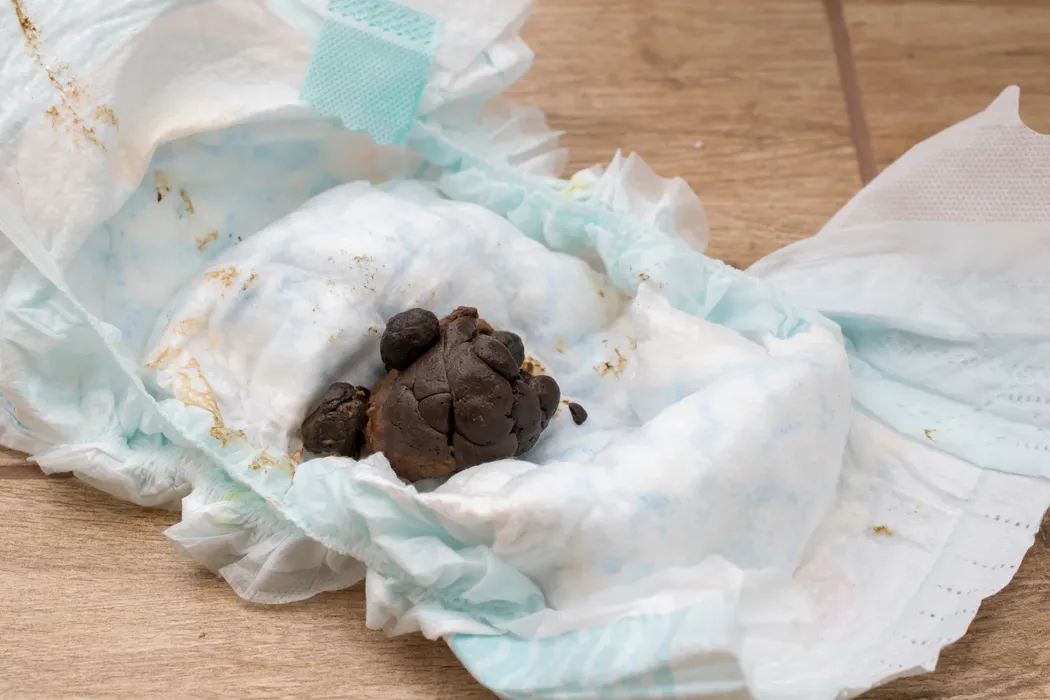
Meconium on days 1 to 2 is dark green to black, sticky, and tar-like. It is made up of amniotic fluid, mucus, and other material your baby swallowed in the womb. It looks alarming but is completely normal.

By days 3 to 4, transitional stools appear. These are greenish-brown and softer, a sign that breast milk or formula has started moving through.

By the end of the first week, healthy breastfed baby poop is typically bright yellow and seedy or curd-like. Formula-fed stools settle into a pale yellow to tan, pastier texture.

Colors that are generally fine: yellow, mustard, green, or orange.

Colors that need medical attention:

  • White, grey, or chalky stools may indicate a liver problem.
  • Red streaks or visible blood need same-day assessment.
  • Black stools after day 3 may signal bleeding higher in the digestive tract.
  • Persistent mucus in stools warrants a call to your doctor.

Signs of Constipation or Diarrhea in Newborns

Working out whether your newborn is not pooping enough versus settling into a longer natural rhythm is one of the trickier parts of early parenthood.

Signs your newborn may be constipated:

  • Hard, pellet-like stools. Consistency matters more than frequency.
  • Crying in obvious pain while straining, beyond the normal grunting effort all babies make.
  • A firm, visibly distended abdomen.
  • Formula-fed babies going more than 2 to 3 days without a soft stool.

Normal grunting does not equal constipation. Babies have weak abdominal muscles and often grunt, go red, and squirm during a perfectly normal bowel movement. If the resulting stool is soft, they are fine.

Signs of diarrhea:

  • A sudden spike in frequency well beyond your baby's usual pattern.
  • Extremely watery stools with no solid portion.
  • An unusually foul smell.
  • Blood or mucus.

Diarrhea can be difficult to distinguish from normal newborn stools because breastfed babies naturally have soft or runny stools. A sudden increase in frequency and looseness, particularly when stools become progressively watery or occur more often than the baby feeds, can indicate diarrhea. Because newborns can become dehydrated quickly, contact your pediatrician promptly if you suspect diarrhea, especially if your baby is less than 1 month old, has blood or mucus in the stool, is feeding poorly, seems unwell, or has signs of dehydration.

When to Contact Your Pediatrician

Most bowel habit questions can wait for a routine visit, but some signs call for a same-day or emergency call.

Call your pediatrician the same day if:

  • Your newborn under 1 month has not passed any stool in 24 to 48 hours.
  • You see blood or persistent mucus in the stool.
  • Your baby is straining with obvious pain and the abdomen feels hard.
  • Stools are white, grey, or black after day 3.

Seek emergency care if:

  • No stool for 3 or more days along with distress, vomiting, or a swollen belly.
  • Signs of dehydration appear: fewer than 6 wet nappies in 24 hours, dry mouth, no tears, or a sunken fontanelle.
  • A rectal temperature of 38°C (100.4°F) or higher in a baby younger than 3 months requires immediate medical evaluation.

While tracking poop is one important part of newborn care, do not overlook other aspects of daily hygiene. Apollo's newborn belly button care guide walks you through keeping the cord stump clean and infection-free.

Contraindications and Precautions

Never give a newborn any laxative, stool softener, suppository, gripe water, or home remedy without direct guidance from a pediatrician. This includes mineral oil, herbal preparations, and any over-the-counter remedy marketed for infants. The newborn digestive system is fragile, and unsupervised interventions can cause serious harm.

Do not attempt to stimulate a bowel movement by inserting objects into the rectum. Avoid modifying formula concentration or switching formula without medical advice. If you are breastfeeding, dietary changes you make can affect your baby's stools, so discuss any planned changes with your doctor.

If your baby is on any prescribed medication and you notice a change in normal newborn bowel movements, report this to your prescribing doctor. Report adverse events to your healthcare provider or the relevant regulatory authority.
Conclusion

Newborn poop patterns can vary widely, especially during the first few weeks as feeding becomes established. Breastfed and formula-fed babies may have different stool frequencies, and changes in frequency do not always indicate constipation or illness. Focus on the overall picture, including stool consistency, feeding, wet diapers, and weight gain. If your newborn has red, white, or persistent black stools, vomiting, fever, a swollen abdomen, poor feeding, signs of dehydration, or other concerning symptoms, contact your pediatrician for appropriate evaluation.

FAQS

Is it normal for a newborn to not poop for 3 days?

In breastfed babies older than 6 weeks, going 3 or even more days without a bowel movement can be normal if the baby is feeding well, not in pain, and passes a soft stool when it eventually comes. In babies under 6 weeks, or in formula-fed babies, more than 2 to 3 days without a stool warrants a call to your pediatrician.

How many times should a newborn pee and poop?

In the first few days, expect at least 1 wet nappy per day of life (1 on day 1, 2 on day 2, and so on), rising to 6 or more wet nappies daily by day 5 to 6. Bowel movements follow the day-by-day pattern outlined above, starting with 1 to 2 meconium stools and increasing through the first week.

Why does my newborn poop so much?

The gastrocolic reflex is very strong in young infants, causing the bowel to contract almost every time the stomach fills. This is why a newborn poops so frequently, sometimes after every single feed. It is a sign of a healthy, active digestive system, not a problem.

What does healthy newborn poop look like?

Healthy poop changes with age. Meconium is black and sticky, transitional stool is greenish-brown, and by the end of the first week a breastfed baby's stool is bright yellow and seedy while a formula-fed baby's is pale yellow and pasty. Soft consistency is the key marker of health at any stage.

Can teething affect newborn poop frequency?

Teething generally begins several months after the newborn period. The AAP notes that babies typically begin teething around 4 to 7 months, although the timing varies. Therefore, teething would not usually explain a change in bowel movements during the newborn period. If a newborn develops a significant change in stool frequency, watery stools, blood or mucus in the stool, fever, or other concerning symptoms, contact your pediatrician rather than assuming it is related to teething.

Apollo 247 Floating Action Button