logo
0

Newborn Poop Frequency: What’s Normal?

Learn how often newborns normally poop, how stool frequency changes with age and feeding, what is considered normal and which warning signs need medical attention.

article image

Dr.Nallapu Siri

Tracking how many times a newborn poops each day is one of the first things new parents find themselves doing, and for good reason. A baby's bowel habits are among the clearest early signals that feeding is going well and the digestive system is working as it should. But the range of what counts as "normal" is surprisingly wide, and knowing where the boundaries lie can save a lot of anxious nights.

How Often Do Newborns Poop?

In the first week of life, most newborns pass stool frequently, often anywhere from 4 to 10 times a day. Some babies go after almost every feed. This happens partly because the newborn gut is immature and moves food through quickly, and partly because feeding itself triggers the gastrocolic reflex, a natural contraction of the intestines in response to a full stomach.

By the end of the first month, the frequency usually drops. Many babies settle into a pattern of 3 to 4 stools a day, though some healthy babies continue going more often.

A few things worth remembering about newborn poop frequency:

  • Counting wet nappies matters as much as dirty ones. Six or more wet nappies a day generally signals adequate hydration.
  • Frequency alone does not tell the whole story. Stool consistency and color matter too.
  • Occasional skipped days are not automatically a problem, depending on the baby's age and how they are being fed.

Is it normal for a newborn to poop after every feed? Yes, especially in the first few weeks. The gastrocolic reflex is strong in newborns, so a dirty nappy shortly after a feed is completely expected.

Breastfed vs Formula-Fed Poop Patterns

Feeding type has a significant effect on newborn poop frequency, consistency, and color. Understanding those differences helps parents avoid unnecessary worry.

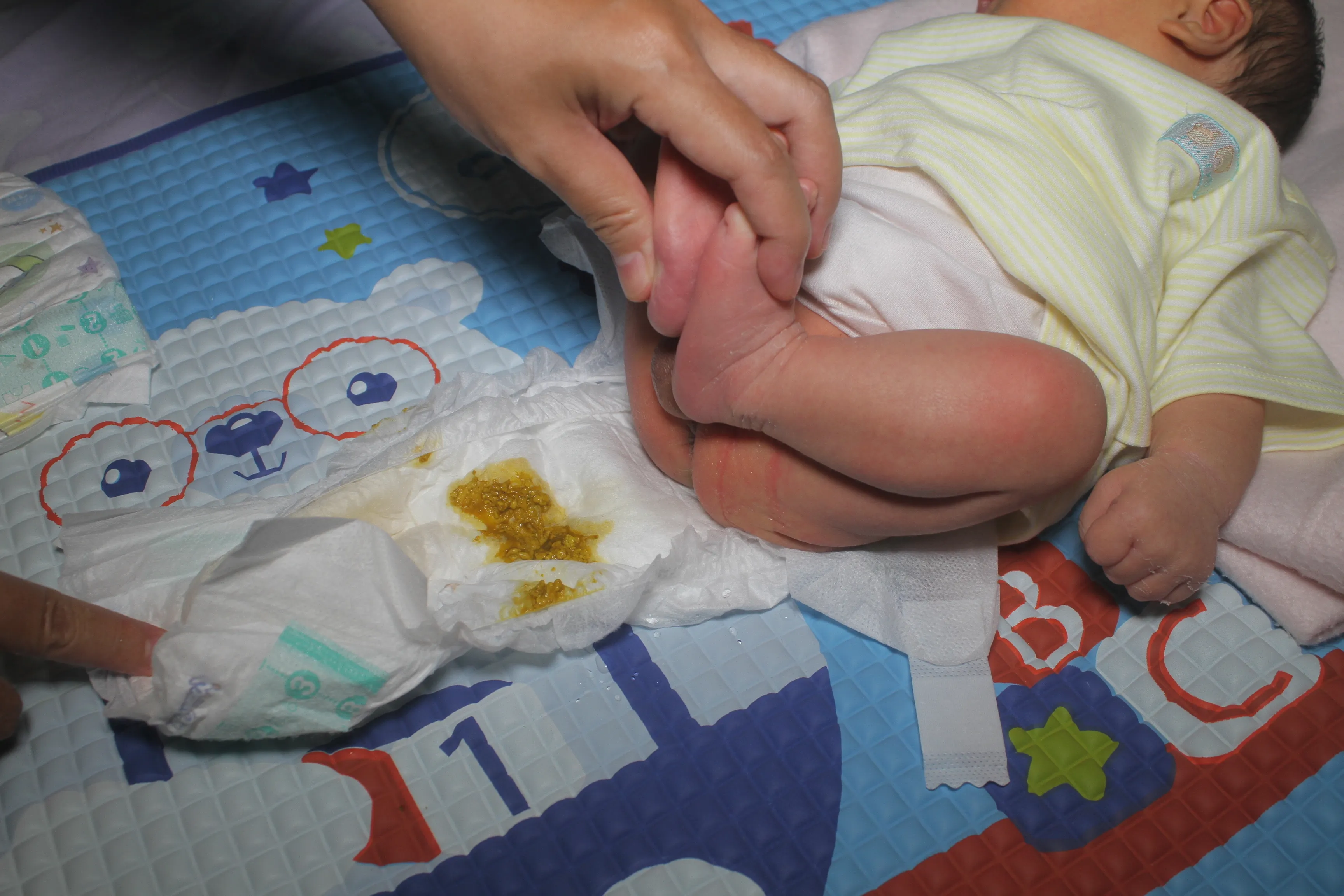
Breastfed babies tend to follow a breastfed baby poop schedule that involves more frequent stools in the early weeks, sometimes after every single feed. Breast milk is highly digestible, leaving little waste, so when there is a lot of output, it usually means the baby is feeding well. After around 6 weeks, breastfed babies sometimes shift dramatically and may go several days between stools. This can alarm parents, but it is often perfectly normal if the baby is gaining weight, feeding well, and not uncomfortable.

Formula-fed babies tend to have a more predictable pattern, typically 1 to 4 stools per day. Formula takes longer to digest than breast milk, so the stool is usually firmer and can be a darker yellow or tan colour. Going more than 3 days without a stool in a formula-fed newborn is worth a call to the paediatrician.

The bottom line: breastfed babies generally poop more often than formula-fed babies in the early weeks, but both patterns fall within a normal range.

What Newborn Poop Colour and Texture Mean?

Stool colour changes rapidly in the first days of life, and each stage tells you something specific about what is happening in the baby's gut. Use the newborn poop colour chart below as a quick reference.
 

StageTimeframeColour and TextureWhat It Means
MeconiumFirst 1 to 2 daysBlack or dark green, sticky, tar-likeNormal first stool; made up of amniotic fluid and cells
Transitional stoolDays 3 to 4Greenish-brown, looserMilk is coming in, gut is adjusting
Mature breastfed stoolWeek 2 onwardMustard yellow, seedy or softNormal and healthy
Formula-fed stoolWeek 2 onwardPale yellow to tan, thickerNormal for formula-fed babies

Colours that need medical attention:

  • Red or blood-streaked stool can indicate a small fissure, a milk-protein allergy, or, rarely, a more serious condition.
  • White, grey, or pale chalky stool may suggest a problem with bile flow from the liver and needs urgent evaluation.
  • Black stool after the first 2 days (once meconium has passed) can signal bleeding in the upper digestive tract.
  • Dark green stool is usually harmless but can sometimes mean a breastfed baby is getting more foremilk than hindmilk.
  • If you spot red, white, or black stools outside the expected windows, contact your paediatrician the same day.

When to Contact a Paediatrician?

Most changes in baby poop patterns during the first month are normal, but certain signs call for professional advice. A newborn not pooping enough, or showing other warning signs, should not be left to wait and see.

Contact your paediatrician if you notice:

  • No stool in the first 24 hours of life. Passing meconium within 24 hours is a standard newborn care checkpoint.
  • A formula-fed baby who has not pooped in more than 3 days.
  • Any newborn showing signs of pain, a hard or distended belly, or repeated vomiting alongside reduced stooling.
  • Blood in the stool at any point.
  • White, grey, or very pale stool, which may point to a liver or bile duct problem.
  • Watery, very frequent stools combined with signs of dehydration, including fewer wet nappies, a sunken fontanelle (the soft spot on top of the head), dry mouth, or unusual lethargy.

Always trust your instincts. If something feels wrong beyond just the poop count, a call to your paediatrician is the right move. You can also explore our newborn belly button care guide for other newborn hygiene basics that matter in the early weeks.

Contraindications and Precautions

Parents sometimes reach for home remedies or over-the-counter products when a baby seems to be straining or skipping stools. In newborns, this carries real risk.

Do not give newborns any of the following without explicit paediatrician guidance:

  • Laxatives or stool softeners of any kind
  • Gripe water or herbal preparations
  • Fruit juices, including prune juice
  • Enemas or suppositories
  • Glucose water or supplemental fluids not prescribed by a doctor

The newborn gut is immature and sensitive. Remedies that seem mild for older children or adults can disrupt gut flora, interfere with feeding, or cause dangerous electrolyte imbalances in a baby under a few weeks old. Even preparations labelled "natural" or "traditional" carry this risk. If you are concerned your newborn is not pooping enough or seems uncomfortable, a paediatrician visit is always the right first step.

Report any adverse events related to products or remedies used in newborns to your healthcare provider or the relevant regulatory authority.

Conclusion

Newborn stool frequency can vary considerably depending on whether the baby is breastfed or formula-fed, as well as their age and individual pattern. Breastfed babies may pass stools several times a day, while formula-fed babies may have fewer bowel movements, and changes in frequency can occur as feeding patterns develop. Stool colour and consistency are also important when assessing what is normal. Parents should seek medical advice if a newborn has very hard stools, persistent diarrhoea, blood in the stool, pale or white stools, black stools after the first few days, poor feeding, vomiting, fever or signs of dehydration. A paediatrician can help determine whether the baby's bowel pattern is appropriate.

FAQS

Is it normal for a newborn to not poop for 2 days?

In breastfed babies older than 4 to 6 weeks, skipping 2 days is often within the normal range, provided the baby is feeding well, gaining weight, and not distressed. In younger newborns or formula-fed babies, 2 days without a stool is worth mentioning to your paediatrician.

How many times should a newborn poop after breastfeeding?

It is common for a breastfed newborn to poop after every feed in the first few weeks, so up to 8 to 10 times a day is not unusual. As the baby's gut matures, this tends to reduce naturally.

What does green poop mean in newborns?

Dark green, sticky stool in the first 1 to 2 days is meconium and is completely normal. After that, green poop can indicate that a breastfed baby is getting more foremilk than hindmilk, or occasionally that the gut is moving stool through quickly. Bright green stool that continues for several days or is accompanied by other symptoms warrants a paediatrician check.

Can a newborn poop too much?

Very frequent stools in the first few weeks are normal and not a cause for alarm on their own. However, if stools are very watery, extremely frequent, or accompanied by signs of dehydration or poor weight gain, that is worth discussing with your doctor, as it could indicate a sensitivity or infection.

When does newborn poop frequency change?

Most babies shift to a less frequent pattern somewhere between 4 and 6 weeks of age, particularly breastfed babies who may go from multiple stools a day to one every few days. Formula-fed babies tend to maintain a steadier rhythm throughout.

Apollo 247 Floating Action Button