logo
0

How Many Times Does a Newborn Poop? Diaper Change Guide

Wondering how many times a newborn should poop daily? Learn normal frequency, diaper change schedule, and signs your baby needs changing now.

article image

Dr.Kamran

Few things occupy a new parent's mind quite like what is happening inside the diaper. Knowing how many times newborn poop patterns are considered normal helps you spot healthy development early and catch warning signs before they become serious. The short answer: frequency varies widely, and both ends of the spectrum can be perfectly fine, depending on your baby's age and feeding method.

How Many Times Should a Newborn Poop Each Day?

In the first week of life, a newborn can poop up to 8 to 10 times a day. That sounds like a lot, but the gut is just learning to work, and colostrum acts as a gentle natural laxative to help clear the very first stools.

After week one, most babies settle into a less hectic pace, though "normal" still covers a wide range.

Breastfed babies tend to poop more often in the early weeks, sometimes after every single feed. Breast milk digests so efficiently that very little waste builds up. After 4 to 6 weeks, many breastfed babies shift to pooping once every few days or even less, and that is still considered normal.

Formula-fed babies usually poop 1 to 3 times a day. Formula takes longer to digest, so stools are firmer and less frequent compared to breastfed babies.

Yes, it is normal for a newborn to poop after every feed. The gastrocolic reflex, a wave of intestinal movement triggered by a full stomach, is especially strong in newborns.

Diaper Change Frequency by Age (Week-by-Week Schedule)

A clean diaper is not just about comfort. Sitting in a wet or soiled diaper raises the risk of nappy rash and skin irritation. Rather than watching the clock, tie diaper checks to feeds and use the table below as a rough guide.

AgePoop frequencyWet diapers per dayChanges per day
Days 1 to 31 to 3 (meconium)1 to 36 to 10
Week 1 to 4Up to 8 to 106 to 88 to 12
1 to 3 months1 to 4 (breastfed may drop to every few days)6 to 88 to 10
3 months+1 to 2 per day average5 to 66 to 8

Most newborns go through 8 to 12 diapers in a 24-hour period during the first month. Check after every feed and before every sleep. Once you know a diaper is soiled, change it promptly. A urine-soaked diaper can wait a little longer but should still be changed every 2 to 3 hours during the day.

Signs a Baby Needs a Diaper Change

Babies cannot tell you directly, but they do communicate. The signs a baby needs a diaper change are usually easy to spot once you know what to look for:

  • Fussiness or sudden crying with no obvious cause, especially after a feed
  • A noticeable smell coming from the diaper area
  • The wetness indicator strip on disposable diapers changes color when wet
  • A sagging or unusually heavy diaper
  • Visible stool when you peek at the diaper's edge

Leaving a dirty diaper on, even briefly, can cause redness and nappy rash. If you notice skin irritation starting, apply a barrier cream at every change and allow a few seconds of air-dry time before closing the fresh diaper.

While you are building your nappy-change routine, it is also a good time to learn how to care for your newborn's belly button, since both areas need gentle, consistent attention in the early weeks.

Normal vs Abnormal Newborn Poop: Color and Consistency Guide

Normal newborn stool color changes dramatically in the first few days. Knowing what to expect prevents unnecessary alarm.

Meconium (days 1 to 2): Thick, sticky, and almost black or dark green. This is made up of everything your baby ingested in the womb. It should clear within 48 hours of birth.

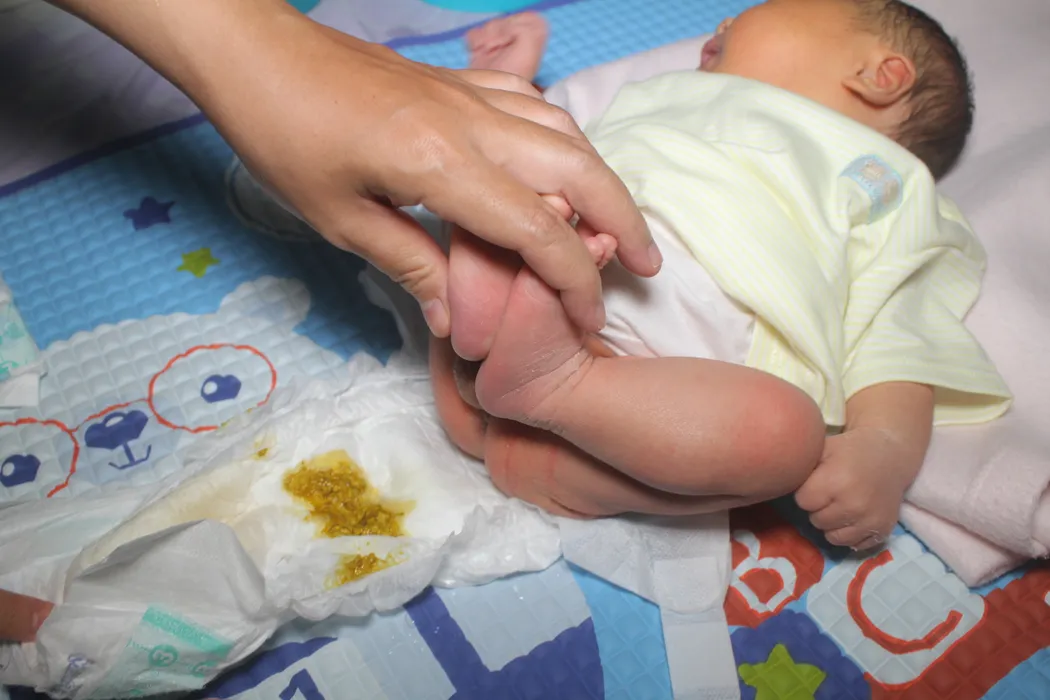
Transitional stool (days 3 to 5): Shifts from green-black to yellow-green as breast milk or formula comes in. Looser in texture than meconium.

Established breastfed stool: Mustard yellow, soft, often seedy or grainy, with a faintly sweet smell. This is textbook normal.

Formula-fed stool: Tan to yellow-brown, firmer, and with a stronger odor.

Green poop is common and usually harmless. It can happen when a breastfed baby gets more foremilk than hindmilk, during a growth spurt, or during a minor digestive adjustment. Occasional green stools rarely need a doctor's visit.

Stool colors that need prompt attention:

  • Bright red blood in the stool or on the diaper
  • Black tarry stool after the first few days (different from meconium)
  • Pale white, grey, or chalky stool, which can point to a liver concern
  • Mucus mixed into stool consistently over several days

When to Consult a Doctor About Newborn Bowel Changes?

Knowing when to act is as important as knowing what is normal. Call your pediatrician if you notice:

  • No stool passed in the first 24 hours of life
  • A breastfed newborn under 6 weeks who has not pooped in more than 2 days
  • Hard, pellet-like stools or a baby who strains with obvious pain
  • A visibly distended belly
  • Watery diarrhea lasting more than 24 hours, which can cause dehydration quickly in a newborn
  • Any blood in the stool
  • Pale or white stools at any age
  • Fewer wet diapers than expected, paired with a dry mouth or no tears when crying

Newborn constipation can become serious if left unaddressed. Dehydration and intestinal blockages, while uncommon, are genuine risks. If something feels off about your baby's pattern, a call to your paediatrician is always the right step.

Contraindications and Precautions for Home Remedies

Do not give a newborn any home remedy, herbal preparation, gripe water, laxative, suppository, or dietary supplement without explicit advice from a paediatrician. A newborn's digestive system is immature and highly sensitive. What seems harmless in an older child can cause real harm in a baby under 3 months.

This includes common household suggestions like sugar water, fruit juice, or oil-based remedies. None of these are appropriate for newborns and may interfere with feeding or cause complications. Always consult your doctor before trying anything beyond a clean, warm diaper change and a feeding check.

Report any unexpected reactions or adverse events related to baby products or remedies to your healthcare provider or the relevant regulatory authority.

Conclusion

Newborn poop frequency can vary considerably during the first weeks of life, depending on your baby's age and whether the baby is breastfed or formula-fed. Frequent soft stools are common in the early weeks, while breastfed babies may naturally begin pooping less often after the first month. Wet diaper output is also an important part of monitoring feeding and hydration, so parents should consider the baby's overall feeding, urine output, behaviour, and growth rather than focusing on stool frequency alone.

Changes such as blood in the stool, black stools after the meconium stage, pale or white stools, persistent watery diarrhoea, a swollen or hard abdomen, fewer wet diapers, or unusual lethargy require prompt medical assessment. Do not give newborns laxatives, suppositories, herbal remedies, juice, gripe water, or other home treatments without paediatric guidance. If you are unsure whether your baby's bowel pattern, stool appearance, or diaper output is normal, speaking with a paediatrician can provide appropriate reassurance and timely care.

Medical Disclaimer

This article is for general informational purposes only and does not constitute medical advice. Always consult a qualified paediatrician for guidance specific to your baby's health. Do not attempt to self-treat or delay seeking professional care based on content read here.

FAQS

Is it normal for a newborn to not poop for 2 days?

For formula-fed newborns, going 1 to 2 days without a stool can fall within normal range. For breastfed babies under 6 weeks, consult your paediatrician if there is no poop for more than 2 days.
How many wet diapers should a newborn have daily?

After the first week, most newborns produce 6 to 8 wet diapers a day. Fewer wet diapers than this, especially alongside a dry mouth or no tears, can be a sign of dehydration and warrants a call to your doctor.

Why does my newborn poop so much?

The gastrocolic reflex is strong in newborns, triggering a bowel movement when the stomach fills. Breastfed babies especially tend to poop after nearly every feed in the early weeks, and this is completely normal.

What does it mean if newborn poop is watery?

Occasional loose stools are normal, particularly in breastfed babies. Watery diarrhoea that continues for more than 24 hours or is accompanied by fewer wet diapers or lethargy needs prompt medical attention, since newborns dehydrate quickly.

Should I wake my baby to change a diaper at night?

You do not need to wake a sleeping baby for a wet diaper alone. If the diaper is soiled with stool, change it gently to prevent skin irritation, using a dim light to avoid fully waking your baby if possible.

Apollo 247 Floating Action Button