logo
0

How Many Weeks of Pregnancy Is 3 Months?

How many weeks is 3 months pregnant? Get the exact week range, trimester breakdown, and a full pregnancy weeks-to-months conversion chart.

article image

Dr.Kamran

Knowing how many weeks of pregnancy 3 months represents can be confusing, especially when your doctor talks about your pregnancy in weeks while family and friends ask how many months pregnant you are. The two systems do not match perfectly because calendar months vary in length, while pregnancy is measured in weeks from the first day of your last menstrual period (LMP).

This guide explains how 3 months of pregnancy corresponds to weeks, where the third month falls within the first trimester, how your baby's development progresses during this stage and which symptoms you may experience. It also explains why your healthcare professional uses weeks when planning scans, screening tests and other antenatal care.

How Many Weeks Is 3 Months Pregnant?

Three months pregnant is approximately 9 to 13 weeks. By around week 13, you are approaching the end of the third pregnancy month on many commonly used pregnancy charts.

The exact month-to-week conversion can vary because calendar months are not all the same length. This means that pregnancy months are an approximate way of describing how far along you are rather than a precise medical measurement.

Pregnancy is usually dated from the first day of your last menstrual period rather than from the day of conception. A full-term pregnancy is counted as about 40 weeks from this date. Your healthcare professional therefore uses your pregnancy week when discussing your due date, scans and screening tests.

If you are unsure how far along you are, your dating scan can help confirm your pregnancy dates and estimated due date. An ultrasound scan is usually offered at around 11 to 14 weeks in NHS antenatal care.

Why Pregnancy Months and Weeks Don't Align Neatly

A calendar month is not exactly four weeks long. Most months have 30 or 31 days, while four weeks contain only 28 days. Over the course of pregnancy, this difference means that 40 weeks cannot be divided into nine equal calendar months.

This is why different pregnancy charts may place a particular week in a slightly different month. For example, one chart may describe week 13 as the end of month 3, while another may place it at the beginning of month 4.

For medical care, your pregnancy week is the more useful measurement. Your due date, ultrasound scans and screening tests are planned according to specific weeks of pregnancy rather than months. For example, the dating scan is usually offered between 11 and 14 weeks.

A pregnancy month calculator can help you understand the approximate month you are in, but use the pregnancy week provided by your healthcare professional for clinical decisions.

Pregnancy Weeks to Months Conversion Chart

The table below provides an approximate pregnancy weeks to months chart based on a 40-week pregnancy counted from the first day of your LMP.

MonthApproximate week range
Month 1Weeks 1 to 4
Month 2Weeks 5 to 8
Month 3Weeks 9 to 13
Month 4Weeks 14 to 17
Month 5Weeks 18 to 22
Month 6Weeks 23 to 26
Month 7Weeks 27 to 30
Month 8Weeks 31 to 35
Month 9Weeks 36 to 40

These ranges are a practical way to describe pregnancy months, not a clinical dating system. Different charts may shift a week between two months. For scans, screening and other medical decisions, follow the pregnancy week given by your doctor or midwife.

Trimester Breakdown: Where Month 3 Fits

Pregnancy is divided into three trimesters. Three months pregnant falls around the end of the first trimester, with week 13 commonly regarded as the beginning of the second trimester.

A commonly used breakdown is:

  • First trimester: weeks 1 to 12
  • Second trimester: weeks 13 to 27
  • Third trimester: week 28 onwards

This means that weeks 9 to 12 are within the first trimester, while week 13 marks the transition into the second trimester in this system. Pregnancy dating can vary slightly between sources, so your healthcare professional's week count should guide your antenatal care.

Your pregnancy week also matters because some scans and screening tests are offered during specific periods. The dating scan is usually offered between 11 and 14 weeks, and screening for Down's syndrome, Edwards' syndrome and Patau's syndrome may be offered around this time.

Baby's Development at 3 Months (Weeks 9 to 13)

A great deal of development takes place between weeks 9 and 13. The developing baby is now called a foetus, and many of the major body structures have formed. They continue to grow and mature throughout the rest of pregnancy.

Some changes during this period include:

  • The fingers and toes become more distinct, while tiny nails begin to develop.
  • Facial features become more defined as the eyes, ears and other structures continue developing.
  • The baby can move inside the womb, although these movements are usually too subtle for you to feel.
  • The baby's organs and body systems continue to develop and become more specialised.
  • By around week 13, the foetus is approximately 7.4 cm long from head to bottom, although measurements can vary.

Although your baby is already moving at this stage, most people do not feel these movements yet. Most people begin to feel their baby move between 16 and 24 weeks of pregnancy. If this is your first pregnancy, you may not notice movement until after 20 weeks.

Common 3 Months Pregnant Symptoms and Body Changes

By around 3 months, some early pregnancy symptoms may begin to ease, while others can continue for several more weeks. Pregnancy affects everyone differently, so you may experience several symptoms or only a few.

Common symptoms and changes include:

  • Nausea and vomiting: Morning sickness can continue during weeks 9 to 13, although it may begin to improve towards the end of the first trimester.
  • Tiredness: Fatigue is common during early pregnancy and may continue into the third month.
  • Breast tenderness: Hormonal changes can make your breasts feel sore, fuller or more sensitive.
  • Bloating and constipation: Hormonal changes can affect digestion and cause these symptoms.
  • Changes in appetite: Food cravings, food aversions and increased sensitivity to smells may continue.
  • Increased vaginal discharge: A thin, clear or milky-white discharge can occur during pregnancy.
  • A small bump: Some people may begin to notice a small bump around this stage, although this varies considerably and may be less noticeable during a first pregnancy.

Having fewer pregnancy symptoms does not necessarily mean that something is wrong. However, seek medical advice if you have vaginal bleeding, severe or persistent abdominal pain, pain when passing urine, fever or vomiting that makes it difficult to keep fluids down. Vaginal bleeding or severe abdominal pain during early pregnancy may need prompt assessment.

Contraindications and Precautions in Early Pregnancy

The first trimester is an important period of fetal development. Taking care with medicines, food, alcohol, smoking and other exposures can help protect your health and your developing baby.

Medicines and supplements

Do not start, stop or change a medicine during pregnancy without checking with your doctor, midwife or pharmacist. This includes medicines bought from a pharmacy or shop, supplements and herbal products.

Some medicines can be used safely during pregnancy, while others may need to be avoided or changed. The decision depends on the medicine, dose, reason for treatment and stage of pregnancy. If you already take a prescribed medicine, do not stop it on your own, as stopping treatment can sometimes be harmful to you and your baby.

Herbal and other complementary products are not automatically safe during pregnancy. Tell your healthcare professional about any herbal, homeopathic or complementary products you use.

Food and drinks

Most foods can be eaten safely during pregnancy, but some require extra care.

  • Avoid raw or undercooked meat and foods that may contain harmful bacteria.
  • Avoid unpasteurised milk and foods made from it.
  • Wash fruit, vegetables and salads thoroughly before eating them.
  • Limit caffeine to no more than 200 mg a day.
  • Avoid alcohol during pregnancy.

If you are unsure whether a particular food, drink, supplement or herbal product is safe, check with your healthcare professional.

Activities and other exposures

Staying physically active during pregnancy is usually encouraged, but the type and intensity of exercise may need to be adjusted according to your health and pregnancy.

Avoid activities that carry a significant risk of falling or being hit in the abdomen. If your work involves chemicals, pesticides, radiation or other potentially harmful substances, discuss the necessary precautions with your healthcare professional.

Avoid smoking and exposure to second-hand smoke. If you smoke and want help stopping, speak to your doctor or maternity team for support.

Conclusion

Three months pregnant usually corresponds to approximately 9 to 13 weeks. Pregnancy months are only an approximate way of describing how far along you are because calendar months do not contain an equal number of days. Your pregnancy week is therefore the more important measurement for antenatal care.
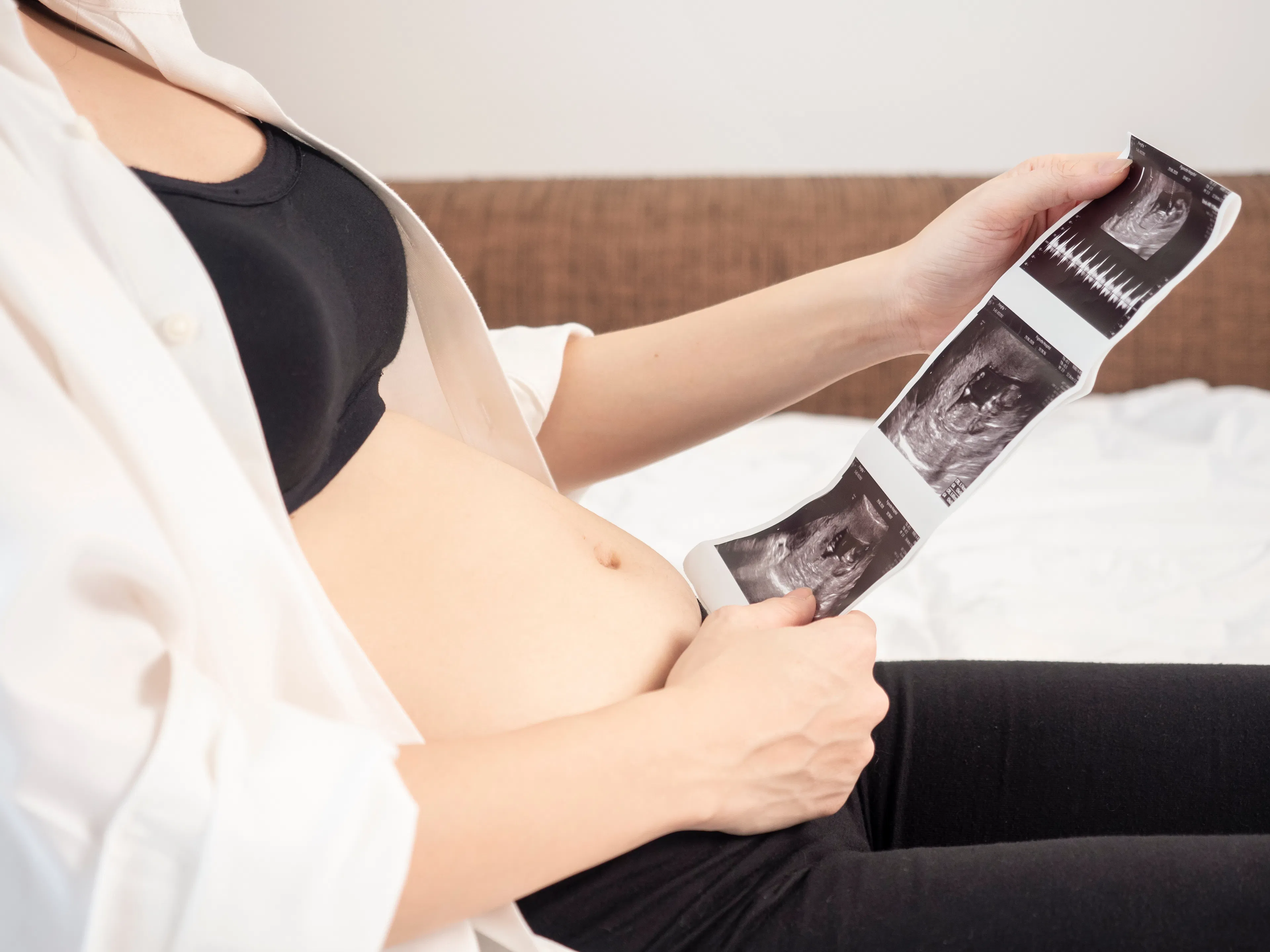
At around 3 months, your baby is developing rapidly, and your early pregnancy symptoms may begin to change. Keep attending your antenatal appointments and speak to your healthcare professional if you have concerns about bleeding, pain, severe vomiting, medicines or any other aspect of your pregnancy.

FAQS

How many weeks is 3 months pregnant?

Three months pregnant is approximately 9 to 13 weeks. The exact month-to-week conversion can vary between pregnancy charts because calendar months are not all the same length. For medical care, follow the pregnancy week calculation your healthcare professional provides.

Is 12 weeks the same as 3 months pregnant?

Yes. Week 12 is generally considered part of the third month of pregnancy and is near the end of the first trimester. Your healthcare professional will use your pregnancy week rather than the month number when planning clinical care.

How many weeks are in each pregnancy month?

Pregnancy months do not contain an exact number of weeks. A practical pregnancy month chart groups approximately 4 to 5 weeks together, which is why some months cover four weeks while others cover five. This is an approximate way of describing pregnancy rather than a medical dating system.

What trimester is 3 months pregnant?

Three months pregnant falls around the end of the first trimester. On a commonly used pregnancy dating system, weeks 9 to 12 are in the first trimester and week 13 marks the beginning of the second trimester. Your healthcare professional's pregnancy week should guide your antenatal care.

Can I feel my baby move at 3 months?

Most people cannot feel their baby move at 3 months, even though the baby is already moving. Most people begin to feel fetal movement between 16 and 24 weeks of pregnancy. If this is your first pregnancy, you may not notice movement until after 20 weeks.

Apollo 247 Floating Action Button