logo
0

How Much Weight Should a Newborn Gain in a Month?

Learn about normal newborn weight gain in the first month, tracking weekly growth, breastfed vs formula-fed curves, and key signs to call a paediatrician.

article image

Dr.Kamran

Knowing how much weight a newborn should gain in a month is one of the first things new parents track, and it matters. Weight gain is the clearest signal that your baby is feeding well, digesting properly, and hitting the newborn growth milestones that shape healthy development in the first month. Understanding what is normal and spotting early signs that a baby is not gaining weight fast enough can make those early weeks far less anxious.

Normal Weight Gain Range for Newborns in the First Month

Most healthy newborns gain roughly 150 to 200 grams per week during the first month. Over four weeks, that adds up to approximately 600 to 800 grams above their lowest recorded weight.

The first-week dip is entirely normal. Newborns typically lose 7 to 10 per cent of their birth weight in the first few days as they shed extra fluid and receive small amounts of colostrum before a mother's milk fully comes in. Most babies return to their birth weight by 10 to 14 days of age.

The average weight gain for newborns per week sits around 155 to 200 grams, though healthy babies can gain a little less and still plot normally on a growth chart. One measurement matters far less than a consistent upward trend over time.

Weight Gain Patterns: Breastfed vs Formula-Fed Babies

Breastfed and formula-fed babies often follow slightly different growth curves, and both can be perfectly healthy.

Normal weight gain for a breastfed baby in the early weeks generally mirrors formula-fed gain during the first three months. The WHO Child Growth Standards were developed using data from exclusively breastfed infants as the reference population, so those charts reflect what is biologically normal for a baby fed at the breast. After three months, breastfed infants sometimes gain a little more slowly, which is expected.

Formula-fed babies may put on weight slightly faster after the first few months because formula is digested more slowly and its caloric density is more consistent feed to feed. This does not make one feeding method superior; it simply means the curve looks a little different on a newborn weight gain chart.

A few practical points:

  • Breast milk composition changes through a feed, so a baby who nurses only briefly may get less fat-rich hindmilk and fewer calories overall.
  • On-demand feeding, aiming for 8 to 12 feeds in 24 hours, generally supports milk supply and steady gain.
  • If you are combination feeding, your paediatrician can help you read the growth chart in context.

How to Track Your Newborn's Growth?

Paediatricians use a growth chart to plot your baby's weight against age and show where they fall among healthy infants of the same sex. The percentile is the number most parents focus on, but a baby at the 25th percentile is not underweight. It simply means 25 per cent of babies that age weigh less.

What matters is whether your baby tracks along their own curve consistently. Crossing two or more major percentile lines downward, for example dropping from the 50th to the 15th, is more meaningful than sitting steadily at a low percentile.

Recommended weigh-in schedule in the first month:

  • Within 3 to 5 days of birth, to check the initial dip
  • At 2 weeks, to confirm return to birth weight
  • At the 1-month well-baby visit

Many hospitals and lactation clinics offer drop-in weight checks between appointments. There is no harm in using them if you are worried.

For broader newborn care during this period, including newborn belly button care essentials, Apollo's resources cover the common questions new parents face in the first weeks.

Signs of Poor or Excess Weight Gain

Knowing the red flags helps you act early. Poor weight gain in a newborn may show up as:

  • Fewer than 6 wet diapers per day after day 4 or 5 of life
  • Stools that remain dark and tarry beyond day 4
  • A baby who seems persistently sleepy and is hard to rouse for feeds
  • Feeding sessions lasting more than 45 minutes at every feed
  • No audible swallowing during nursing
  • No increase in weight over any two weeks

If you notice several of these signs together, contact your paediatrician rather than waiting for the next scheduled visit. These are classic signs of poor weight gain in a newborn and often point to a feeding issue that can be corrected early.

Excess weight gain is less common but can occur with overfeeding formula or, rarely, with metabolic conditions. Consistent gain of more than 300 grams per week is worth mentioning at your next visit.

Tracking newborn growth milestones in the first month means looking beyond the scale too. Length, head circumference, and alertness all contribute to the picture your doctor builds at each checkup.

Contraindications and When Not to Self-Assess?

Home tracking is a reassurance tool, but it has limits. Some situations require close professional supervision rather than parental monitoring alone.

  • Premature babies (born before 37 weeks) are plotted on corrected age charts and often have different nutritional needs entirely.
  • Babies with congenital heart disease, metabolic disorders, or chromosomal conditions may follow growth patterns that deviate from standard charts for reasons unrelated to feeding.
  • Infants with significant reflux or a tongue-tie affecting latch need a clinical assessment before any feeding changes are made.
  • If your baby was small for gestational age at birth, weight targets may be set individually by a neonatologist.

In these cases, general guides, including this one, are not a substitute for personalised advice. Home scales also vary in accuracy, so always weigh your baby on the same calibrated scale, preferably at the clinic.

Report adverse events or unexpected health changes to your healthcare provider or the relevant regulatory authority.

When to Consult a Paediatrician?

Contact your paediatrician promptly if:

  • Your newborn has not regained birth weight by 14 days of age.
  • Your baby loses more than 10 per cent of birth weight at any point.
  • Weight has not increased over two weeks.
  • Your baby is feeding fewer than 8 times in 24 hours and seems hard to wake.
  • You notice a sudden drop across percentile lines on the growth chart.
  • You feel your baby is not gaining weight fast enough despite frequent feeding.

Early intervention almost always resolves the underlying feeding issue. Do not wait and hope the numbers improve on their own.

Conclusion

Healthy newborns typically gain 150 to 200 grams per week in their first month, recovering their initial birth weight loss by day 10 to 14. Whether your baby is breastfed or formula-fed, maintaining a steady upward trajectory along their own growth curve on a standard chart is the main marker of health. Keeping track of wet diapers, feeding frequency, and alertness helps verify proper hydration and nutrition. If your newborn fails to regain birth weight by two weeks, drops significantly across percentiles, or shows signs of poor feeding, consult a paediatrician promptly.

FAQs

How much weight should a newborn gain in the first month?

Most newborns gain 600 to 800 grams above their lowest recorded weight over the first four weeks, which works out to roughly 150 to 200 grams per week. Consistent upward progress on a growth chart matters more than hitting an exact number.

Is it normal for a newborn to lose weight in the first week?

Yes. A loss of 7 to 10 per cent of birth weight in the first few days is expected as babies shed extra fluid and receive colostrum in small amounts. Most babies return to their birth weight by 10 to 14 days.
How much weight should a breastfed baby gain per week?

Normal weight gain for a breastfed baby is generally 150 to 200 grams per week in the first month, consistent with the WHO Child Growth Standards, which use breastfed infants as the reference group. Growth may slow slightly after three months, which is still considered normal.

What if my newborn is gaining weight too slowly?

If your baby is not gaining weight fast enough, your paediatrician will assess latch, feeding frequency, and milk transfer. Common causes an ineffective latch, insufficient milk supply, or a short tongue-tie, most of which can be corrected with early support.

How is newborn weight gain measured at checkups?

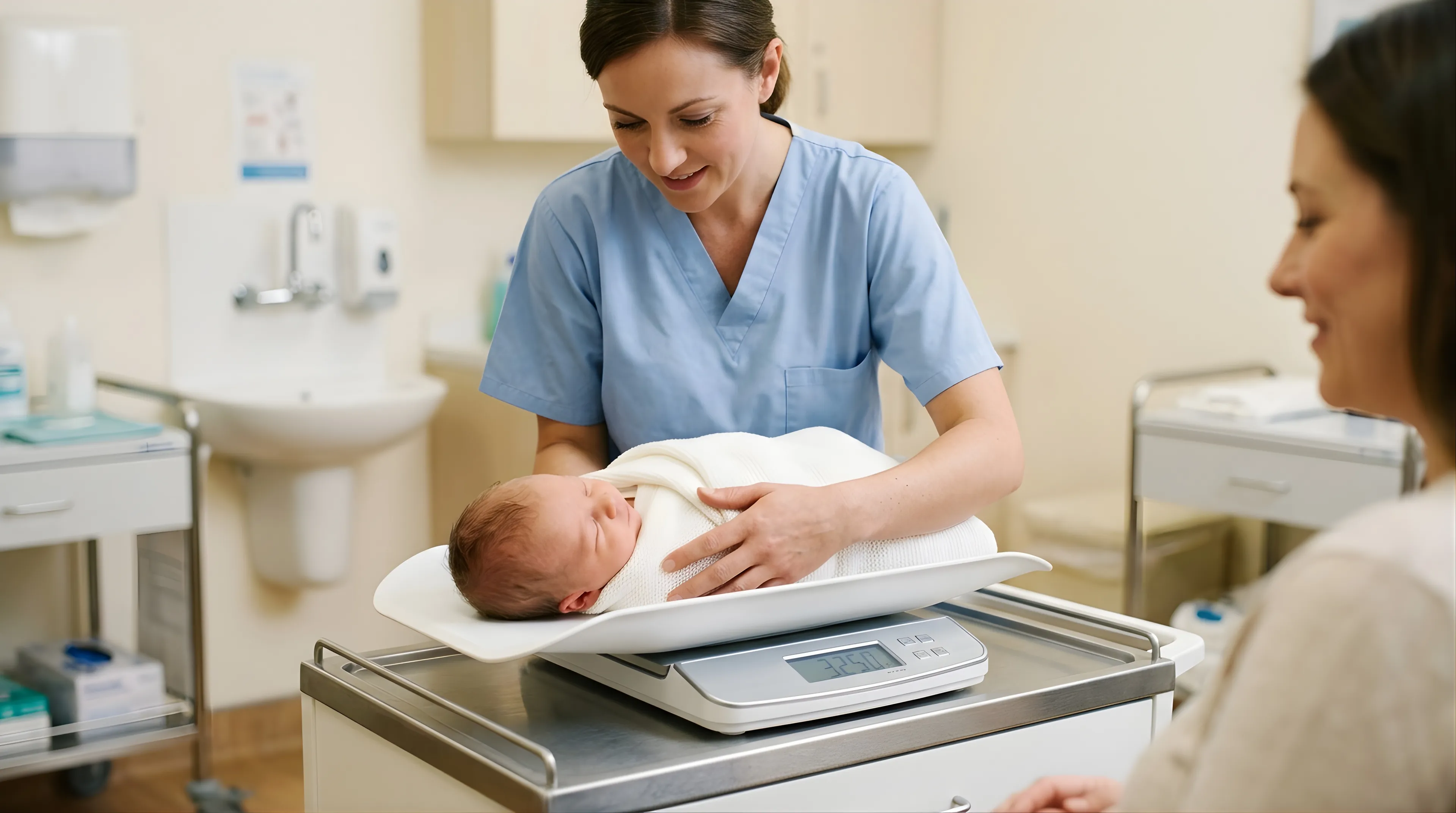
At each visit, your baby is weighed unclothed on a calibrated scale, and the result is plotted on a sex-specific growth chart. The paediatrician tracks whether the baby is following their own percentile curve over time, not just whether a single reading looks high or low.

Apollo 247 Floating Action Button