logo
0

How Much Weight Should a Newborn Gain in a Month?

Learn how much weight a newborn should gain each month, expected growth patterns, factors affecting weight gain, and when to consult a paediatrician.

article image

Dr.Rohini priyanaka

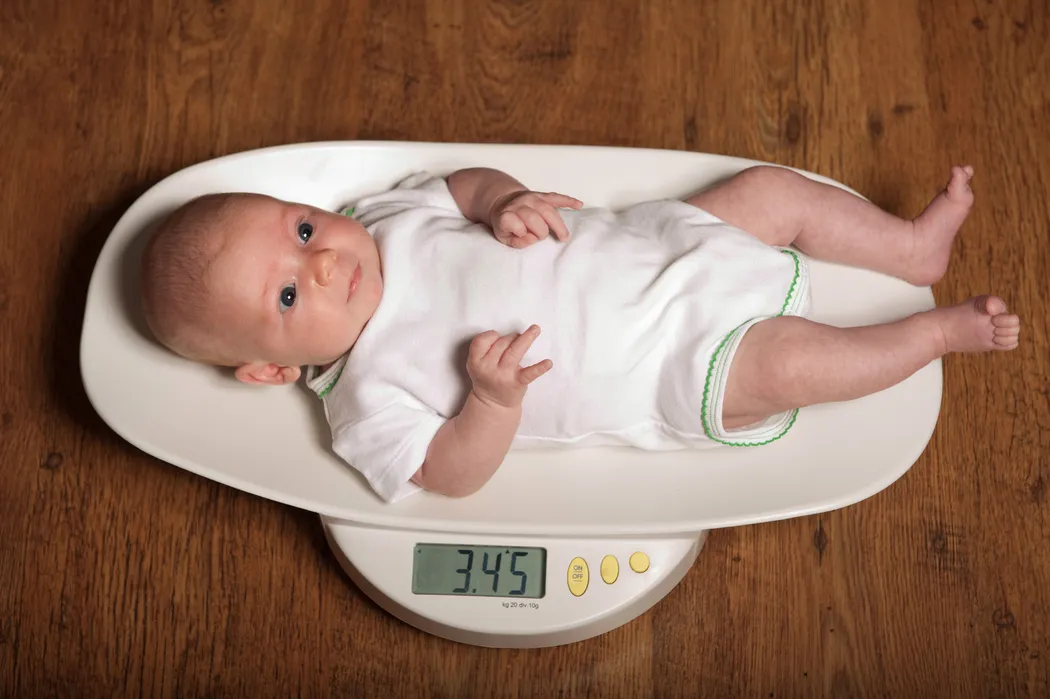
Tracking how much weight a newborn should gain in a month is one of the most common concerns new parents bring to their paediatrician. Weight gain is the clearest early signal that a baby is feeding well, absorbing nutrients, and growing on track. Getting familiar with normal ranges helps you stay calm when things look fine, and act quickly when they don't.

How Much Weight Should a Newborn Gain in a Month?

Most healthy newborns gain roughly 150 to 200 grams per week in the first three months of life. Over a full month, that adds up to about 600 to 800 grams. By around five months, most babies have doubled their birth weight.

A few quick reference points:

  • Week 1: a small weight loss of up to 7 to 10% of birth weight is normal as excess fluid is shed.
  • By day 10 to 14: birth weight should be fully regained.
  • Months 1 to 3: approximately 150 to 200 g per week.
  • Months 3 to 6: approximately 100 to 150 g per week.
  • Months 6 to 12: approximately 70 to 90 g per week.

These are averages. Individual babies vary, and a single week's measurement matters less than the overall trend over several weeks.

Weekly and Monthly Weight Gain Chart (0 to 6 Months)

The newborn weight gain chart below gives general expected gains by age. Actual figures from your child's growth record should always be interpreted by your paediatrician alongside other growth measurements like length and head circumference.
 

AgeExpected Gain per WeekExpected Gain per Month
0 to 2 weeksRegain birth weightBirth weight restored by day 10 to 14

1 to 3 months
150 to 200 g600 to 800 g
3 to 4 months120 to 150 g480 to 600 g
4 to 6 months100 to 130 g400 to 520 g

The average weight gain for a newborn per week sits between 150 and 200 g in the early months, but this does slow naturally as babies get older. Baby boys tend to be slightly heavier at birth and may gain marginally faster than girls early on, but both follow similar growth curves and the difference is rarely clinically significant.

Factors That Affect Newborn Weight Gain

Weight gain rarely follows a straight line. Several things can shift the pace:

  • Feeding method: breastfed and formula-fed babies often gain at slightly different rates, particularly in the first few weeks.
  • Prematurity: babies born before 37 weeks start from a lower baseline and follow adjusted growth curves.
  • Birth weight: smaller babies may gain proportionally faster to catch up; larger babies sometimes plateau briefly.
  • Latch and milk supply: a poor latch or low supply can silently reduce intake without obvious signs until weight checks flag it.
  • Illness: even a brief infection or jaundice episode can slow gain temporarily.
  • Feeding frequency: newborns typically need 8 to 12 feeds in 24 hours, and fewer feeds often means less intake overall.

When a baby is not gaining weight as expected, feeding method and frequency are usually the first things a paediatrician will review.

Signs of Healthy vs Poor Weight Gain

You do not need a scale at home to get reassurance between appointments. Daily observations give useful clues, and watching for signs of poor weight gain in newborns is something every caregiver can learn to do.

Signs that weight gain is likely on track:

  • Six or more wet diapers every day after day four or five
  • Three or more soft stools per day in the first weeks (for breastfed babies)
  • Baby appears satisfied after most feeds and settles for a reasonable stretch
  • Alert and responsive during wakeful periods
  • Skin looks well hydrated, not loose or wrinkled

Red flags that warrant a call to your paediatrician:

  • Fewer than six wet diapers a day after the first week
  • Consistently sleepy, difficult to wake for feeds, or feeding fewer than 8 times in 24 hours
  • Jaundice lasting beyond two weeks
  • Sunken fontanelle (soft spot) or dry mouth
  • Weight loss beyond 10% of birth weight at any point
  • No return to birth weight by two weeks

A baby not gaining weight adequately does not always look obviously unwell. A baby can seem calm and content and still not be getting enough. Regular weight checks remain the most reliable monitoring tool.

When to Consult a Doctor About Newborn Weight

Contact your paediatrician promptly if:

  • Your baby has not regained birth weight by 14 days old.
  • Total monthly gain is below 500 grams in the first three months.
  • There is any weight loss after the initial first-week drop has resolved.
  • You are worried about milk supply or latch, and feeding support has not helped within a day or two.
  • Any of the red flags listed above appear.

Newborn growth milestones are reviewed at scheduled visits, typically around day 3 to 5, two weeks, six weeks, and then monthly in the first six months. Do not wait for a scheduled visit if something feels wrong. Early review nearly always leads to a straightforward fix, whether that is a latch correction, a feeding schedule adjustment, or, occasionally, investigation for an underlying cause.

Tracking normal weight gain for infants alongside other newborn growth milestones gives a much fuller picture than weight alone. Length, head circumference, and developmental markers all feed into how a paediatrician assesses overall progress.

Contraindications and Precautions

Before considering supplements or changes to your baby's feeding routine, it is important to understand when extra care or medical guidance may be needed:

  • Avoid unapproved supplements: Do not introduce formula supplements, thickeners, or herbal preparations without explicit advice from a paediatrician, as they may affect feeding and may not be suitable for a newborn's developing digestive system.
  • Medical conditions: Babies with conditions such as cardiac defects, metabolic disorders, or cleft palate may require an individualised feeding plan under specialist guidance. Premature infants may also need adjusted growth charts and fortified feeds under medical supervision.
  • Avoid changing feeds based on home readings: Do not switch feeding methods or add supplements based only on home scale measurements or comparisons with other babies. Infant weight gain varies widely, and growth should be assessed in context.
  • Umbilical care: Along with feeding and growth, keeping the umbilical area clean and dry is an important part of newborn care.

Conclusion

Newborn weight gain varies between babies, so the overall growth trend is more important than a single weekly or monthly measurement. During the first few months, steady weight gain, adequate feeding, sufficient wet nappies, and appropriate growth in length and head circumference are useful indicators of healthy development. Most babies regain their birth weight within about 10 to 14 days, but growth should be assessed using age- and sex-appropriate growth charts. If your baby is not regaining birth weight, is feeding poorly, has fewer wet nappies, or shows other signs of dehydration or illness, contact your paediatrician promptly.

FAQS

What is the normal weight gain for a 1-month-old baby?

Most babies gain around 600 to 800 grams in their first month, which works out to roughly 150 to 200 grams per week. A healthy 1-month-old will typically weigh around 500 to 700 grams more than their birth weight once the initial first-week dip has been recovered.

Is 500 grams a month enough for a newborn?

Five hundred grams per month sits at the lower edge of the normal range in the first three months. If your baby is consistently gaining less than 500 grams a month, mention it to your paediatrician at the next visit or sooner if you notice any feeding difficulties or red flag signs.

Do breastfed babies gain weight slower than formula-fed babies?

Breastfed babies can gain weight slightly more slowly than formula-fed babies in the early weeks, though both patterns are considered normal. Growth charts used in India are based on breastfed babies as the reference, so your paediatrician will interpret your baby's readings in that context.

What if my newborn loses weight after birth?

A weight loss of up to 7 to 10% of birth weight in the first week is expected and not a cause for alarm. If loss exceeds 10%, or if birth weight is not regained by day 14, contact your paediatrician to review feeding and rule out any underlying issue.

How often should a newborn be weighed?

Routine checks are typically done at day 3 to 5, at two weeks, at six weeks, and then monthly through the first six months. If there are feeding concerns or the baby is premature, your doctor may recommend more frequent weighing until growth is on a steady track.

Apollo 247 Floating Action Button