logo
0

How Much Weight Should a Newborn Gain in a Month?

Learn healthy newborn weight gain milestones, expected growth patterns, and when to consult a pediatrician in the first month. Doctor-reviewed guide.

article image

Dr.Rohini priyanaka

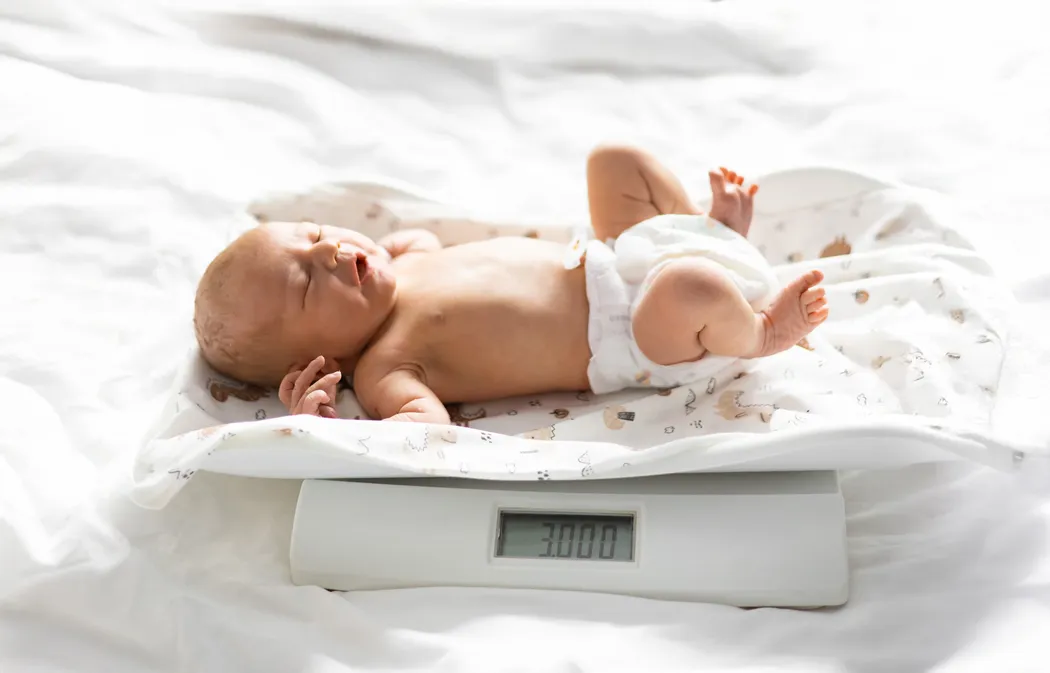
Knowing how much weight should a newborn gain in a month is one of the first concerns for new parents, and it is a meaningful one. Weight is the clearest early signal that your baby is feeding well and growing as expected. This guide walks you through normal patterns week by week, the factors that shape growth, and when to call your doctor.

Expected Weight Loss and Regain After Birth

Most newborns lose weight in the first few days of life, and this is completely normal. A loss of 5% to 10% of birth weight is expected as your baby sheds excess fluid and adjusts to life outside the womb.

By around day 10 to 14, most babies return to their birth weight. If that has not happened by the two-week mark, it is worth a conversation with your paediatrician. Newborn losing weight after birth is not cause for panic in the first few days, but it does need monitoring. Your baby's discharge weight and any follow-up checks help the doctor track this recovery closely.

How Much Weight Should a Newborn Gain Each Week?

Once feeding is established, newborn weight gain per week typically falls between 150 and 200 grams. WHO Child Growth Standards describe this as the expected pattern for the first three months, though there is natural variation from baby to baby.

A few practical points:

  • Weight can vary slightly depending on the time of day or whether your baby has just fed, so try to weigh at consistent times.
  • A single weigh-in that looks low is less meaningful than a trend over several days.
  • Your pediatrician will plot each measurement on a growth chart to assess progress against population norms.

Consistent weekly gain, even at the lower end of the range, is generally more reassuring than any single number.

Total Expected Weight Gain in the First Month

Putting those weekly gains together, the average newborn weight gain in the first month adds up to roughly 600 grams to 1 kilogram above birth weight by the four-week mark. Most babies double their birth weight by around five months.

A newborn growth chart for the first month will show a dip in the first week, followed by a steady upward curve once feeding is going well. If your baby's curve moves consistently upward, that matters more than which percentile it sits in.

Birth weight also shapes the trajectory. Larger babies may gain more in absolute grams; smaller babies can take a little longer to establish a steady pattern.

Factors That Affect Newborn Weight Gain

Several things shape how a baby gains weight in the early weeks.

  • Feeding type and frequency: Breastfed newborn weight gain can look a little slower in the first two weeks compared to formula-fed babies, simply because breast milk supply is still being established. This usually evens out once milk comes in fully. Feeding 8 to 12 times a day supports both supply and intake.
  • Gestational age: Babies born early may need more time and, in some cases, additional nutritional support before weight gain follows the standard curve.
  • Birth weight: Babies at either end of the normal birth-weight range may follow slightly different curves in the early weeks.
  • Illness or jaundice: A baby who is unwell or has significant jaundice may feed less and gain more slowly until they recover.

Signs of Poor Weight Gain to Watch For

Knowing the signs of healthy newborn growth also means recognising when something may be off. Contact your paediatrician promptly if you notice any of the following:

  • Your baby has not returned to birth weight by two weeks.
  • Fewer than six wet diapers in a 24-hour period after day four or five.
  • Very dark or concentrated urine beyond the first two days.
  • Your baby seems lethargic, is difficult to wake for feeds, or pulls away from the breast or bottle after less than 10 minutes consistently.
  • Fewer than two to three stools per day in the first weeks, particularly for breastfed babies.
  • A sunken fontanelle (the soft spot on top of the head), which can indicate dehydration.

No single sign on this list is necessarily alarming in isolation, but a combination warrants a prompt check-in.

Contraindications and Supplement Safety

If your paediatrician recommends a supplement such as vitamin D drops or, in specific situations, a formula top-up, use exactly what is prescribed at the recommended dose. Do not switch formulations or add any supplement without medical guidance. Some preparations are not appropriate for all babies, particularly those born very early or with specific metabolic conditions.

Report adverse events, such as unusual reactions to any supplement or feeding product, to your healthcare provider or the Central Drugs Standard Control Organisation (CDSCO) if you are in India, or the relevant regulatory authority in your country.

When to Consult a Paediatrician?

Trust your instincts. If feeding feels difficult, your baby seems persistently unsettled, or the scale numbers are not moving, that is reason enough to call.

Seek same-day advice if your baby shows signs of dehydration (dry mouth, no tears when crying, sunken fontanelle), has lost more than 10% of birth weight, or has not fed in more than four hours during the newborn period.

Your pediatrician will schedule weight checks at regular intervals in the first month. Attending all of these appointments, even when your baby seems fine, is the best way to catch concerns early. For broader newborn care tips for the first month, including how to manage common concerns like umbilical cord care, Apollo's resources can support you at home between those visits.

Medical Disclaimer

This article is for general informational purposes only and does not constitute medical advice. It is not a substitute for professional medical consultation, diagnosis, or treatment. Growth patterns vary between individual babies; always consult a qualified paediatrician before making decisions about your newborn's feeding, nutrition, or supplementation. If your baby shows signs of dehydration, significant weight loss, or you have any urgent concern, seek medical attention promptly. Do not start, stop, or change any supplement or feeding regimen without guidance from a healthcare professional. Adverse events related to any product or supplement should be reported to your healthcare provider or the relevant regulatory authority in your country.

Conclusion

Newborn weight gain varies from baby to baby, and the most useful measure is not a single monthly number but a steady growth pattern over time. Most babies lose some weight in the first few days and gradually regain their birth weight before continuing to gain as feeding becomes established. Feeding effectively, having an appropriate number of wet diapers, and following your baby's growth curve during paediatric visits provide a better picture of healthy development than comparing your baby with a fixed weight target.

If your baby loses more than expected, does not regain birth weight within the expected period, has fewer wet diapers, feeds poorly, or seems unusually sleepy or difficult to wake, seek paediatric advice promptly. Do not change formula concentration, add supplements, or alter feeding volumes without professional guidance. Regular growth monitoring and timely assessment can help identify feeding difficulties or medical concerns early and ensure your baby receives appropriate support for healthy growth.

FAQS

How much should a newborn weigh at 1 month?

Most babies weigh somewhere between 3.5 kg and 5 kg at one month, depending on birth weight and feeding history. Rather than focusing on a single target, your pediatrician will look at whether your baby has gained steadily from their own starting point.

Is it normal for a newborn to not gain weight in the first week?

Yes. Most newborns lose 5% to 10% of birth weight in the first few days before gaining it back. Actual upward gain typically does not begin until days 4 to 5, once feeding is better established.
How can I help my newborn gain weight faster?

Feed frequently, at least 8 to 12 times in 24 hours, and ensure your baby is latching or bottle-feeding effectively. If you are breastfeeding, skin-to-skin contact can support milk supply. If you have concerns, a lactation consultant or paediatrician can assess feeding technique directly.

Do formula-fed babies gain weight faster than breastfed babies?

Formula-fed babies often gain a little faster in the first two weeks because the volume of each feed is easier to measure and control. Over the first month, breastfed babies generally catch up once milk supply is well established. Both patterns are considered normal.

What is the average daily weight gain for a newborn?

After the initial weight loss and recovery, newborns gain roughly 20 to 30 grams per day on average during the first month. This works out to the 150 to 200 gram weekly gain your paediatrician will be tracking at each visit.

Apollo 247 Floating Action Button