logo
0

How Much Weight Should a Newborn Gain in a Month?

Learn healthy newborn weight gain by month, warning signs of poor growth, and when to consult a paediatrician. Doctor-reviewed guide.

article image

Dr.Nallapu Siri

Knowing how much weight should a newborn gain in a month is one of the first things new parents find themselves worrying about. It makes sense: in those early weeks, weight gain is one of the clearest signs that your baby is feeding well, staying healthy, and growing on track. This guide breaks down what to expect month by month, what the red flags look like, and when to pick up the phone and call your doctor.

How Much Weight Do Newborns Typically Gain Each Month?

Most newborns lose a small amount of weight in the first few days after birth. This is completely normal and is mainly due to fluid loss. Babies typically regain their birth weight by around 10 to 14 days of age.

After that, the average weight gain for a newborn per week is roughly 150 to 200 grams in the first month. That adds up to around 600 to 800 grams over the first four weeks. From months 2 to 6, the pace settles slightly, with most babies gaining around 100 to 150 grams per week.

So is 500 grams a month normal for a newborn? It sits at the lower edge of the typical range in the first month but may be perfectly fine depending on birth weight, feeding method, and the baby's overall health. Context always matters more than a single number.

Month-by-Month Weight Gain Expectations (0 to 6 Months)

The table below gives general ranges. Individual babies vary, and these figures are meant as a guide, not a strict target.

AgeExpected Weight GainKey Notes
Birth to Day 5Loss of up to 7 to 10% of birth weightNormal fluid loss; watch for more than 10% loss
By Day 10 to 14Return to birth weightSlower regain may need medical review
Month 1600 to 800 gFastest period of gain; feeding frequency is high
Month 2500 to 700 gGrowth may appear to slow slightly
Month 3400 to 600 gFeeds becoming more predictable
Month 4400 to 500 gGaining around 100 to 150 g per week
Month 5400 to 500 gWeight roughly doubles birth weight around this time
Month 6350 to 450 gMost babies double their birth weight by 5 to 6 months

A typical newborn weight gain chart from your paediatrician will plot these gains on a growth curve. What matters most is that your baby follows a consistent upward trend along their own curve, not that they hit a specific number at each visit.

For reference, a baby weighing around 3 to 3.5 kg at birth might weigh approximately 4.5 to 5 kg at one month and close to 6 to 6.5 kg by three months. These are averages; your baby may sit higher or lower and still be perfectly healthy.

Factors That Influence Newborn Weight Gain

Several things can affect how quickly a baby puts on weight.

  • Feeding type plays a real role. Breastfed and formula-fed babies often follow slightly different growth curves in the early months. Breastfed babies may gain more quickly in the first few months, then slow down compared to formula-fed babies after around 3 to 4 months.
  • Birth weight matters. Smaller babies may take longer to reach certain milestones, while larger babies may appear to slow down as they settle onto their natural growth curve.
  • Premature babies are tracked differently. Their weight is usually plotted against their corrected age (age from their expected due date, not actual birth date) for at least the first two years.
  • Illness, even a brief cold or infection, can slow gain temporarily. A baby who has been unwell may take a week or two to catch back up.
  • Genetics also matters. Two small parents are unlikely to have a baby who ranks in the 90th percentile for weight.

Understanding why protein intake matters for growth and development is particularly relevant for breastfeeding mothers, as the quality of the mother's diet can influence milk composition during the early months.

Signs Your Newborn May Not Be Gaining Enough Weight

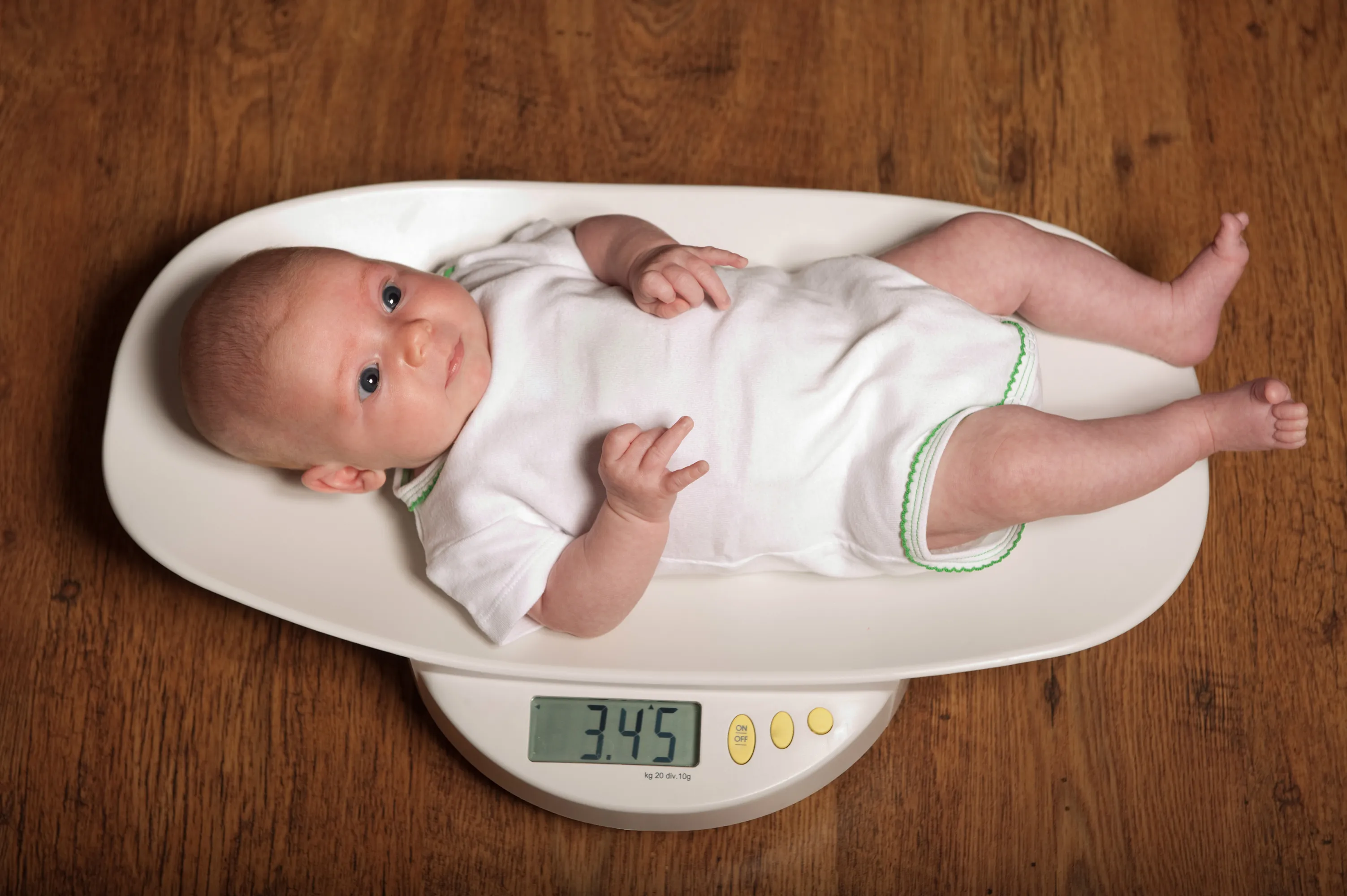
Weight checks at home with a digital scale can be reassuring between clinic visits, but there are other signs worth watching for.

  • Fewer than 6 wet nappies a day after the first week of life can suggest the baby is not getting enough milk.
  • Dry mouth, sunken fontanelle (the soft spot on the head), or skin that does not spring back when gently pinched are signs of dehydration.
  • Persistent lethargy or a baby who is very hard to wake for feeds needs prompt attention.
  • Not returning to birth weight by day 14 is a standard threshold that most paediatricians use as a prompt for closer review.
  • Feeding for very short periods or falling asleep at the breast or bottle before finishing a feed may mean the baby is too tired or too weak to feed effectively.
  • Stools that remain dark or meconium-coloured beyond day 4 to 5 suggest the baby may not be taking in enough colostrum or milk.

These are signs baby is not gaining enough weight and deserve a call to your paediatrician rather than a wait-and-see approach.

When to Consult a Paediatrician?

Routine weight checks at scheduled well-baby visits catch most concerns early. In India, these typically happen at birth, around 2 weeks, 6 weeks, 10 weeks, and at 3-month intervals after that. If you are worried between visits, do not wait.

Contact your paediatrician promptly if:

  • Your baby loses more than 10% of birth weight in the first week
  • Birth weight is not regained by 14 days
  • Your baby has fewer than 6 wet nappies per day after day 5
  • You notice signs of dehydration listed above
  • Your baby seems unusually quiet, difficult to rouse, or disinterested in feeding

When to worry about newborn weight is a question that has a simple answer: trust your instincts. If something feels wrong, get it checked. Paediatricians expect these calls and would far rather reassure a worried parent than see a preventable problem worsen.

Contraindications and Precautions

This section contains important safety information.

Do not attempt to change your baby's feeding schedule, volume, or formula concentration without paediatric guidance. Over-diluting formula to make it last longer, or adding extra scoops to increase calories, can be dangerous and may cause serious harm.

Supplementing breastfed babies with water or other fluids before 6 months is not recommended and can interfere with milk supply and nutrient intake.

Conditions such as tongue-tie, cleft palate, cardiac defects, metabolic disorders, and gastrointestinal problems can all affect weight gain and require specialist management. If weight gain is consistently poor despite adequate feeding, further medical investigation is warranted.

Report adverse events to your healthcare provider or the relevant regulatory authority.

Any supplement, thickener, or feeding aid for a newborn should only be used under direct medical supervision.

Conclusion

Newborn weight gain varies from baby to baby, and the most useful measure is not a single monthly number but a steady growth pattern over time. Most babies lose some weight in the first few days and gradually regain their birth weight before continuing to gain through the following months. Feeding effectively, having an appropriate number of wet nappies, and following the baby's growth curve during paediatric visits provide a better picture of healthy development than comparing your baby with a fixed weight target.

If your baby loses more than expected, does not regain birth weight within the expected period, has fewer wet nappies, feeds poorly, or seems unusually sleepy or difficult to wake, seek paediatric advice promptly. Do not change formula concentration, add supplements, or alter feeding volumes without professional guidance. Regular growth monitoring and timely assessment can help identify feeding difficulties or medical conditions early and ensure your baby receives the support needed for healthy growth.

FAQS

How much weight should a newborn gain in the first month?

Most babies gain around 600 to 800 grams in the first month after regaining their birth weight, which typically happens by day 10 to 14. This works out to roughly 150 to 200 grams per week.

Is it normal for a newborn to lose weight after birth?

Yes, a weight loss of up to 7 to 10% of birth weight in the first few days is normal and is mostly due to fluid loss. Babies should start regaining weight by day 4 to 5 and be back to birth weight by 10 to 14 days.

How can I tell if my baby is gaining weight properly at home?

A consistent increase in wet and dirty nappies, a baby who feeds actively and seems satisfied after feeds, and steady growth in length and head circumference are all reassuring signs. A digital baby scale used at the same time each day (before a feed) can give a rough sense of progress between clinic visits.

Does slow weight gain always mean a health problem?

Not always. Some babies are naturally smaller and gain more slowly while still being healthy. However, consistently slow gain, especially alongside poor feeding or other symptoms, does need medical review to rule out an underlying cause.

What foods or feeding changes help newborn weight gain?

For babies under 6 months, breast milk or formula is the only nutrition needed. Increasing feeding frequency, ensuring a good latch for breastfed babies, and checking that formula is prepared correctly are the main practical steps. Any further changes should be discussed with a paediatrician.

Apollo 247 Floating Action Button