logo
0

How to Change a Newborn Diaper: Frequency & Tips

Learn how to change a newborn diaper safely, how often to change it, the best timing, nighttime tips, diaper rash prevention, and warning signs.

article image

Dr.Mayank

Caring for a newborn is full of firsts, and knowing how to change a newborn diaper correctly is one of the most essential skills new parents need. Done right and done often, diaper changes protect your baby's delicate skin, help you spot health changes early, and keep your little one comfortable through those early weeks.

How Often Should You Change a Newborn's Diaper?

Most newborns need a fresh diaper every 2 to 3 hours, which works out to roughly 8 to 12 changes a day. That number sounds high, but newborns feed frequently, and their digestive systems are active around the clock.

Keeping up with newborn diaper-changing frequency matters because:

  • Prolonged contact with urine or stool breaks down delicate newborn skin within minutes.
  • A wet diaper creates warmth and moisture, the ideal environment for a rash or fungal infection.
  • Tracking wet and soiled diapers helps you confirm your baby is feeding well and staying hydrated.

In the first few days, your baby will pass dark, sticky meconium stools. Once feeding is established, expect at least 3 to 4 soiled diapers each day alongside frequent wet ones.

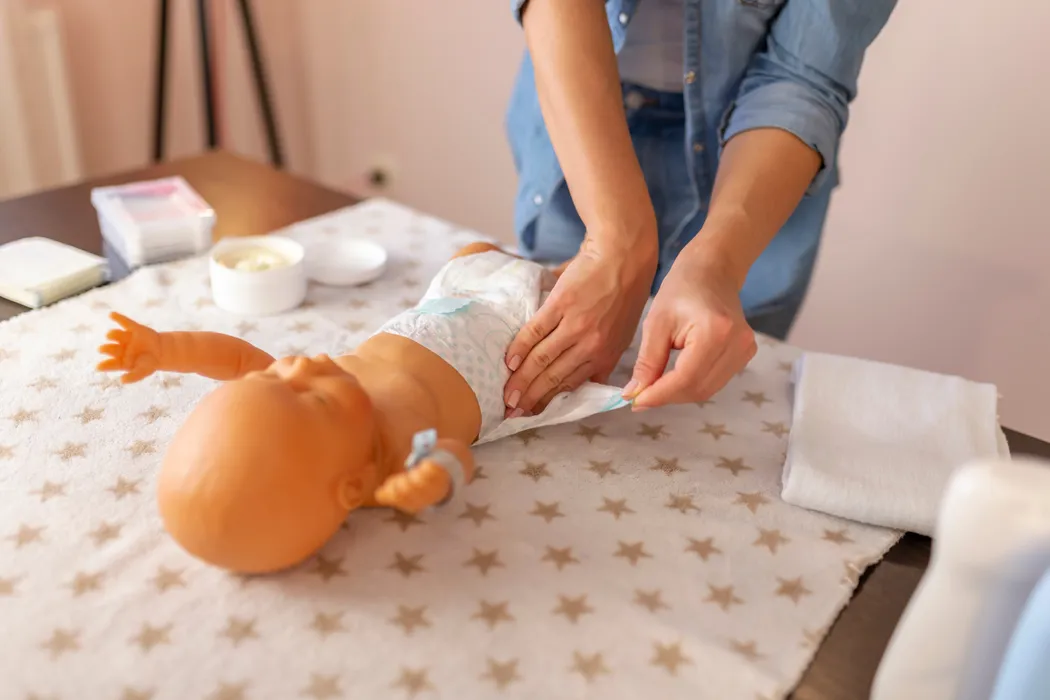
Step-by-Step: How to Change a Newborn Diaper

Gather everything before you start. Never leave your baby unattended on a changing surface, even for a second.

What you need:

  • Clean diaper
  • Fragrance-free wipes or soft cotton wool with warm water
  • Barrier cream or petroleum jelly
  • A changing mat or clean, padded surface

The steps:

  • Lay your baby on their back on a safe, flat surface.
  • Open the soiled diaper but keep it under your baby. Fold down the front to contain the mess.
  • Lift your baby's bottom by gently holding both ankles and slide the dirty diaper out.
  • Wipe front to back, always front to back, especially for girls. This keeps bacteria away from the urinary tract.
  • Clean all skin folds carefully, then pat the area dry with a soft cloth.
  • Apply a thin layer of barrier cream before putting on the new diaper.
  • Fasten snugly but leave room for two fingers at the waistband.

If the umbilical cord stump is still attached, fold the front of the diaper down below it so air can circulate. Read more about how to care for your newborn's belly button to keep that area healing well.

Signs Your Newborn Needs a Diaper Change Now

Newborns cannot tell you they are uncomfortable, so learning the signs your baby needs a diaper change is essential.

  • The diaper feels noticeably heavier when you pick your baby up.
  • There is a distinct odour even before any fussiness appears.
  • Your baby becomes suddenly restless, squirms, or cries without another obvious reason.
  • You can see or feel sagging in the diaper, a reliable sign it is fully saturated.
  • You hear or notice bowel movement sounds. Newborns are rarely quiet about this.
  • The skin around the diaper area looks pink or irritated when you check.

To tell if a diaper is wet without fully opening it, press gently on the absorbent pad. Most modern disposable diapers also carry a moisture-indicator strip that changes colour when wet.

Best Timing: Before or After Feeds, and at Night

A practical rhythm works better than watching the clock. Check your baby's diaper before each feed, after each feed, and before putting them down to sleep. Checking before a feed means your baby does not start nursing while already uncomfortable. Checking after makes sense because feeding stimulates the digestive tract, and a fresh soiled or wet diaper often appears within minutes.

When it comes to when to change a diaper at night, the approach needs to balance skin health with sleep. Waking a soundly sleeping baby for a change that is not needed can disrupt sleep for hours. If the diaper is only wet and your baby is settled, it can often wait until they naturally stir. Change immediately if:

  • There is a bowel movement, since stool is far more irritating to skin than urine.
  • The diaper is visibly leaking.
  • Your baby is stirring and seems uncomfortable.

Keep nighttime changes efficient: dim lights, minimal talking, quick movements. This signals to your baby that night is still for sleeping, not play.

Preventing Diaper Rash Between Changes

Newborn diaper rash prevention is about consistency at every single change, not just applying cream when redness appears.

  • Change diapers promptly: Change diapers promptly after soiling. Stool is significantly more irritating than urine and should never sit for long.
  • Let the skin air-dry: At every change, let the skin air-dry for 30 to 60 seconds before fastening a fresh diaper.
  • Apply barrier cream: Apply a thin layer of zinc oxide or petroleum jelly-based barrier cream at each change, even when skin looks perfectly healthy.
  • Use gentle wipes: Use fragrance-free, alcohol-free wipes. Both ingredients are common irritants for newborn skin.
  • Care for cloth diapers properly: If you use cloth diapers, rinse thoroughly and skip fabric softeners.
  • Check the diaper fit: Make sure it fits well. A diaper that is too tight rubs the skin and traps moisture, both of which accelerate rash development.

Minor pinkness usually clears within a day or two with these steps. If redness persists or worsens, it needs medical attention.

When to Consult a Doctor

Some skin changes in the diaper area go beyond a normal surface rash and need prompt evaluation. This section covers when home care is not enough.

Do not wait to call your doctor if you notice:

  • A rash spreading beyond the diaper area or appearing on other parts of the body.
  • Bright red, beefy-looking skin with small red dots at the edges, which can signal a yeast infection.
  • Blisters, open sores, or skin that looks raw or is bleeding.
  • Fever alongside the rash.
  • No improvement after 48 to 72 hours of careful home care.
  • Swelling, pus, or warmth that suggests a developing skin infection.

Report adverse events or unexpected skin reactions to your healthcare provider or the relevant regulatory authority.

Conclusion

Changing a newborn’s diaper every 2–3 hours is a useful general guide, while soiled diapers should be changed promptly. A safe routine includes preparing supplies beforehand, cleaning gently from front to back, drying the skin, applying a suitable barrier cream, and ensuring the diaper fits comfortably. At night, a wet diaper may sometimes wait until the baby naturally wakes, but bowel movements, leaks, or skin irritation require prompt changes. Persistent, worsening, or unusual rashes, especially with fever or broken skin, should be evaluated by a paediatrician.

FAQS

How often should a newborn diaper be changed?

Most newborns need 8 to 12 diaper changes every 24 hours, roughly every 2 to 3 hours. Soiled diapers should always be changed promptly, regardless of timing.

Do you need to change a diaper if it is just wet?

Yes. Even a urine-only diaper should be changed regularly, since prolonged skin contact with moisture breaks down the skin barrier and increases rash risk. If your baby is awake and fussy, change it right away.

Should you wake a sleeping baby to change a diaper?

If the diaper is only wet and your baby is sleeping comfortably, it is generally fine to wait until they wake naturally. Wake them immediately for a bowel movement, a leaking diaper, or visible skin irritation.
How long can a newborn stay in one diaper?

No longer than 2 to 3 hours during the day as a general guide, and soiled diapers should come off within minutes of being noticed. Leaving a soiled diaper on longer significantly raises the chance of a rash.

What are signs of a diaper rash needing treatment?

Redness that does not fade after a day or two of home care, blistering, skin breakdown, a beefy-red rash with satellite spots, or any rash accompanied by fever all warrant a call to your doctor rather than continued self-care.

Apollo 247 Floating Action Button