logo
0

How to Change a Newborn Diaper: Step-by-Step Guide

Learn how to change a newborn's diaper safely with this step-by-step guide. Discover tips on gentle wiping, preventing diaper rash, and daily skin care.

article image

Dr.Nallapu Siri

Learning how to change a newborn’s diaper confidently is one of the first practical skills every new parent needs. Newborns produce 8 to 12 wet or soiled diapers a day, and each change is an opportunity to keep their skin clean, comfortable, and rash-free. Done well, it takes under three minutes. Done carelessly, it can lead to infections, skin irritation, or accidental injury. This guide walks you through every step.

What You Need Before You Start?

Gather everything before you lift your baby. Leaving a newborn unattended on a changing surface, even for a second, is a safety risk.

Supplies to have within arm's reach:

Wash your hands with soap and water for at least 20 seconds before you begin. This is the single most important hygiene step, and it is easy to skip when you are tired.

Step-by-Step: How to Change a Newborn's Diaper Safely

These newborn diaper changing steps apply to both disposable and cloth diapers.

  1. Lay your baby on their back on the changing mat. Keep one hand on them at all times.
  2. Unfasten the diaper tabs but do not remove the diaper yet. Lift your baby's bottom gently by holding both ankles with one hand.
  3. Fold the front of the soiled diaper down so the clean outer surface is now under your baby's bottom. This protects the mat.
  4. Wipe from front to back using a fresh wipe or damp cotton pad. Never wipe back to front, as this carries bacteria toward the urethra. Use a new wipe for each stroke.
  5. Slide the dirty diaper out from under the baby. Fold it in on itself, seal with the tabs, and set it aside.
  6. Pat the skin dry with a soft cloth. Do not rub.
  7. If the skin looks red or irritated, apply a thin layer of barrier cream (see below).
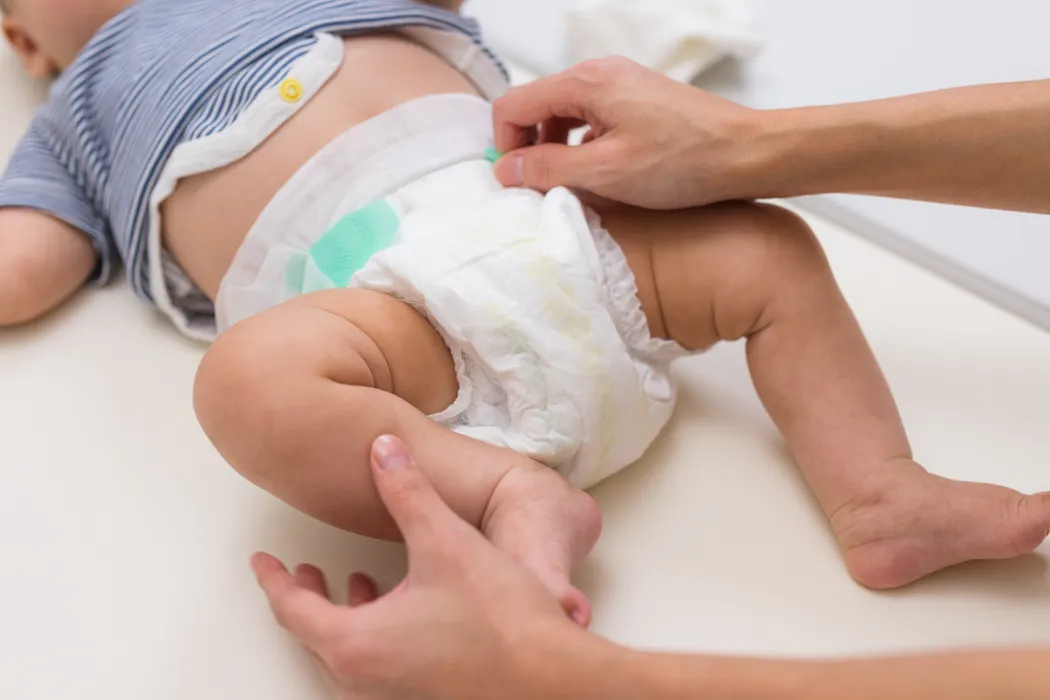
  8. Slide the clean diaper under your baby with the tab side at the back, level with the waist. Bring the front up and fasten the tabs snugly but not tight. You should be able to slip two fingers inside the waistband.
  9. Check that the leg ruffles are pulled out, not tucked in, to prevent leaks.

For newborns whose umbilical cord stump has not yet fallen off, fold the top of the diaper down to keep it clear of the stump. Knowing how to care for a newborn's belly button alongside diaper changes will help the stump heal cleanly.

Caring for Sensitive Newborn Skin

Newborn skin is thinner and more permeable than adult skin, which means it absorbs irritants quickly and loses moisture fast. Sensitive skin diaper care comes down to a few consistent habits.

  • Wipe gently. No scrubbing. The goal is to lift away mess, not clean a surface.
  • Air-dry when you can. After patting the area dry, leave the diaper off for a minute or two before fastening the clean one. Airflow is one of the best ways to prevent redness.
  • Choose fragrance-free, alcohol-free products only. Fragrances and preservatives in scented wipes are a common cause of contact dermatitis in newborns.
  • Apply barrier cream at every change if your baby's skin is prone to redness, or at night changes when the diaper will be on longer. Zinc oxide creams form a physical barrier against moisture.

Hygiene Best Practices to Prevent Infection

Good newborn hygiene tips go beyond the baby:

  • Wash your hands after every change, not just before.
  • Dispose of soiled diapers promptly in a sealed bin. Do not leave them open on the changing mat.
  • Wipe down the changing mat with a baby-safe disinfectant spray after each use and allow it to dry.
  • If you have older children, keep the changing area and supplies out of their reach to avoid cross-contamination.
  • Never share wipes, creams, or changing mats between siblings without cleaning in between.

How Often Should You Change a Newborn's Diaper?

Knowing how often to change a newborn’s diaper prevents both rash and infection. Most newborns need 8 to 12 changes in 24 hours during the first month.

Change the diaper:

  • After every feed (newborns often pass stool during or just after feeding)
  • Whenever you see or smell soiling
  • When your baby wakes from sleep, even if the diaper feels only slightly wet
  • Before bed, using a larger or overnight-rated diaper if available

At night, you do not need to change a wet-only diaper if your baby is sleeping soundly and the skin looks healthy. A soiled diaper should always be changed promptly, day or night, to reduce the risk of diaper rash.

Recognising and Managing Diaper Rash

Newborn diaper rash prevention is the goal, but rashes are still common. Typical diaper rash looks like:

  • Pinkish-red, moist skin in the diaper area
  • Mild swelling or puffiness around the creases
  • Fussiness when the area is wiped

For mild redness, diaper rash home remedies include increasing change frequency, applying a thick layer of zinc oxide barrier cream at every change, and allowing more air-dry time. Most mild rashes clear in 2 to 3 days with consistent care.

If the rash looks bright red, has raised edges, or small red spots are spreading beyond the diaper zone, it may signal a fungal (candidal) infection, which needs a different treatment. Do not apply antifungal creams without a doctor's guidance.

When to Consult a Paediatrician?

See a doctor promptly if:

  • The rash has not improved after 3 days of home care.
  • You notice blistering, open sores, or bleeding.
  • Your baby has a fever alongside the rash.
  • The rash appears in the first two weeks of life.
  • There are yellow crusts or pus, which may indicate a bacterial infection

If your baby's skin breaks and bleeds, the advice on treating minor skin cuts and wounds may be useful as a reference, but always call your paediatrician first for a newborn.

Report adverse events related to any product used on your baby's skin to your healthcare provider or the relevant regulatory authority.

Contraindications and Precautions for Diaper Rash Products

Some products should not be used on newborn skin without medical advice:

  • Talcum powder (baby powder): fine particles can be inhaled and cause lung damage. Most pediatric guidelines advise against it in this age group.
  • Products containing boric acid, camphor, or phenol: these are absorbed through newborn skin and can be toxic.
  • Hydrocortisone or steroid-based creams: should only be used if prescribed by a doctor for a newborn. Self-medicating with steroid creams can thin delicate skin.
  • Heavily fragranced creams or antiseptic solutions not formulated for babies.

Stick to plain zinc oxide or petrolatum-based barrier creams unless your doctor recommends otherwise. If you are unsure about any ingredient, ask a pharmacist before use.

Conclusion

Changing a newborn's diaper safely and frequently is fundamental to maintaining clean, healthy skin and preventing diaper rash. By gathering your supplies beforehand, wiping gently from front to back, and ensuring the area is completely clean and dry before putting on a fresh diaper, you protect your baby from skin breakdown and infection. Always fold down the waistband to clear a healing umbilical stump, and keep an eye out for persistent redness. If a rash does not improve within 3 days, or if you notice blisters, bleeding, or yellow crusting, consult a paediatrician promptly.

FAQS

How do you change a newborn diaper without waking them?

Work slowly and keep the room dimly lit. Warm the wipe in your hands before touching the baby's skin, and avoid lifting the legs higher than needed.

Is it normal for newborns to cry during diaper changes?

Yes, many newborns dislike being undressed or having cold air on their skin. Talking softly, making eye contact, or placing a warm cloth nearby can help settle them.

Can I use baby powder during diaper changes?

No. Paediatric guidance strongly advises against talcum powder around newborns because inhaling the fine particles can harm their lungs. Cornstarch powders are also generally unnecessary if you are using a good barrier cream.

How long should newborns go without a diaper change at night?

A wet-only diaper can usually wait until your baby wakes naturally, but a soiled diaper should be changed as soon as you notice it to prevent skin irritation.

What is the correct way to clean a baby girl vs a baby boy during a diaper change?

For girls, always wipe front to back to keep bacteria away from the vaginal area. For boys, clean under and around the scrotum thoroughly, and point the penis downward before fastening the new diaper to reduce leaks.

Apollo 247 Floating Action Button