logo
0

How to Check Pregnancy at Home Naturally

Learn how to check pregnancy at home, recognise early pregnancy signs, use a home pregnancy test correctly, and understand when to see a doctor.

article image

Dr.Bhanu Prakash

Finding out whether you are pregnant is one of the most significant moments in a person's life, and knowing how to check pregnancy at home naturally can help you take that first step with confidence. Whether your period is late, you are feeling off, or you are actively trying to conceive, understanding what your body is telling you and how to test accurately matters before you visit a clinic.

Early Signs of Pregnancy You Can Notice at Home

Your body often signals pregnancy before any test confirms it. These signs are indicative only, not diagnostic. Many overlap with premenstrual symptoms, so pay attention to a cluster of changes rather than a single symptom.

Common early pregnancy symptoms at home include:

  • A missed period is usually the clearest prompt to test, though irregular cycles can complicate timing.
  • Nausea or queasiness, often called morning sickness, can appear as early as two to four weeks after conception and does not always strike in the morning.
  • Breast tenderness, swelling, or a heavier feeling in the chest that feels different from your usual pre-period changes.
  • Unusual fatigue that sets in early in the day and does not lift with rest.
  • Frequent urination, mild cramping, or light spotting called implantation bleeding, which some women notice around the time their period would have arrived.
  • Heightened sensitivity to smells, food aversions, or a metallic taste in the mouth.

None of these symptoms alone confirms pregnancy. A woman with a stomach bug, hormonal imbalance, or stress can experience several of them. Use these as a cue to test, not a conclusion.

Traditional and Natural Home Indicators (and Their Limits)

Long before pharmacy kits existed, people relied on folk methods to detect pregnancy. Some are still discussed online, so it helps to know what the evidence actually says.

Natural signs of pregnancy that traditional methods try to track include shifts in basal body temperature (BBT), changes in urine colour or smell, and the texture of cervical mucus. After ovulation, BBT rises slightly and stays elevated if pregnancy occurs. Tracking this over several weeks can suggest you did not ovulate a second time as expected, which may hint at pregnancy, but it cannot confirm it.

Urine colour changes, saltwater or toothpaste urine tests, and similar folk indicators have no clinical evidence behind them. They are unreliable, and acting on them could delay proper testing or care.

The honest answer to "can you tell you are pregnant without a test?" is: you may notice strong clues, but you cannot know for certain. For real certainty, a home pregnancy test kit or a blood test is necessary.

Using a Home Pregnancy Test Kit Correctly

Modern home pregnancy test kits detect the hormone human chorionic gonadotropin (hCG), which the body starts producing after a fertilised egg implants in the uterus. Using one correctly makes a real difference to reliability.

This is how to use a home pregnancy test kit step by step:

  • Check the expiry date on the packaging before opening. Expired kits can give unreliable results.
  • Use your first urine of the morning. hCG is most concentrated then, which improves sensitivity.
  • Dip the absorbent tip into a clean urine sample, or hold it in the urine stream, for the exact number of seconds stated in the instructions, usually five to ten seconds.
  • Lay the stick flat and wait the full time shown in the instructions, commonly two to five minutes, before reading the result.
  • Read the result within the window specified. A line appearing after the result window closes may be an evaporation line, not a true positive.
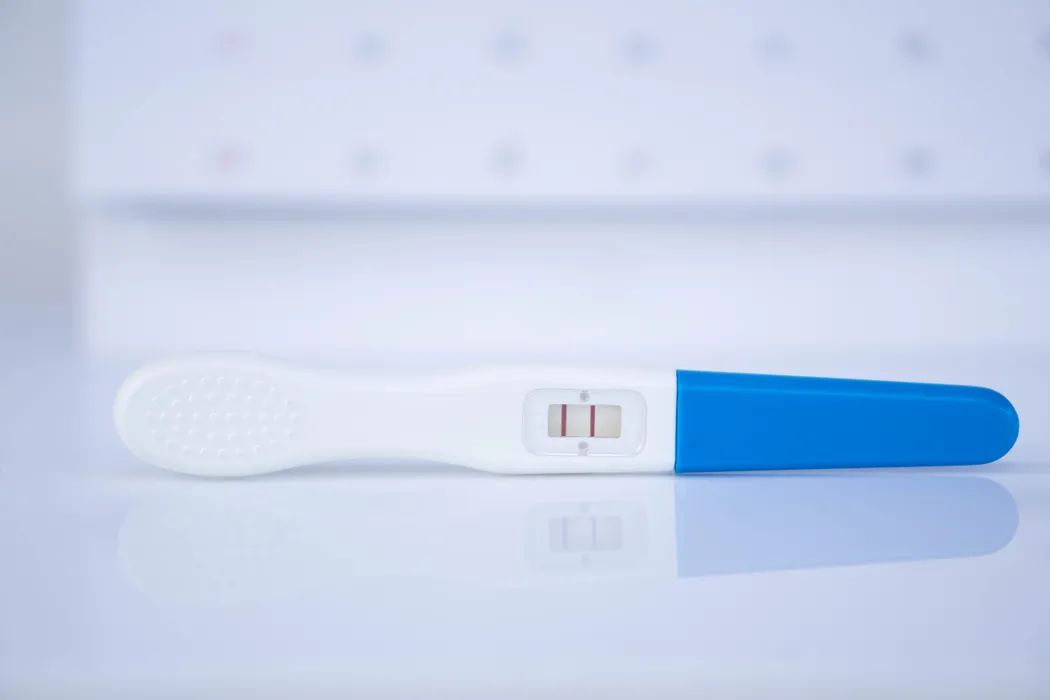
  • One line in most kits means not pregnant; two lines (even a faint second line) typically mean pregnant. Always check your specific kit's guide because symbols vary by brand.
  • Store unused tests at room temperature, away from moisture and direct sunlight.

Best Time to Take a Pregnancy Test for Accurate Results

Timing matters when to take a pregnancy test. hCG starts rising after implantation, which occurs roughly six to twelve days after conception. Levels then double approximately every 48 to 72 hours in early pregnancy.

Most standard kits detect hCG reliably from the first day of a missed period. Some early-response kits claim detection a few days before that, but accuracy is lower because hCG may still be below the kit's threshold.

If your cycle is regular and you are one week or more past your expected period date, a good-quality kit used with first morning urine is highly likely to give an accurate result. If your cycles are irregular, count at least 21 days after unprotected sex before testing.

Testing too early is the single most common reason for a missed result on an otherwise normal pregnancy.

How Accurate Are Home Pregnancy Tests?

Home pregnancy test accuracy is high when kits are used correctly and at the right time. Good-quality tests can reach accuracy above 99 per cent under those conditions. That said, errors do happen.

Causes of a pregnancy test false negative:

  • Testing too early, before hCG has built up enough.
  • Using diluted urine rather than first morning urine.
  • Reading the result outside the designated time window.
  • Using an expired or poorly stored kit.

Causes of a false positive (less common):

  • Certain fertility medications containing hCG can trigger a positive result that does not reflect an ongoing pregnancy.
  • A very early pregnancy loss, sometimes called a chemical pregnancy, where hCG was present but the pregnancy did not continue.
  • Certain medical conditions that raise hCG levels, such as some ovarian conditions.

If your result is negative but your period does not arrive, retest after two to three days with a fresh kit and first morning urine. If symptoms persist and tests remain negative, a blood test at a clinic is the next step. Blood tests detect hCG at far lower concentrations than urine kits.

When to See a Doctor?

A positive home test should always be followed up with a doctor, ideally within a week or two. A blood test and an ultrasound will confirm the pregnancy, estimate how far along you are, and rule out complications such as an ectopic pregnancy, which needs urgent attention.

See a doctor promptly if you have:

  • A positive test alongside severe one-sided pelvic pain or heavy bleeding.
  • Repeated negative tests but a strongly missed period and persistent symptoms.
  • Any history of ectopic pregnancy, polycystic ovary syndrome, or irregular cycles that make timing uncertain.

Once your pregnancy is confirmed, your doctor will guide you on prenatal vitamins, diet, and the next steps in antenatal care. For families preparing ahead, learning newborn care basics after pregnancy can be a helpful early read.

Contraindications and Precautions

Knowing how to check pregnancy at home naturally also means knowing when test results may not be straightforward.

Conditions and factors that can affect results:

  • Fertility treatments that use hCG injections can cause a false positive for days to weeks after the injection. Your fertility specialist will advise you on when it is safe to test.
  • Certain rare tumours and medical conditions (such as gestational trophoblastic disease or some germ-cell tumours) can produce hCG in the absence of pregnancy.
  • Kidney disease or conditions causing very dilute urine may reduce test sensitivity.
  • Some antihistamines and diuretics can affect urine concentration, indirectly affecting test reliability, though they do not directly interfere with hCG detection.

If you are on any prescribed treatment and are unsure whether it could affect your result, ask your doctor or pharmacist before interpreting the test.

Report any unexpected reactions to test kit components, such as skin irritation from the kit casing, to your healthcare provider or the relevant regulatory authority.

Conclusion

Natural signs such as a missed period, nausea, breast tenderness, and fatigue may suggest pregnancy, but they cannot confirm it. Home pregnancy test kits are the most reliable way to check at home when used at the right time and according to the instructions. If the result is unclear, your period remains delayed, or you develop pain or heavy bleeding, seek medical advice for proper confirmation and care.

FAQS

Can I check pregnancy at home without a kit?

You can look for natural signs of pregnancy such as a missed period, nausea, or breast tenderness, but these symptoms are not reliable enough to confirm pregnancy on their own. A home pregnancy test kit or a clinical blood test is the only dependable way to know.

How soon can a home pregnancy test detect pregnancy?

Most kits can detect pregnancy from the first day of a missed period. Some sensitive early-response kits may detect hCG a few days before that, but accuracy is highest after the missed period.

Does drinking water affect a pregnancy test?

Drinking large amounts of water before testing can dilute your urine, which may lower hCG concentration and produce a false negative. Always use your first morning urine, which is the most concentrated sample of the day.

Why did I get a faint line on my pregnancy test?

A faint second line usually indicates a positive result. It means hCG is present in your urine, though at low levels, which is common in very early pregnancy. Retest in two to three days with first morning urine, and the line should be clearer.

Is it normal to get a negative test but still be pregnant?

Yes, this can happen, especially if you tested too early or used diluted urine. If your period does not arrive and symptoms continue, retest a few days later or ask your doctor for a blood test, which is more sensitive than a urine kit.

Apollo 247 Floating Action Button