logo
0

How to Choose the Right Infant Formula for Your Baby

Learn how to select the right first infant formula, spot feeding cues, and transition safely — expert-reviewed guidance from Apollo Pharmacy.

article image

Dr. Vasantha Sree

Choosing a first infant formula can feel overwhelming when shelves are lined with dozens of tins all claiming to be the best. Whether you are exclusively formula-feeding from birth or supplementing breastfeeding, understanding what goes into a formula and how to match it to your baby's needs makes the decision much clearer. This guide is written for new parents who want plain, unbiased guidance on selecting and using formula safely.

What Is First Infant Formula and Who Needs It

Infant formula is a manufactured food formulated to meet the nutritional requirements of infants when used as a substitute for human milk. In India, FSSAI defines infant formula as a product intended to meet the normal nutritional requirements of infants during the first six months when used as a substitute for human milk. Follow-up formula is a separate category intended for infants after six months as part of a complementary diet.\\

Formula is suitable for:

  • Babies whose mothers choose not to breastfeed or cannot breastfeed
  • Newborns who need a supplement while milk supply is being established
  • Babies not gaining weight adequately on breast milk alone

First infant formula is not the same as breast milk. Breast milk contains a range of bioactive components, including antibodies, immune cells and hormones, that are not reproduced in exactly the same way in manufactured infant formula. That said, regulated infant formulas provide complete nutrition and are safe as a sole food source when breastfeeding is not possible or chosen. Always discuss the decision with your child's paediatrician before starting.

Types of Infant Formula: Cow's Milk, Soy, Hydrolysed, and More


Knowing the types of infant formula helps you have a more informed conversation with your doctor.

  • Cow's milk-based formula is a common type of standard infant formula. The proteins and other components are modified to make the product suitable for infant nutrition.
  • Soy-based formula uses soy protein instead of milk protein. It may be appropriate for some infants in specific circumstances, but it should not be assumed to be suitable for an infant with suspected or confirmed cow's milk protein allergy. Discuss the choice with a paediatrician.
  • Partially hydrolysed formula contains milk proteins that have been broken into smaller fragments. These products are sometimes marketed for digestive comfort, but parents should not assume that a partially hydrolysed formula will treat an allergy or resolve unexplained digestive symptoms.
  • Extensively hydrolysed formula breaks milk proteins down into smaller fragments and may be recommended for infants with confirmed cow's milk protein allergy (CMPA). Selection should be guided by a paediatrician.
  • Amino acid-based (elemental) formula contains nitrogen in the form of individual amino acids and may be used when a specialised formula is medically indicated, including certain severe allergies or metabolic conditions. It should be selected with specialist medical guidance.
  • Premature or low-birth-weight formula is higher in calories, protein, and specific micronutrients. Premature babies should only receive formula recommended by their neonatal care team.

The more specialised the formula, the more essential it is to get a paediatrician's input before use.

How to Choose the Right First Formula for Your Baby

For most healthy, full-term newborns, a standard cow's milk-based Stage 1 formula is the right starting point. Here is how to think through the choice on how to choose baby formula without getting lost in marketing claims:

  • Start with your baby's age and birth status. Full-term babies need Stage 1; premature or very low-birth-weight babies need specialist guidance.
  • Consider any known family history of cow's milk protein allergy. If that history is strong, ask your paediatrician before buying a standard formula.
  • Watch your baby's response in the first two to four weeks. Small spit-ups are normal; persistent distress is not.
  • Ignore advertising phrases like "closer to breast milk" or "comfort formula." Look at the ingredients and discuss with your doctor.

Infant nutrition products sold in India are subject to FSSAI requirements covering composition, permitted ingredients, labelling and other safety requirements. This does not mean that every formula is interchangeable: products can differ in protein source, ingredients, age indication and suitability for particular medical needs. There is no single best formula for every baby.

Transitioning: From Breastfeeding to Formula, or Switching Formulas

If you are moving from breastfeeding to formula, the pace of transition can vary depending on your feeding goals, your baby's needs and your milk supply. A gradual change may be useful for some families, while others may need a different approach. Your paediatrician or lactation professional can help you plan the transition.

If a formula change is recommended, follow the instructions provided by your paediatrician and the manufacturers of the products involved. Do not mix different powdered formulas together in the same bottle unless a healthcare professional has specifically advised you to do so.

Some loose stools, extra gas, or fussiness during any transition is normal and usually settles within a week. If symptoms worsen or persist, contact your paediatrician before making another switch.

Safe Preparation, Storage, and Feeding Practices

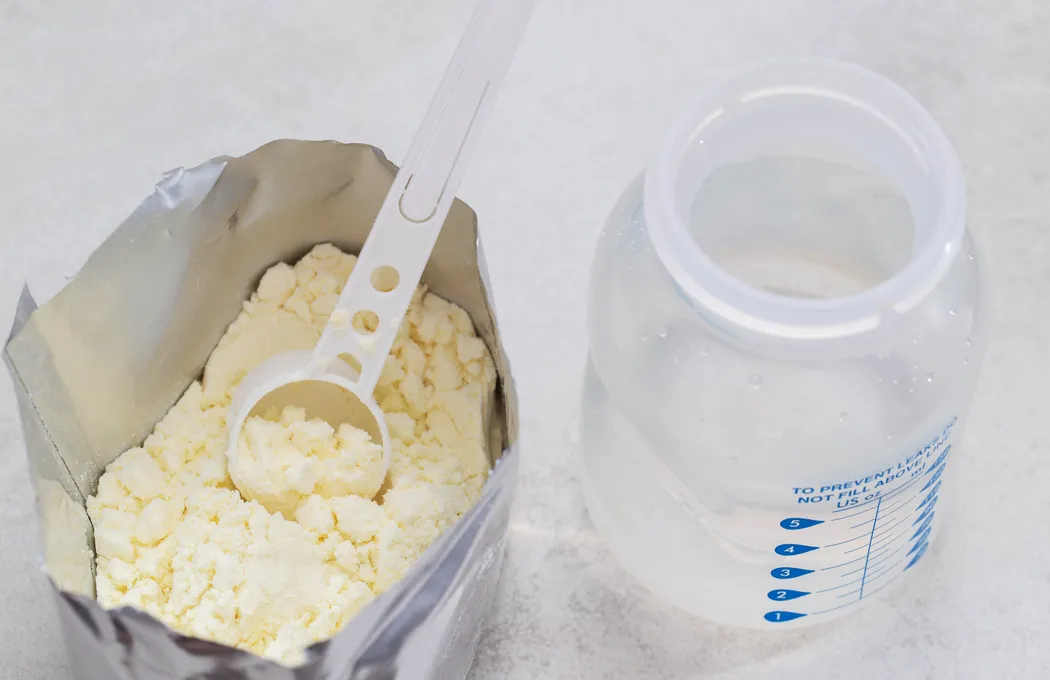
Incorrect preparation is the most common source of feeding problems, so this newborn formula feeding guide would be incomplete without it. Follow these steps every time:

  • Wash hands thoroughly before handling any feeding equipment.
    Sterilise bottles, teats, and caps before each use, especially in the first 6 months.
  • Follow the preparation instructions on the specific formula package. Where the instructions call for powdered formula to be reconstituted with hot water, WHO guidance recommends water at no less than 70°C to reduce the risk from bacteria that may be present in powdered formula. Cool the prepared feed to a safe feeding temperature before giving it to the baby.
  • Measure powder and water exactly as the tin instructs. Adding extra powder does not improve nutrition and can stress your baby's kidneys.
  • Prepared powdered formula should not be kept at room temperature for more than two hours. Discard any remaining feed after this period, or sooner if the manufacturer's instructions specify a shorter time.

If formula needs to be prepared in advance, WHO guidance recommends cooling it quickly and storing it in a refrigerator at 5°C or below, then using it within 24 hours. Follow the product manufacturer's instructions if they specify a shorter storage period.
Good feeding hygiene matters as much as good formula choice, especially for young newborns whose immune systems are still maturing. You may also find Apollo's newborn belly button care guide helpful as you settle into newborn care routines.

Contraindications and When to Avoid Certain Formulas

Some babies should not receive standard cow's milk-based first infant formula:

  • Babies with galactosaemia have difficulty processing galactose and require a specialised feeding plan. Their formula must be selected by the baby's metabolic or paediatric care team.
  • Babies with confirmed cow's milk protein allergy may need an extensively hydrolysed or amino acid-based formula, depending on the clinical presentation. The appropriate product should be selected with guidance from a paediatrician.
  • Premature or very low-birth-weight infants have specific calorie and nutrient requirements that standard term formulas do not meet. Their formula must be recommended by the neonatal team.
  • Soy formula should not be chosen automatically for an infant with suspected or confirmed cow's milk protein allergy. A paediatrician can determine whether a soy-based or specialised formula is appropriate based on the baby's age and clinical history.

Never switch to a specialised formula without medical advice, even if you suspect an allergy.


Signs of Formula Intolerance and When to Call a Doctor

Learning to read the signs baby not tolerating formula is one of the most practical skills a new parent can develop. Mild fussiness and gas during the first week of any new formula can be normal, but contact your paediatrician if you notice:

Persistent vomiting or projectile vomiting after most feeds

  • Blood or mucus in the stools
  • Severe or worsening eczema, hives, or a rash appearing after feeds
  • Poor weight gain, continued weight loss, or concern that your baby is not returning to an expected growth pattern
  • Excessive, inconsolable crying that does not improve after 1 to 2 weeks
  • Diarrhoea lasting more than a few days
  • Do not attempt to self-diagnose formula intolerance or allergy. A paediatrician can help determine whether the formula, the feeding technique, or something else entirely is the cause.

Report adverse events to your healthcare provider or the relevant regulatory authority. If your baby develops an unusual or concerning reaction after consuming infant formula, seek medical advice promptly. Report adverse events to your healthcare provider or the relevant regulatory authority.

Conclusion

Choosing the right first infant formula is less about finding a particular brand and more about selecting a product that is appropriate for your baby's age, nutritional needs and medical history. For healthy, full-term newborns, a standard first infant formula may be suitable, while babies with allergies, metabolic conditions, prematurity or other medical concerns may need specialised nutritional support.

Always follow the preparation, storage and feeding instructions on the product label, maintain good feeding hygiene, and speak with your paediatrician before making a formula change when there are medical concerns. With the right information and professional guidance, parents can make formula-feeding decisions that support their baby's nutrition and safety.

FAQS

How much formula should a newborn drink?

Feeding amounts vary with the baby's age, weight, feeding pattern and individual needs. Newborns generally take small, frequent feeds, but there is no single volume that is appropriate for every baby. Follow your paediatrician's advice and your baby's feeding cues, and seek medical advice if your baby is consistently taking much less than expected or is not gaining weight appropriately.Your paediatrician will guide amounts based on your baby's weight and growth curve.

Can I switch formula brands anytime?

Some babies can change between standard infant formulas without a prolonged transition, while others may benefit from a gradual change. The appropriate approach depends on the baby's age, feeding history and reason for the switch. If you are changing formula because of suspected allergy, poor growth or another medical concern, speak with your paediatrician first.

Is soy formula safe for newborns?

Soy-based infant formula may be appropriate for some full-term infants in specific circumstances, but it is not the right choice for every baby. If cow's milk protein allergy is suspected, do not switch to soy formula without discussing it with your paediatrician.

How long can prepared formula be stored?

WHO guidance recommends that prepared powdered formula that is not being used immediately should be cooled quickly and stored at 5°C or below, then used within 24 hours. Formula kept at room temperature should not be held for more than two hours. Always follow the specific product instructions if they give a shorter storage period.

What is the difference between Stage 1 and Stage 2 formula?

Stage 1 infant formula is intended for infants during the first six months when formula is used as a substitute for human milk. Follow-up formula is intended for infants after six months and is used as part of a complementary diet. The exact age range and preparation instructions should always be checked on the product label.

Apollo 247 Floating Action Button