logo
0

How to Choose the Right Diaper Bag for Baby Care on the Go?

Learn how to choose and pack a diaper bag, including essential supplies, useful features, hygiene tips and baby skin-care precautions.

article image

Dr.Nallapu Siri

Stepping out with a newborn is one of parenting's steepest learning curves, and your diaper bag sits at the centre of it. The right diaper bag is not just a carryall, it is a portable hygiene station that keeps your baby comfortable and clean wherever you are. Choosing poorly means scrambling for wipes at the wrong moment; choosing well means calmer outings for everyone.

What Is a Diaper Bag and Why It Matters?

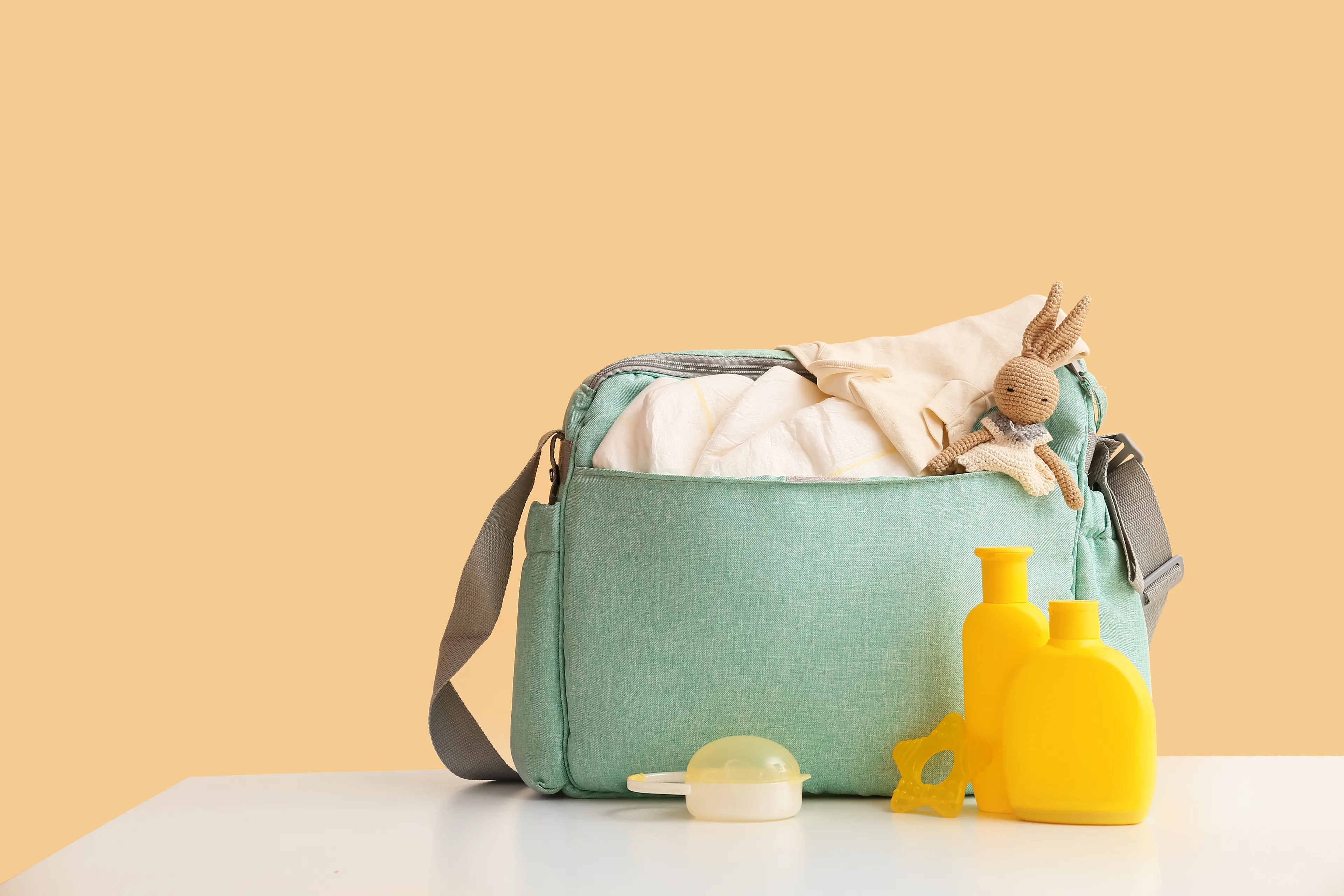
A diaper bag is a purpose-built carry bag that holds everything needed to feed, clean, and change a baby during outings. Unlike a regular bag, it is designed around baby hygiene workflows, quick access to diapers, safe storage for feeds, and a clean surface for changing.

For new parents, it also functions as a safety net. Rash creams, spare clothes, and sanitizer all live in one organised place, so a blowout in a crowded mall does not become a crisis. Think of it less as luggage and more as a mobile care kit.

Types of Diaper Bags: Tote, Backpack, Sling

Each style suits a different lifestyle, and most parents find they eventually own more than one.

Tote-style bags open wide at the top, giving instant access to everything inside. They are great for hospital trips or day outings where you are moving between a car and one location. The downside is that a heavy tote on one shoulder can cause fatigue quickly.
Backpack diaper bags distribute weight across both shoulders, which can be useful when you are also carrying a baby. They work especially well for parents who need both hands free. Many have exterior pockets that can help organise wipes, bottles, and toys without digging through everything.
Sling or messenger bags are compact and suited for short outings, such as a quick grocery run or a park visit. They carry fewer supplies, so they may work best when you need to pack less.

A simple comparison:

StyleBest forMain trade-off
ToteCar trips, hospital visitsShoulder strain with heavy loads
BackpackHands-free outings, carrying multiple suppliesCan be bulky for short outings
Sling/MessengerQuick errands, carrying a few essentialsLimited storage

Must-Have Features to Check Before Buying

Before any purchase, focus on function over appearance.

  • Waterproof or water-resistant lining can be useful because bottles may leak and soiled nappies need to be stored separately.
  • An insulated pocket can help keep expressed breast milk or prepared feeds cool when used with appropriate cooling packs and according to food-safety guidance. An insulated pocket alone does not guarantee that milk or formula will remain at a safe temperature for a particular number of hours.
  • A wipeable changing mat included in the bag saves you from hunting for a clean surface in a public restroom.
  • Stroller straps or clip hooks let you attach the bag to a pram or stroller when appropriate. Ensure the bag does not make the stroller unstable or exceed the manufacturer's recommendations.
  • Multiple compartments mean your soiled diaper disposal pouch stays well away from your snacks and clean clothes.
  • Padded shoulder straps or a supportive back panel may reduce strain on longer outings.

Check that zips and buckles are smooth and operable with one hand. When you are holding a wriggling baby, two-handed clasps can become genuinely frustrating.

Diaper Bag Checklist: What to Pack

A well-packed baby changing bag makes changing stations feel manageable rather than stressful. Here is a practical diaper bag checklist, organised by category.

Diapering essentials

  • Enough diapers for the expected number of changes during the outing, plus several extras
  • Fragrance-free baby wipes or cotton and water, depending on your baby's needs
  • Zinc oxide or barrier rash cream, if needed
  • Disposable diaper bags or a sealed wet bag for soiled nappies

Clothing and comfort

  • At least 2 full spare outfits for the baby
  • A muslin cloth or light receiving blanket
  • A pacifier in a clean case, if used

Feeding

  • Pre-measured formula in a sealed container, or expressed breast milk stored and transported according to recommended temperature-control guidance
  • Burp cloths
  • A small bib

Hygiene and parent care

  • Hand sanitiser with at least 60% alcohol
  • A small pack of adult tissues or wipes for yourself
  • A compact changing mat if the bag does not include one

Knowing how to pack a diaper bag efficiently matters as much as what you pack. Heavy items can go towards the bottom, frequently needed items can go in outer pockets, and soiled-diaper disposal pouches should be kept away from clean clothes and feeding supplies.

Hygiene and Safety Tips for Changing on the Go

Keeping your baby's changing area clean while travelling requires a short, repeatable routine.

Always wash your hands with soap and water when available. If soap and water are not available, the CDC recommends using an alcohol-based hand sanitiser containing at least 60% alcohol. This can be particularly useful before and after diaper changes when handwashing facilities are not readily accessible.

Lay your own portable changing mat on top of any public changing table. Shared surfaces may carry germs even when they look clean. Fold the mat so the soiled side stays inward when you roll it up, and clean it according to the manufacturer's instructions.

Dispose of soiled diapers promptly in a suitable bag or bin. Avoid leaving them loose in your diaper bag. If a public bin is unavailable, a sealed disposal bag can help contain odour until you reach an appropriate waste bin.

New parents often ask about skin rashes discovered during an outing. Mild redness can have several causes, including irritation from moisture, stool, friction or a reaction to a product, so it should not automatically be described as a contact rash based only on how quickly it clears. Contact your paediatrician if the rash is spreading, blistering, associated with fever, very raw or bleeding, or does not improve after appropriate care. The American Academy of Pediatrics advises medical assessment for concerning features and when a diaper rash is not improving or is worsening. You can also read about newborn belly button hygiene care for more guidance on keeping delicate newborn skin clean and healthy.

Report unexpected or significant adverse reactions to your healthcare provider and, where appropriate, the product manufacturer or relevant regulatory authority.

Contraindications and Precautions for Baby Skin Products

Not every wipe, cream, or powder is suitable for every baby, and this is worth stating clearly before you buy in bulk.

Who should exercise extra caution?

  • Babies with a personal history of eczema, atopic dermatitis, or contact allergies
  • Premature infants, whose skin barrier is less mature and more vulnerable to water loss, irritation and injury
  • Babies who have had a previous reaction to fragranced or other skin-care products

Practical precautions

  • There is no need to routinely patch-test every new wipe or cream on a newborn's inner wrist or thigh before use. Instead, introduce new products one at a time and discontinue them if your baby develops a reaction.
  • Choose fragrance-free wipes for newborns. Fragrances and preservatives can trigger contact reactions in susceptible babies.
  • Avoid talc-based powders around babies. The American Academy of Pediatrics advises against baby powder because inhaled powder can injure the lungs. Cornstarch-based powders can also irritate the respiratory tract if inhaled, so avoiding loose powders altogether is the safer approach.
  • If you notice persistent redness, hives, swelling, blistering or other concerning skin changes after using a product, stop using it and consult your paediatrician.

Never use disinfecting wipes intended for surfaces on baby skin. Do not assume that adult antiseptic or sanitising wipes are suitable for newborn skin simply because they are designed for human use. Check the product label and intended use, as formulations vary. If uncertain about a product, ask your paediatrician before using it.
Premature babies may require individualised skin-care advice because their skin barrier is less mature than that of full-term infants. Evidence from neonatal skin research shows that preterm skin is more vulnerable to increased permeability, water loss and injury. Follow the skin-care plan provided by your baby's medical team.

Conclusion

The right diaper bag should make outings easier without encouraging you to carry more than you need. Choose a bag that keeps diapering, feeding and hygiene supplies organised, gives you easy access to frequently used items and is comfortable to carry. Pack enough supplies for the planned outing with a few extras, and adjust the contents as your baby's age, feeding pattern and needs change. For babies with sensitive skin or special medical needs, prioritise guidance from your paediatrician when choosing wipes, creams and other skin-care products.

FAQS

How many diapers should I carry in a diaper bag?

There is no universal number of diapers required for every outing. Pack enough for the expected changes during the trip, with several extras in case the outing lasts longer than planned or your baby needs additional changes. Newborns generally need more frequent diaper changes than older babies, so their bags may need more supplies.

What size diaper bag do I need?

Choose a bag based on the length of your outings, how much you need to carry and whether you are carrying supplies for more than one child. A medium-sized bag may suit many families, while a larger bag can be useful for longer trips or multiple children. A smaller sling-style bag may be sufficient for quick errands when fewer supplies are needed.

Can I use a normal backpack as a diaper bag?

Yes. A normal backpack can work well if it has enough space and allows you to organise diapering, feeding and clothing supplies safely. A waterproof organiser or insert can help separate different categories of items.

How often should I clean my diaper bag?

Clean spills and leaks promptly and follow the bag manufacturer's care instructions. Wipeable interiors can be cleaned as needed, while bags that are machine washable should only be washed according to the care label. There is no universal weekly or monthly cleaning schedule.

What is the best material for a diaper bag?

Nylon and polyester can be practical choices because they are generally lightweight and easy to wipe clean. The most important considerations are durability, ease of cleaning, comfortable carrying and whether the interior can protect supplies from moisture and leaks.

Apollo 247 Floating Action Button