Bottle Nipple Safety, Sterilisation and Contraindications
Who should not use certain nipple types?
Infants with a confirmed or suspected latex allergy must not use latex nipples. Symptoms of a latex reaction can include rash, hives, or in rare cases more serious reactions. Report adverse events to your healthcare provider or the relevant regulatory authority.
Premature infants or babies with neurological feeding difficulties should use nipples specifically designed for their condition, ideally under guidance from a neonatal care team.
Cracked, discolored, or torn nipples pose a choking hazard and must be discarded immediately, regardless of how recently they were purchased. Never continue using a nipple that shows visible deterioration.
Sterilization and replacement guidance
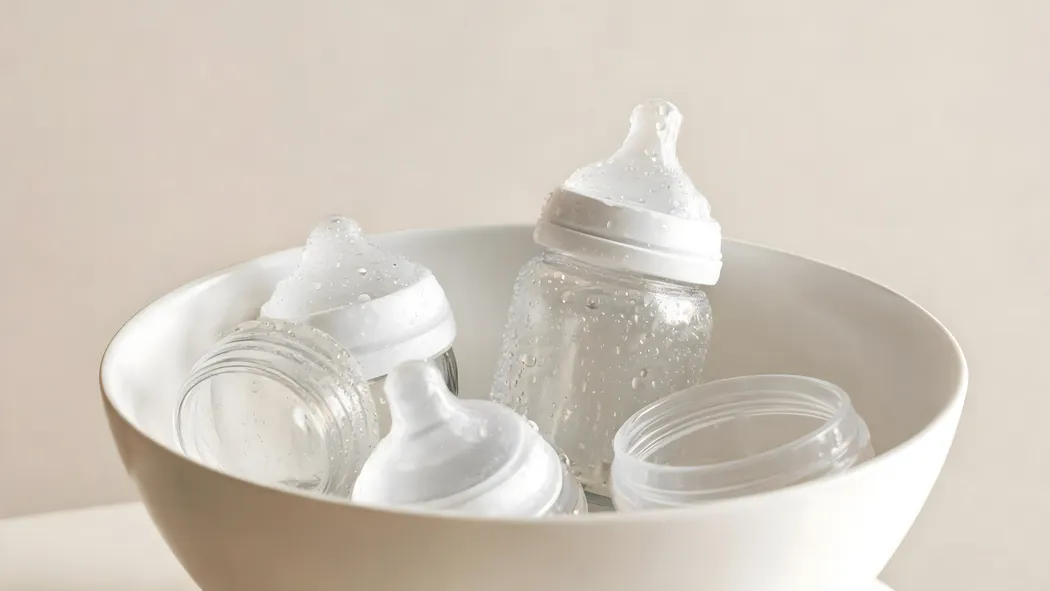
Before first use, sterilize all nipples by boiling in water for 5 minutes or using a steam sterilizer. After that, wash with warm soapy water after every feed and sterilize daily for the first few months. Replace nipples every 4 to 6 weeks for newborns, or sooner if you see any cracking, stickiness, or discoloration. Pull on the teat firmly before each use. If it tears or stretches abnormally, replace it.
Good hygiene around bottle feeding is part of broader newborn care essentials beyond feeding, including keeping feeding equipment and the baby's environment clean and safe.