logo
0

How to Mix Formula Safely: Step-by-Step Guide

Learn how to mix infant formula safely with proper handwashing, water preparation, accurate measurements, feeding hygiene, storage, and cleaning tips.

article image

Dr. Ezhilrasan

Feeding your baby formula feels like it should be simple, but mixing formula incorrectly is more common than most new parents expect, and the consequences can be serious. Too little water makes feeds dangerously concentrated; too much dilutes the nutrition your baby needs to grow. Getting the technique right from the start is one of the most protective things you can do in those early weeks.

Why Correct Formula Mixing Matters

The correct formula to water ratio is the foundation of safe formula preparation. When formula is over-concentrated, babies receive too much protein and salt, placing strain on their immature kidneys. When it is too dilute, they miss out on calories and nutrients, which can slow weight gain and, in serious cases, cause a dangerous drop in blood sodium.

Contamination is the other major concern. Powdered formula is not sterile, and bacteria such as Cronobacter sakazakii can occasionally be present in the powder. Using water at the right temperature during preparation reduces this risk significantly. Paediatric guidelines generally recommend preparing each feed fresh rather than making a large batch in advance for this reason.

Before You Start: Sterilising Equipment and Handwashing

Clean hands and sterilised equipment are the first line of defence against contamination in any safe formula preparation steps routine.

Handwashing

Wash with soap and water for at least 20 seconds, covering the backs of your hands, between your fingers, and under your nails. Dry with a clean cloth or a disposable towel, not a shared kitchen towel.

Sterilising Bottles for Formula

Sterilising bottles for formula should happen before every feed during the first year of life. Common methods include:

  • Boiling: submerge bottles, teats, rings, and caps in water and boil for five minutes.
  • Electric or microwave steam steriliser: follow the manufacturer's instructions; most cycles take a few minutes and are very effective.
  • Cold-water sterilising solution: submerge bottles for the recommended contact time, then shake off excess solution before use.

After sterilising, assemble the bottles on a clean surface. Avoid wiping the inside of a bottle with a cloth, even a clean one, as this can reintroduce bacteria.

Step-by-Step: How to Mix Formula Correctly

Follow these steps each time you prepare a feed.

  1. Prepare the water: Boil fresh tap water and allow it to cool for no more than 30 minutes so that it remains above 70°C. This temperature can help reduce bacteria that may be present in powdered formula.
  2. Add water first: Pour the correct amount of water into the sterilised bottle before adding the powder. This helps maintain the correct formula-to-water ratio.
  3. Check the instructions: Read the formula tin carefully for the specific scoop-to-water ratio. Preparation instructions can vary between brands and formula types.
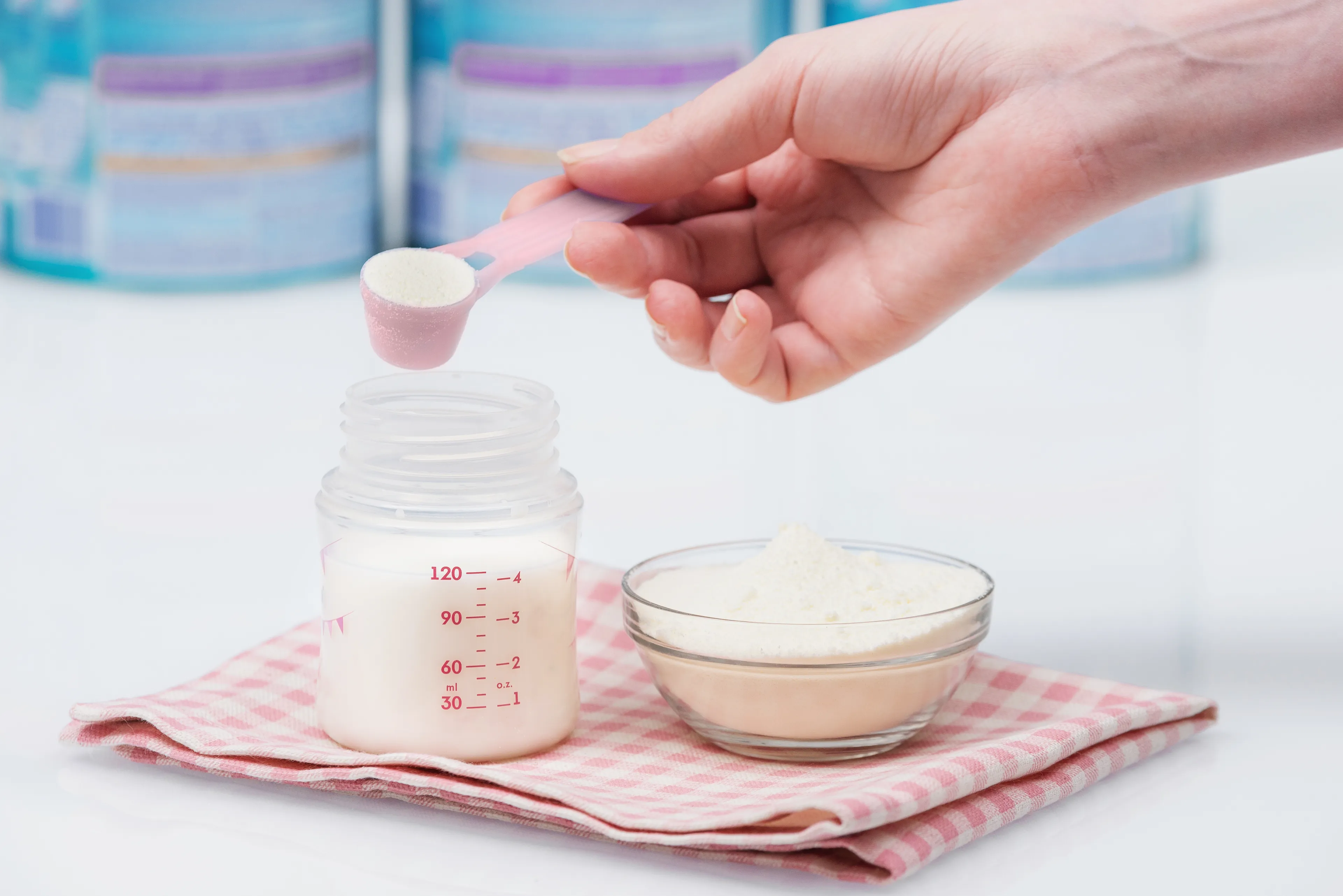
  4. Measure the powder: Use only the scoop provided with the formula. Fill it without packing the powder and level it using the leveller provided or a clean, dry knife.
  5. Add the powder: Add the recommended number of level scoops to the measured water.
  6. Mix thoroughly: Secure the teat and cap, then gently swirl or shake the bottle until the powder has dissolved. Avoid unnecessarily vigorous shaking if it creates excessive bubbles.
  7. Cool before feeding: Cool the prepared feed to a comfortable temperature before giving it to your baby. Place the bottle under cool running water or in a bowl of cool water, then test a few drops on the inside of your wrist. It should feel warm, not hot.

Common Powdered Formula Mixing Mistakes to Avoid

Even careful parents make these errors, particularly in the early weeks of sleep deprivation.

Using too much powder: Adding an extra scoop “for good measure” can make the formula too concentrated and may be unsafe for your baby.

  • Using heaped scoops: Scooping directly from the tin without levelling can result in inconsistent amounts of powder. Always use the level scoop specified by the manufacturer.
  • Using unsafe water: Avoid using unboiled tap water or water from a home water softener. In India, water quality can vary, so follow local guidance and the formula manufacturer's instructions for preparing safe water.
  • Microwaving formula: Avoid microwaving prepared formula because it can create hot spots that may burn your baby's mouth. If warming is necessary, use warm running water or a suitable bottle warmer.
  • Keeping leftover formula: Once your baby has started drinking from a bottle, saliva can introduce bacteria. Discard unfinished formula within the time recommended by the formula manufacturer or your healthcare provider rather than saving it for another feed.
  • Preparing large batches: Fresh preparation is generally preferred when practical. If preparing formula in advance, follow the manufacturer's storage instructions carefully and keep prepared feeds refrigerated as directed.

Keeping the correct formula to water ratio consistent across every feed is the single most important habit to build from the beginning.

Storing and Handling Prepared Formula

Fresh preparation is always safest, but real life sometimes requires working ahead.

  • Prepared formula stored in the fridge at 4 degrees Celsius or below can be used within 24 hours.
  • At room temperature, discard prepared formula after two hours.
  • When travelling, carry boiled water in a sealed flask and dry scoops in a clean container, then mix fresh at feeding time. Pre-made formula in sealed single-serve cartons is a convenient and safe alternative for outings.
  • Never reheat prepared formula more than once, and never refreeze it.
  • Label bottles with the preparation time so there is no guesswork later.

For more on keeping your newborn safe and healthy day to day, the newborn care basics guide covers other essential hygiene and care routines worth knowing.

Contraindications and When to Avoid Certain Formulas

Standard infant formula is appropriate for most healthy, full-term babies who are not breastfed. Some babies, however, require a different approach, and a paediatrician should always guide these decisions. Situations requiring medical guidance include:

  • Cow's milk protein allergy: Babies with a confirmed or suspected cow's milk protein allergy may need an extensively hydrolysed or amino acid-based formula, depending on the severity and medical assessment.
  • Lactose intolerance: True lactose intolerance is uncommon in young infants. When medically confirmed, a lactose-free formula may be considered under paediatric guidance.
  • Prematurity or low birth weight: Premature or low-birth-weight babies may require specialised formulas with higher calorie and nutrient density to support growth and development.
  • Metabolic conditions: Babies with conditions such as phenylketonuria (PKU) may require specially formulated medical feeds tailored to their specific nutritional needs.
  • Poor growth or feeding reactions: Babies who are not gaining weight adequately, have persistent vomiting, or develop signs of an allergic reaction after feeds should be assessed by a paediatrician before changing formula.

Never switch formula type without first speaking to your doctor. Formula milk hygiene and preparation technique matter regardless of which type is prescribed, so the steps above apply across all formula categories.

Conclusion

Safe formula preparation depends on accurate measurements, clean equipment, safe water, and careful handling at every step. Always follow the formula manufacturer's instructions for the correct water-to-powder ratio, prepare feeds using properly sterilised equipment, and avoid adding extra or insufficient powder. Freshly prepared feeds are preferable, while prepared formula should be stored and discarded according to safe time and temperature limits. If your baby has a suspected allergy, intolerance, poor growth, or another medical condition requiring specialised formula, consult a paediatrician before changing the feeding plan. Consistent hygiene and correct preparation can help reduce contamination risks while ensuring your baby receives the intended nutrition.

FAQS

How do I know if formula is mixed correctly?

The feed should look smooth and uniform, with no visible powder clumps. Following the correct formula to water ratio printed on the tin and using a levelled scoop each time is the most reliable way to confirm accuracy.

Is cooled boiled water necessary for formula?

Yes. Boiling and then cooling water to above 70 degrees Celsius before mixing formula helps eliminate bacteria that may be present in the powder. Water that is simply warm from the tap does not provide the same protection.

Can I switch formula brands without consulting a doctor?

For healthy, full-term babies, switching between standard infant formulas of the same stage is generally low risk, but it is still worth checking with your paediatrician, especially if your baby has a history of digestive sensitivity or allergy.

What water is safest for mixing formula in India?

Freshly boiled and cooled tap water is appropriate in most settings. Bottled mineral water is not recommended as a routine substitute because mineral content varies and some brands have high sodium levels unsuitable for infants.

How often should feeding bottles be replaced?

Replace plastic bottles every two to three months or immediately if you notice any cracks, cloudiness, or damage to the teat. Deteriorating bottles are harder to clean properly and can harbour bacteria.

Apollo 247 Floating Action Button