logo
0

How to Moisturise Newborn Skin the Right Way

Learn how to moisturise newborn skin safely. Get expert tips on choosing the right lotion, best application timing, common mistakes to avoid, and more.

article image

Dr. Ezhilrasan

Moisturising newborn skin is one of those small daily acts that make a real difference to your baby's comfort and health. A newborn's skin is nothing like adult skin: it is thinner, more permeable, and far more vulnerable to dryness and irritation. Getting the basics right early helps protect that fragile outer layer while it matures over the first few weeks of life.

Why Newborn Skin Needs Special Moisturising Care

A baby's skin barrier is still developing at birth. The outermost layer, called the stratum corneum, is thinner than in older children and loses moisture much faster. This is why many newborns show visible peeling within the first one to two weeks, particularly on the hands, feet, and ankles.

Peeling in the first fortnight is completely normal. Before birth, babies are surrounded by amniotic fluid and coated in a protective layer called vernix. Once that vernix is gone, the skin adjusts to a dry environment, and some shedding is the natural result. It is not a sign of illness or allergy.

What makes this stage worth watching is transepidermal water loss, where moisture evaporates through the skin faster than it can be replaced. Low humidity, air conditioning, and frequent bathing can all make this worse.

How to Choose the Right Moisturiser for Your Baby

With dozens of products marketed as the best moisturiser for newborn baby, the labels can feel overwhelming. A few clear criteria cut through the noise.

What to look for:

  • Fragrance-Free & Dye-Free: Fragrance-free and dye-free formulations, since fragrance is the most common contact irritant in baby products.
  • Hypoallergenic & Clinical Testing: Hypoallergenic and dermatologist or paediatrician-tested labelling.
  • Simple Ingredient Lists: Simple ingredient lists with emollients such as petrolatum, glycerin, or shea butter.
  • Newborn-Specific Formulations: Products specifically formulated for newborns or sensitive infant skin.

Baby moisturiser ingredients to avoid:

  • Preservatives to Avoid: Parabens and formaldehyde-releasing preservatives.
  • Surfactants to Avoid: Sodium lauryl sulfate (SLS).
  • Fragrances & Oils to Avoid: Artificial fragrances or essential oils.
  • Alcohols to Avoid: Alcohols listed high in the ingredient list.
  • Paraben Derivatives: Any ingredient ending in "-paraben" where a paraben-free alternative is available.

On coconut oil: some families reach for it as a natural option, but current evidence is mixed. A few studies suggest it may actually disrupt the skin barrier in some infants, so it is safer to choose a purpose-formulated, tested product unless your paediatrician specifically recommends it.
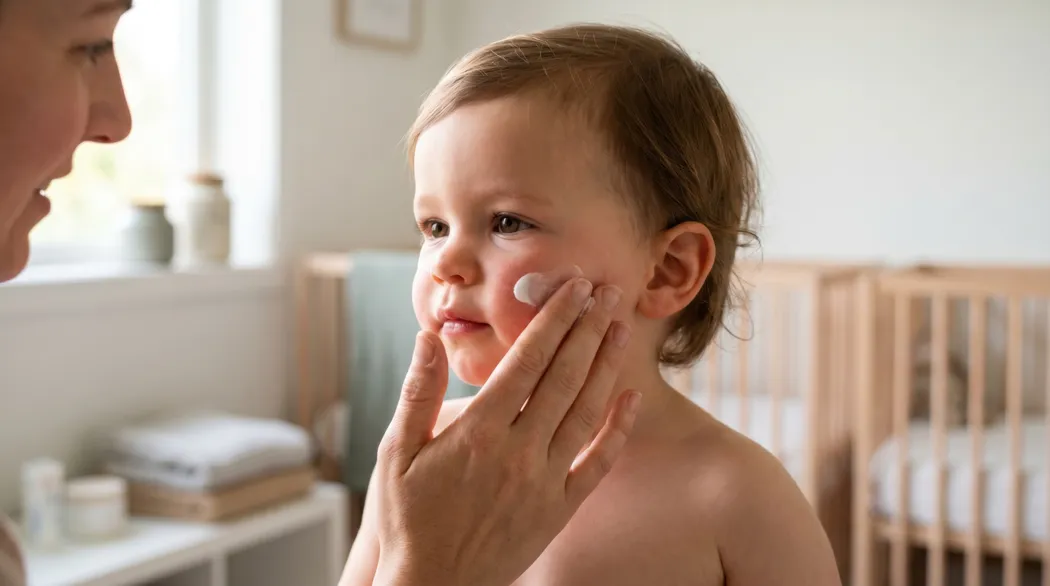
Best Time and Technique to Apply Moisturiser

Knowing when to moisturise newborn after bath is one of the most underrated parts of newborn skin care tips. The ideal window is within three minutes of a bath, a method sometimes called "soak and seal." The skin holds extra surface moisture at this point, and applying lotion immediately locks it in before evaporation takes over.

How to apply baby lotion correctly:

  • Gentle Pat Drying: Pat the skin dry with a soft towel, leaving it very slightly damp rather than completely dry.
  • Immediate Application: Apply moisturiser immediately after patting, using gentle downward strokes.
  • Targeted Coverage: Cover the body, limbs, and scalp if dry, but avoid the eye area and any broken skin.
  • Thin, Even Layer: Use only a thin, even layer; more product does not mean more protection.

When to moisturise newborn after bath is well-established, but frequency also matters. Once daily, timed right after the bath, is usually sufficient for healthy skin. In very dry climates or during winter, a second light application during the day can help. Always check with your paediatrician if you are unsure how often your baby needs it.

For the face, use a tiny amount of the same fragrance-free product and keep it well away from the eyes and mouth.

Common Mistakes to Avoid

Even careful parents can fall into habits that irritate rather than protect.

  • Over-Application of Product: Applying thick layers in the belief that more product works faster. A thin, even coat is all the skin needs.
  • Using Scented Adult Products: Using scented adult lotions because they smell pleasant. Fragrances are a leading cause of contact dermatitis in infants.
  • Vigorous Skin Drying: Rubbing the skin dry before applying moisturiser. Always pat gently and leave skin slightly damp.
  • Ignoring New Rashes: Ignoring a new rash that appears after starting a product. Stop use immediately and consult your doctor.
  • Incorrect Bathing Habits: Bathing the baby in long, hot water. Lukewarm water for five to ten minutes maximum is the standard guidance. Over-bathing strips natural oils faster than any moisturiser can replace them.

Can too much moisturiser harm a baby? Applying thick layers too frequently can occasionally block hair follicles and cause minor irritation. It is unlikely to cause serious harm, but a light touch and consistent routine are the better approach.

When to See a Doctor

A newborn dry skin remedy works well for typical peeling and mild dryness. But some signs need professional attention.

Speak to your paediatrician if you notice:

  • Weeping or Crusting Skin: Redness, oozing, crusting, or skin that weeps fluid.
  • Spreading or Infected Rashes: Rashes that spread rapidly or look infected.
  • Signs of Early Eczema: Persistent dry, thickened, or itchy patches that could indicate early eczema.
  • Allergic Reactions: Swelling or hives after applying a new product, which may signal an allergic reaction.
  • Unresponsive Dry Skin: Skin that does not improve after two to three weeks of consistent moisturising.

Eczema (atopic dermatitis) can appear in the first weeks of life, and early diagnosis makes a meaningful difference to long-term comfort. If the skin breaks open from scratching, follow proper minor wound care guidelines under medical advice to prevent infection.

Report adverse events to your healthcare provider or the relevant regulatory authority.

Contraindications and Precautions

Some products should never be used on newborn skin without a prescription or direct medical advice.

  • Topical Corticosteroids: Topical corticosteroids, even mild over-the-counter strengths, must only be used under paediatric or dermatological supervision. Newborn skin absorbs these agents much more readily than adult skin, raising the risk of systemic effects.
  • Medicated Antifungal or Antibiotic Creams: Medicated creams containing antifungals or antibiotics require a confirmed diagnosis before use.
  • Harsh Active Ingredients & Oils: Products containing essential oils, camphor, menthol, or salicylates are not appropriate for newborns.
  • Adult Skincare Products: Adult skin care products, including moisturisers, are formulated for a different pH and skin thickness. They are not suitable substitutes.

If your baby has a known allergy or skin condition such as ichthyosis or neonatal lupus, consult a dermatologist before starting any moisturising routine.

Conclusion

Moisturising your newborn's skin doesn't have to be complicated. By focusing on fragrance-free, hypoallergenic products, applying moisturiser immediately after a bath to lock in hydration, and keeping routines simple, you help protect and nurture your baby's developing skin barrier. Always monitor your baby's skin for any unusual reactions, and consult your paediatrician whenever you have concerns about dryness, rashes, or product selection.

FAQS

How often should you moisturise a newborn?

Once daily, applied right after a bath, is enough for most healthy newborns. In dry weather or if the skin looks particularly parched, a second light application during the day is fine, but always check with your paediatrician first.

Can I use adult lotion on my baby?

No. Adult lotions are formulated for a different skin pH and thickness, and many contain fragrances, preservatives, or actives that can irritate or harm newborn skin. Always use a product specifically designed for newborns or sensitive infant skin.

Is olive oil good for newborn skin?

Research suggests olive oil may actually weaken the skin barrier in newborns due to its oleic acid content, which can disrupt the lipid layer. It is better to use a purpose-formulated, fragrance-free baby moisturiser instead.

Why does my newborn have flaky skin?

Flaking in the first one to two weeks is a normal part of the skin adjusting after birth. Before delivery, vernix protects the skin; once it is gone, the outer layer sheds as it adapts to the outside environment. Gentle moisturising helps, and the peeling usually resolves on its own.

What is the safest moisturiser for newborns?

A fragrance-free, dye-free, hypoallergenic cream or ointment with simple emollients such as petrolatum or glycerin is generally the safest choice. Look for products labelled as paediatrician-tested and formulated for newborn or sensitive skin, and ask your doctor if you are unsure which product suits your baby.

Apollo 247 Floating Action Button