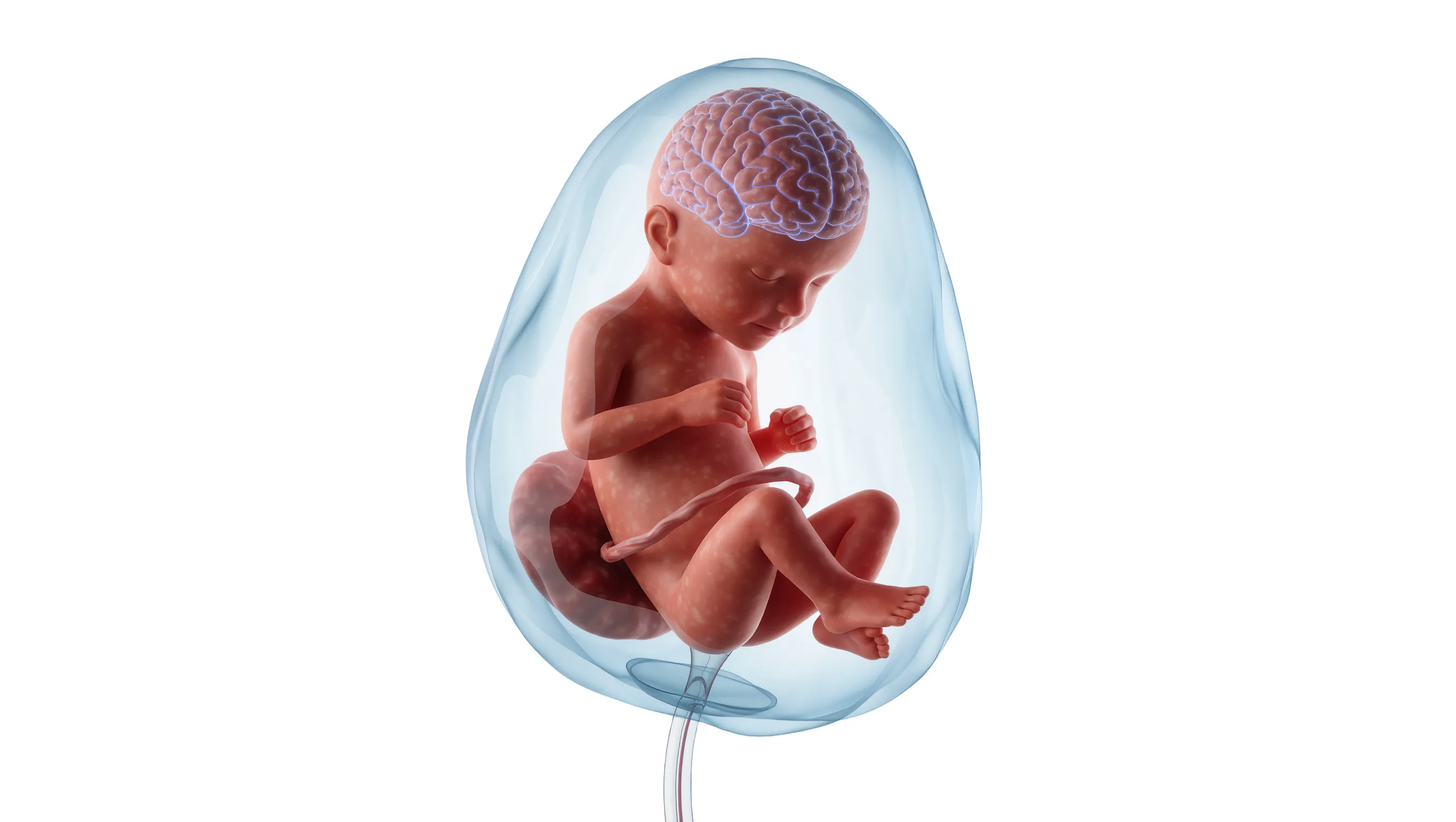
First Trimester (Weeks 1-12): Conception and Early Development
The first trimester is the most dramatic period of change, even though much of it is invisible from the outside.
Fertilization and Implantation
Around week 2 to 3, a sperm fertilizes an egg in the fallopian tube. The resulting zygote travels toward the uterus, dividing rapidly as it moves. By week 4, it burrows into the uterine lining, a process called implantation. Some people notice light spotting at this point, which is normal.
Organ Formation
Between weeks 5 and 10, the embryo develops at a remarkable pace:
- The neural tube (which becomes the brain and spinal cord) closes by around week 6.
- A tiny heartbeat can sometimes be detected by ultrasound from week 6 onward.
- Arm and leg buds appear around weeks 6 to 7.
- By week 10, all major organs have begun forming and the embryo is now called a foetus.
- Fingers and toes are distinct by week 12.
Common First-Trimester Symptoms
Most early symptoms are driven by rising levels of human chorionic gonadotropin (hCG) and progesterone:
- Nausea and vomiting, especially in the morning (though it can strike any time)
- Breast tenderness and swelling
- Fatigue that can feel overwhelming
- Frequent urination
- Food aversions or cravings
- Mild cramping and bloating
These symptoms typically peak around weeks 8 to 10 and ease for most people by the end of the first trimester.