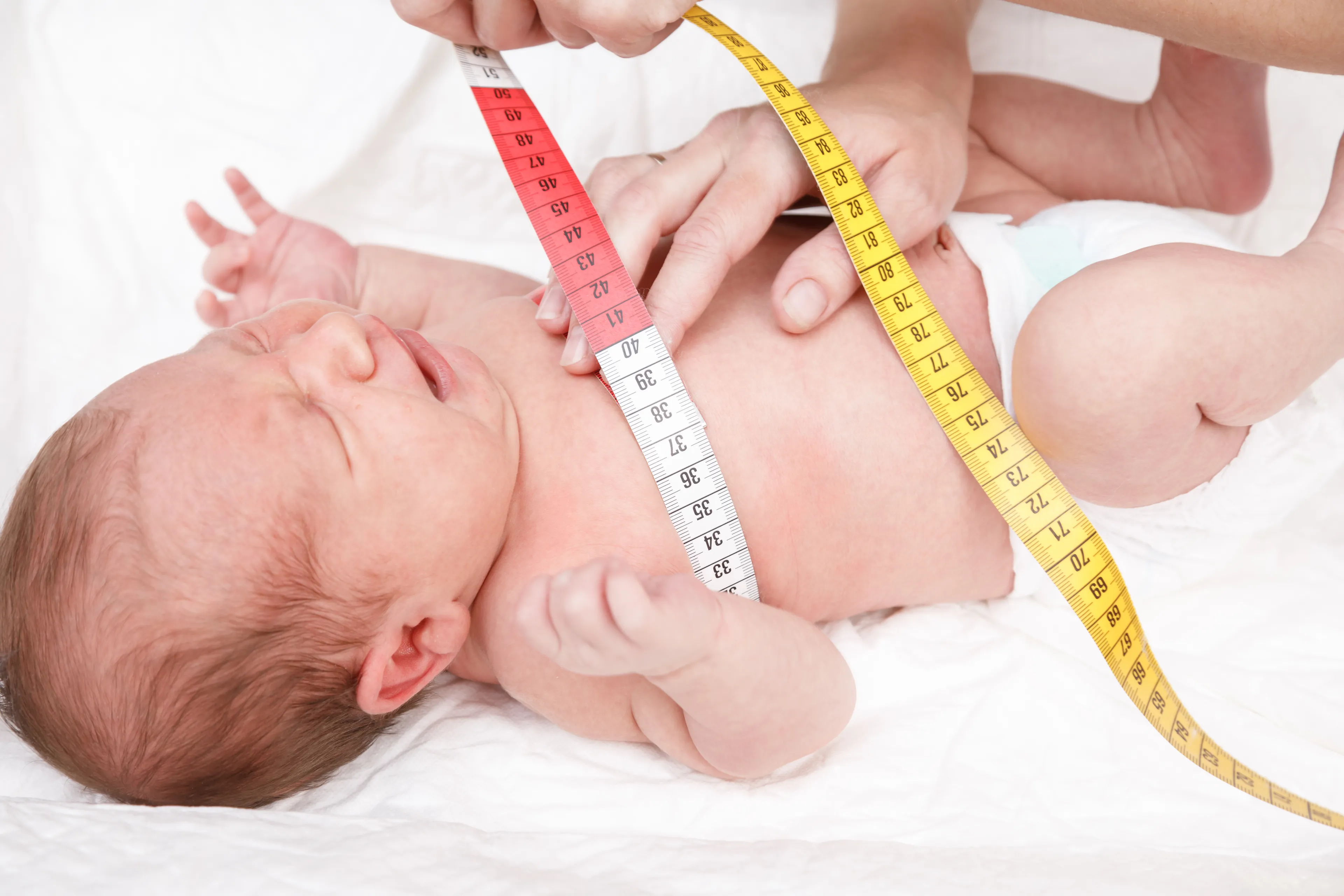
Infant chest circumference can provide useful information about a baby's growth when it is measured correctly and considered alongside weight, length, and head circumference. Home measurements can help parents understand growth patterns, but small differences in technique or timing can affect the result. Rather than focusing on a single number, keep consistent records and share them with your paediatrician, who can interpret the measurements using an appropriate growth chart and your baby's overall health and development.
If your baby's chest circumference appears persistently smaller or larger than expected, or growth is accompanied by poor feeding, slow weight gain, or other developmental concerns, discuss these findings with a paediatrician. Breathing difficulty, rapid breathing, visible pulling in around the ribs, or other signs of respiratory distress require prompt medical attention and should not be managed through home measurements. Regular clinical growth monitoring remains the most reliable way to assess whether your baby's growth is progressing appropriately.
Medical Disclaimer: This article is for general informational purposes only and does not constitute medical advice, diagnosis, or treatment. The reference ranges and guidance provided here are approximate and may not apply to every baby. Always consult a qualified paediatrician or healthcare professional regarding your child's growth and development. Do not delay seeking professional advice based on information read here.