Best First Foods and Nutrition Guidelines
First Foods for a 6-Month-Old Baby
The best first foods for a 6-month-old baby are single-ingredient purees with a smooth, thin consistency. Start with one new food at a time and wait two to three days before introducing the next. This helps you spot any reaction clearly.
Good options to begin with:
- Iron-rich foods: These are a priority because iron stores begin to decline around 6 months. Well-cooked and puréed meat such as chicken or mutton, puréed lentils such as moong dal, and iron-fortified cereals are good options.
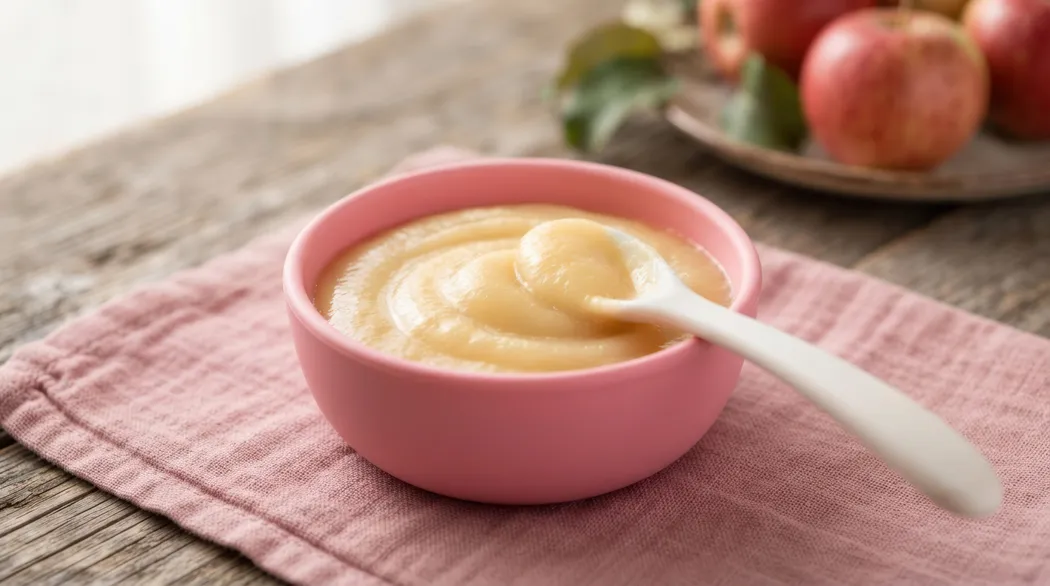
- Fruit purées: Banana, cooked apple, pear and chikoo are soft options that are generally well accepted by babies.
- Vegetable purées: Carrot, sweet potato, pumpkin and bottle gourd can be cooked until soft and puréed to a smooth consistency.
- Ragi porridge: Ragi (finger millet) is a popular Indian first grain and provides nutrients including calcium and iron.
- Moong dal: Moong dal water or thin dal soup provides protein and can be a gentle option when introducing complementary foods.
As your baby gains confidence over four to six weeks, move from very thin purees to thicker mashes, and then to soft lumps. Texture progression is as important as food variety.
How Much Should a 6-Month-Old Eat?
Portions are very small at first. Begin with one to two teaspoons per meal and build up over weeks to around two to four tablespoons per meal. Your baby's stomach is roughly the size of their fist. Overfeeding is unlikely if you follow hunger and fullness signals, but pushing food past the point where a baby turns away or closes their mouth is worth avoiding.
Breast milk or formula should continue to provide the majority of nutrition through the first year. Solids at this stage are learning experiences as much as they are meals.